

Can You Pay for a Car
Down Payment With a Credit Card?
When you are preparing to purchase a used vehicle, one of the most common questions is how to handle the down payment. The idea of using a credit card is appealing, offering convenience and the potential for rewards. The short answer is yes, many dealerships accept credit cards for at least a portion of the down payment, but the specifics can vary. Policies differ from one dealership to another, often depending on their internal rules and the fees associated with credit card processing. Some may have a limit on how much you can charge, while others may accept the full amount. Understanding the dealership's policy, along with the potential benefits and drawbacks for your personal finances, is the first step. Making an informed decision involves weighing the convenience and perks against potential interest rates and fees, ensuring the choice aligns with your budget and financial strategy for your next car purchase.
Ultimately, deciding whether to use a credit card for your down payment is a personal financial choice. Our team is here to provide clear and straightforward information about all your payment options. We believe in empowering our customers to make decisions that feel right for them, without any pressure. We can walk you through our specific policies and help you understand how different payment methods work within the overall purchase process. Explore the detailed guide below to learn more about the nuances of this option and feel fully prepared for your visit.
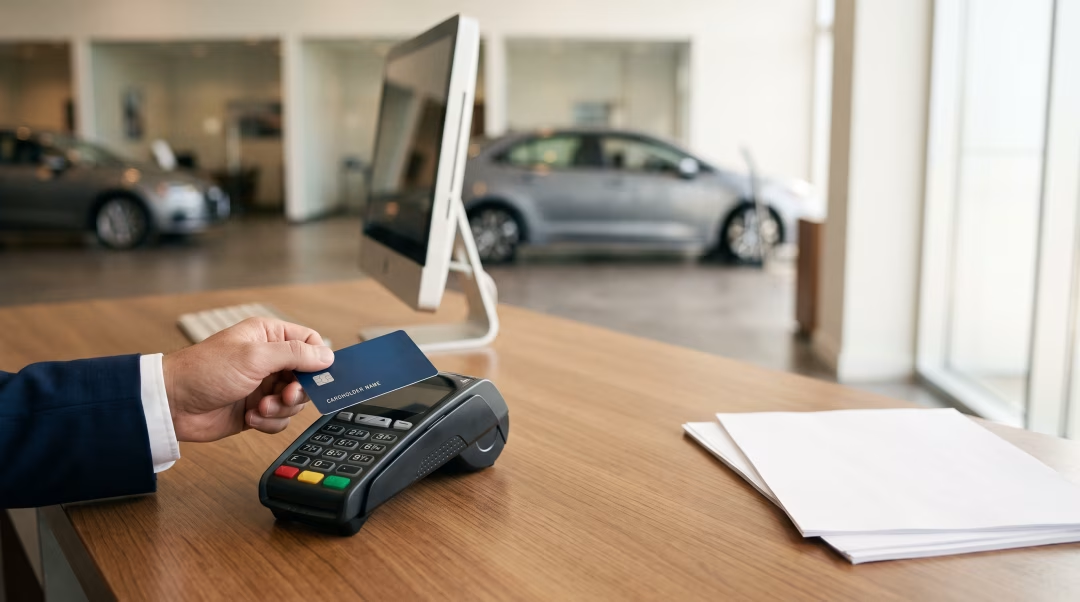
The Complete Guide to Using a Credit Card for Your Down Payment
Navigating the car buying process involves many decisions, and how you make your down payment is a significant one. While cash, debit, and cashier's checks are traditional methods, using a credit card has become an increasingly common question. Whether this is a viable option depends entirely on the dealership's policies and your own financial situation. Here, we will explore the reasons behind dealership policies, the potential advantages for you as a buyer, the significant risks to be aware of, and the best practices to follow if you choose this path.
Why Dealership Policies on Credit Card Down Payments Vary
You might wonder why a dealership would not want to accept a credit card for a large payment. The primary reason comes down to cost. When a customer uses a credit card, the business has to pay a merchant processing fee. This fee is typically a percentage of the transaction amount, often ranging from 2% to 4%. On a multi-thousand-dollar down payment, this can add up to hundreds of dollars that the dealership must absorb, directly cutting into the profit margin on the vehicle sale. To manage these costs, dealerships adopt different policies:
- No Credit Cards: Some dealerships, particularly smaller ones, may have a strict policy against accepting credit cards for down payments to avoid the fees altogether.
- A Capped Amount: A very common policy is to accept credit cards up to a certain limit, such as $2,500 or $5,000. This is a compromise that offers customer convenience while limiting the dealership's exposure to high processing fees.
- Full Acceptance: Some larger dealerships may accept any amount on a credit card, viewing the processing fee as a cost of doing business to facilitate a sale.
- Passing on the Fee: In some cases, a dealership might allow you to use a credit card but will add a "convenience fee" or surcharge to your total to cover their processing cost. You should always ask about this upfront.
Another concern for dealers is the risk of chargebacks. While rare, a customer could dispute the charge after driving off the lot, creating a complicated situation for the business. Because of these factors, it is essential to call ahead and ask about the dealership's specific policy before you visit. You can learn more about financing options in our financing area.
Potential Benefits of Using a Credit Card
If the dealership allows it, there are several scenarios where using a credit card for your down payment could be advantageous.
Earning Rewards: This is the most popular reason. If you have a rewards card that offers significant cash back, travel miles, or points, a large down payment can help you accumulate a substantial bonus. A $5,000 down payment on a 2% cash back card, for example, would net you $100. For some, this perk is worth seeking out a dealership that accepts credit cards.
0% APR Introductory Offers: If you have recently opened a new credit card with a promotional 0% Annual Percentage Rate (APR) for a set period (e.g., 12 or 18 months), you can essentially give yourself an interest-free loan for the down payment. This strategy only works if you are disciplined enough to pay off the entire balance before the promotional period expires and the regular, much higher, interest rate kicks in.
Convenience and Cash Flow: Perhaps your cash is in an investment account that takes a few days to access, but you have found the perfect car and want to secure it immediately. A credit card can bridge that short-term gap. It is also simpler than obtaining a cashier's check from the bank.
Major Risks and Downsides to Be Aware Of
While the benefits can be tempting, the risks associated with using a credit card for a down payment are significant and can lead to serious financial trouble if not managed carefully.
Extremely High Interest Rates: This is the single biggest risk. If you do not pay off the credit card balance in full during the first billing cycle, you will start accruing interest at your card's standard APR. Credit card APRs often exceed 20%, which is far higher than any auto loan interest rate. Carrying that down payment balance on your card for even a few months can cost you hundreds of dollars, wiping out any rewards you earned and then some.
Negative Impact on Your Credit Score: When you make a large purchase on a credit card, your credit utilization ratio—the amount of credit you are using compared to your total available credit—spikes. A high utilization ratio can cause a temporary but significant drop in your credit score. This could be problematic if the lender for your auto loan performs a final credit inquiry right before finalizing the loan, as a lower score could potentially affect your interest rate or even the final approval. If you are trying to get pre-qualified, it is best to keep your utilization low.
The Cash Advance Trap: It is critical to confirm with your credit card issuer how they will classify the transaction. Some card companies may treat a payment to a car dealership as a "cash equivalent" transaction, processing it as a cash advance rather than a standard purchase. Cash advances typically come with their own upfront fees and a higher interest rate that starts accruing immediately, with no grace period. This is a worst-case scenario that can make the transaction incredibly expensive.
Do all dealerships accept credit cards for down payments?
No, not all dealerships accept credit cards for down payments. Policies vary widely due to credit card processing fees, which can be costly for the dealer. Many dealerships set a limit on the amount you can charge, such as $5,000, while others may not accept them at all for down payments. It is always best to call the dealership ahead of time to confirm their specific policy.
Will using a credit card for a down payment affect my auto loan approval?
It potentially could. Charging a large down payment increases your credit utilization ratio, which can temporarily lower your credit score. If your auto lender pulls your credit again just before finalizing the loan, a lower score might impact your final terms. To be safe, it is best to have a plan to pay off the credit card balance immediately or to use another payment method.
What is a credit card surcharge or convenience fee?
A surcharge or convenience fee is an extra charge that a merchant, like a car dealership, may add to your bill when you pay with a credit card. This fee is meant to cover the processing cost that the credit card company charges the merchant. If a dealer adds a surcharge, they must disclose it to you upfront.
Is it better to use a credit card or a debit card for a car down payment?
For most people, a debit card is a safer choice. A debit card transaction pulls money directly from your bank account, so you are not taking on new, high-interest debt. A credit card should only be considered if you can gain significant rewards and are absolutely certain you can pay off the full balance before any interest accrues.
Can I split my down payment between a credit card and another payment method?
Yes, many dealerships will allow you to split the down payment. For example, if a dealer has a $3,000 limit for credit card payments but your total down payment is $5,000, you could pay $3,000 on your card and the remaining $2,000 with a debit card or check. This is a common way for buyers to earn some rewards while staying within the dealer's policy.
