

Hatchback vs. Sedan: Which
Used Car Fits Your Life?
Choosing your next used car involves many decisions, but one of the first is picking the right body style. The classic debate often comes down to hatchback vs. sedan. While they may share similar engines and features, their core design differences can have a big impact on your daily life. A sedan offers a traditional four-door layout with a separate, lockable trunk, providing a quiet ride and secure storage. A hatchback, on the other hand, replaces the trunk lid with a large, top-hinged liftgate, creating a more versatile and open cargo area. Understanding the unique pros and cons of each style is the key to finding a vehicle that not only fits your budget but also perfectly complements your day-to-day needs, whether you are commuting through Dallas traffic, hauling gear for weekend trips, or running family errands around town. Let us help you explore which one is the right choice for you.
Now that you have a better idea of what makes each body style unique, the next step is to explore the vehicles themselves. Our extensive used inventory features a wide variety of high-quality sedans and hatchbacks to suit any driver's needs. We believe finding the right car should be a straightforward process, regardless of your credit history. Our experienced team is here to guide you through our selection and explain your financing possibilities. You can start the process from home by filling out our simple pre-qualification form today.
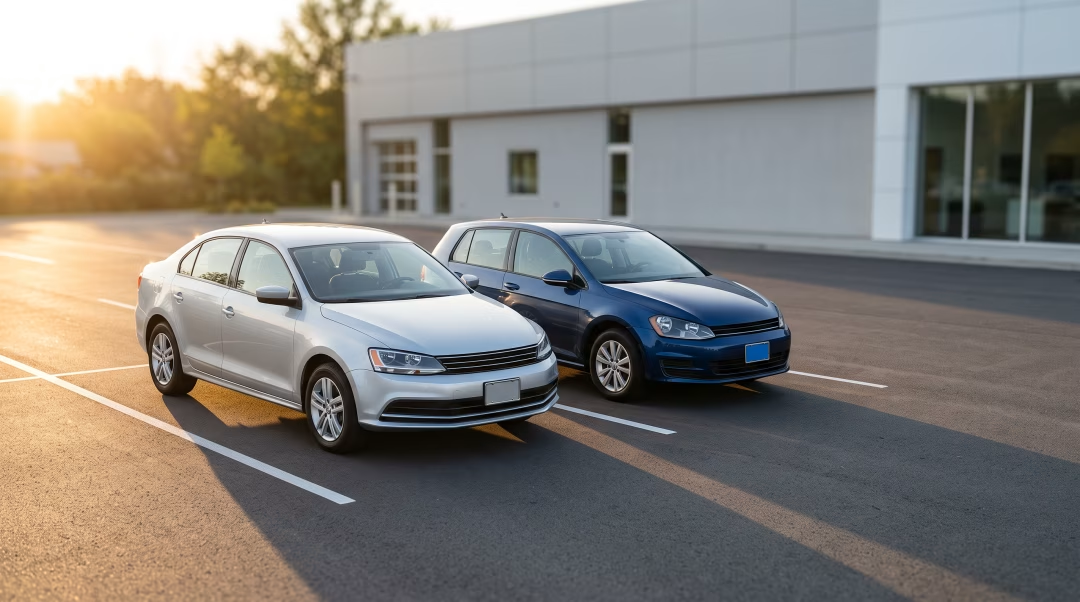
A Deeper Dive: Comparing Used Hatchbacks and Sedans
When you are browsing through listings for used cars for sale in Dallas, TX, the terms "sedan" and "hatchback" appear constantly. At first glance, they seem similar—both are passenger cars designed for daily driving. However, the fundamental difference in their rear design creates two distinct vehicle types with unique advantages. A sedan is defined by its "three-box" configuration: the engine compartment, the passenger cabin, and a separate trunk. A hatchback is a "two-box" design, combining the passenger cabin and cargo area into one open space accessible by a large rear hatch. This guide will break down the comparison point-by-point to help you decide which used car truly fits your life.
The Defining Difference: Cargo Space and Versatility
The most significant advantage of a hatchback is its superior cargo flexibility. While a midsize sedan might have a spacious trunk, the opening is fixed, limiting the size and shape of items you can carry. A hatchback's rear door lifts up high, creating a massive opening to a cargo area that can be expanded by folding down the rear seats. This transforms the car into something with utility closer to a small SUV, making it incredibly practical for a variety of tasks.
- Hauling bulky items like small furniture, bicycles, or large boxes that would never fit in a sedan's trunk.
- Easier loading and unloading of groceries, sports equipment, or strollers thanks to the wide opening.
- Transporting pets, especially larger dogs, who can ride more comfortably in the open cargo area.
In contrast, a sedan's trunk offers security and isolation. Your belongings are kept completely out of sight, which can be a benefit in busy parking lots. The separation also means that any odors from items like gym bags or takeout food are contained in the trunk and do not enter the passenger cabin.
Passenger Comfort and Interior Ambiance
From the driver's seat, a hatchback and a sedan built on the same platform (like a Ford Focus or Honda Civic) will feel nearly identical. Front-seat legroom and headroom are typically the same. The difference is usually felt by rear-seat passengers and in the overall cabin environment. Some hatchbacks offer slightly more rear headroom due to a roofline that does not slope down as aggressively as a sedan's. However, sedans often provide a quieter ride. Because the trunk is a separate, sealed-off space, it acts as a sound buffer, reducing road noise coming from the rear wheels and exhaust. In a hatchback, the open-air design means sound from the cargo area can travel more freely into the cabin.
Driving Dynamics, Performance, and Fuel Efficiency
It is a common misconception that one style inherently performs better than the other. In reality, since many automakers offer the same car in both sedan and hatchback variants, they often share the exact same engines, transmissions, and suspension components. This means their performance, handling, and braking characteristics are remarkably similar. Any minor differences in weight (hatchbacks can sometimes be slightly heavier) or aerodynamics are usually so small that they are unnoticeable in everyday driving. You can find some of the best used cars for good gas mileage in Texas in either body style. Your choice should be based on practicality and preference, not on an expectation of sportier performance from one over the other.
Making the Right Choice for Your Lifestyle
The best way to decide is to honestly assess your daily needs and what you expect from your vehicle. Consider your commute, your hobbies, your family size, and the types of items you transport most often. For many drivers in areas like Garland or Mesquite, the decision comes down to balancing everyday comfort with occasional utility.
A Used Sedan Might Be for You If:
- You prioritize a quiet cabin for long commutes.
- You want the added security of a separate, locked trunk.
- You prefer a more traditional, classic automotive style.
- You rarely need to transport large or bulky items.
A Used Hatchback Might Be for You If:
- You need maximum cargo flexibility for hobbies, work, or family gear.
- You have a large pet that travels with you.
- You want the utility of an SUV but in a smaller, more fuel-efficient package.
- You find it easier to park a car with a shorter rear overhang.
Find Your Next Used Car with Us
Ultimately, there is no single right answer in the hatchback vs. sedan debate—only the right answer for you. The best way to finalize your decision is to see them in person. We invite you to browse our online inventory of used sedans for sale in Grand Prairie, TX, and our selection of versatile hatchbacks. When you find a few that catch your eye, schedule a test drive to experience the differences firsthand. Our team is dedicated to helping you find the perfect vehicle for your needs and budget, and our in-house financing options are designed to make the process accessible for drivers from all financial backgrounds.
Are hatchbacks safer than sedans?
Safety is determined by a specific vehicle's design, materials, and safety features, not its body style. A top-rated sedan for safety will be safer than a poorly rated hatchback, and vice versa. Always check the crash test ratings from organizations like the IIHS and NHTSA for the specific used model you are considering.
Which body style holds its value better?
Resale value depends heavily on the specific make and model, its reliability record, market demand, and condition. While some popular hatchback models are known for strong value retention, the same is true for many sedans. Generally, models from brands known for reliability, like Honda or Toyota, tend to hold their value well regardless of body style.
Do hatchbacks have more road noise than sedans?
Historically, sedans were quieter because the separate trunk helped block road noise. However, modern hatchbacks have significantly improved with better sound-deadening materials and cabin insulation. While a sedan may still have a slight edge in quietness, the difference in newer used models is often minimal and may not be noticeable in daily driving.
Can I fit a car seat easily in both a hatchback and a sedan?
Yes, most modern compact and midsize vehicles in both body styles are designed to accommodate child safety seats. They are typically equipped with the LATCH (Lower Anchors and Tethers for Children) system in the rear seats. The ease of installation will vary more by the car's specific rear-seat dimensions and door opening size than by whether it is a sedan or hatchback.
Are insurance costs different for a hatchback versus a sedan?
When comparing the same car model in its sedan and hatchback forms, insurance rates are usually very similar. Insurance premiums are calculated based on factors like the vehicle's repair cost, safety record, price, and engine size, as well as the driver's history. A slight price difference between the two body styles may lead to a minor difference in premiums, but it is rarely a major factor.
