

How Much Do Tolls Add
to a Dallas Commute Budget?
Navigating the Dallas-Fort Worth Metroplex often means choosing between sitting in traffic or using the extensive network of toll roads. While these routes can save you significant time, the costs can quickly add up, becoming a major line item in your monthly budget. Understanding how much tolls will impact your daily expenses is a crucial step in planning your commute and overall cost of vehicle ownership. This expense is just as important as your car payment or fuel costs, especially if you drive daily from suburbs like Frisco, Plano, or McKinney into the city. Before you even begin shopping for a vehicle, it is wise to map out your potential routes and calculate the associated fees. This allows you to create a comprehensive transportation budget that accounts for every variable, helping you choose a car that fits both your lifestyle and your financial reality without any surprises down the road.
Factoring toll expenses into your budget is a key part of smart car ownership in North Texas. The total cost of your commute is not just about the fuel you use; it is a combination of your car payment, insurance, maintenance, gas, and those daily toll fees. By planning for these costs together, you can make a more informed decision when browsing our used inventory. A more fuel-efficient vehicle, for example, might free up enough money in your monthly gas budget to make a toll-based commute much more manageable and stress-free.
Breaking Down Dallas Toll Road Costs
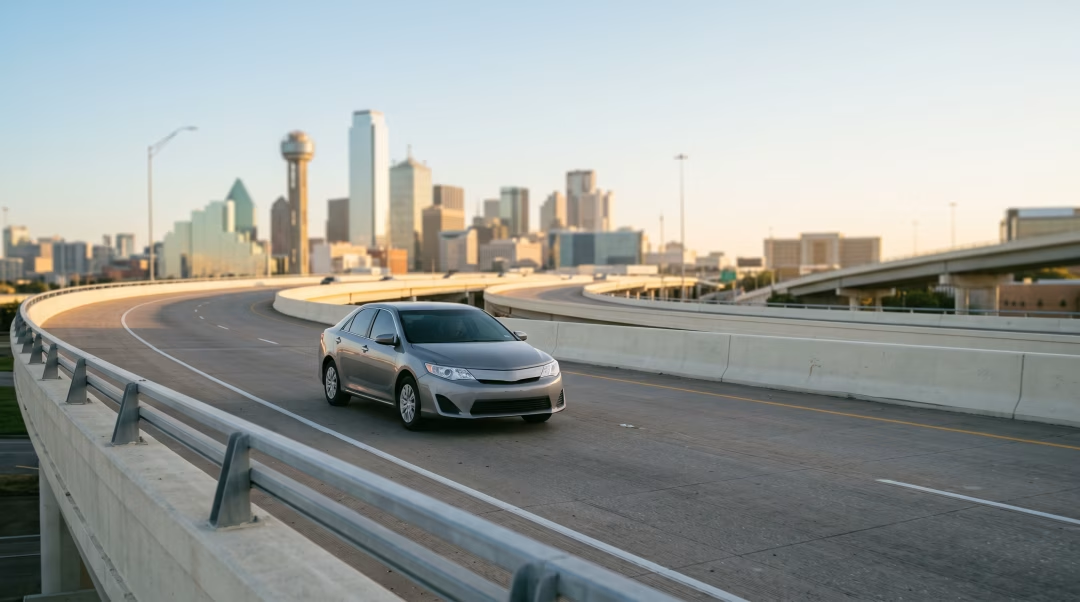
The Dallas area is managed by the North Texas Tollway Authority (NTTA), which operates a vast system of modern, well-maintained roads designed to alleviate traffic on major highways. While incredibly convenient, this convenience comes at a price that varies depending on the road you use, the distance you travel, and how you choose to pay. For anyone moving to Dallas or starting a new commute, getting a handle on these costs is essential.
The major toll roads you will likely encounter in the DFW area include:
- The Dallas North Tollway (DNT)
- President George Bush Turnpike (PGBT)
- Sam Rayburn Tollway (SRT)
- Chisholm Trail Parkway (CTP)
- 360 Tollway
- Lewisville Lake Toll Bridge
Each of these roads is equipped with electronic toll gantries that read a sticker on your windshield (a TollTag) or photograph your license plate. This is the foundation of the two-tiered pricing system.
TollTag vs. ZipCash: A Critical Difference in Cost
The single most effective way to manage toll costs in Dallas is to get a TollTag. A TollTag is a small sticker you place on your windshield that is linked to a prepaid account. When you drive under a toll gantry, the fee is automatically deducted from your account at the lowest possible rate.
If you do not have a TollTag, you will be billed via ZipCash. This system photographs your license plate and mails a bill to the registered owner of the vehicle. However, this convenience comes at a significant premium; ZipCash rates are typically at least 50% higher than TollTag rates, and sometimes more. Over a month of daily commuting, this difference can easily amount to $50, $100, or even more. If you plan to use toll roads regularly, learning how to get a TollTag and save on Dallas toll roads is a non-negotiable first step.
Estimating Your Personal Commute Costs
So, what does this look like in a real-world scenario? Let's imagine a daily commute from a suburb like Frisco to an employment hub like the Dallas Medical District. This trip would likely involve the Dallas North Tollway. A one-way trip during peak hours could cost between $3 and $5 with a TollTag. A round trip would therefore be $6 to $10 per day. Commuting five days a week, your monthly toll budget would need to be between $120 and $200. Without a TollTag, that same commute could cost upwards of $300 per month.
Your actual costs will vary based on your specific start and end points. The best way to get a precise figure is to use the online toll calculator provided by the NTTA. You can input your route and it will show you the exact cost for both TollTag and ZipCash customers. This exercise is a vital part of learning how to build a car budget that accurately reflects your real-world expenses in North Texas.
How Your Vehicle Choice Affects Your Commuting Budget
While you cannot change the price of tolls, you can change other variables in your transportation budget. The vehicle you drive plays a massive role. By choosing a car with better fuel economy, the money you save on gasoline can effectively offset your toll expenses. For example, switching from a vehicle that gets 20 MPG to one that gets 35 MPG can save you hundreds of dollars in fuel costs over the course of a year. That savings can make the decision to take the faster toll road much easier on your wallet.
When you are considering your next vehicle, it is important to estimate fuel costs before choosing a used car. This allows you to see the complete financial picture. A slightly higher car payment for a more efficient vehicle might lead to a lower overall monthly transportation cost when tolls and gas are combined. Our team can help you explore options in our inventory that are known for reliability and great gas mileage, perfect for the daily DFW commuter.
The Risk of Unpaid Tolls
Ignoring toll bills is not a viable option. What starts as a small fee can escalate quickly. The NTTA adds administrative fees to late payments, and if bills remain unpaid, they can be sent to collections. Furthermore, unresolved toll violations can result in a block on your vehicle registration renewal, preventing you from legally driving your car. Understanding how unpaid NTTA tolls affect buying a car is crucial, as these issues can create significant hurdles during the financing process. Keeping your toll account in good standing is just as important as making your car payments on time.
What is the average daily cost for tolls in Dallas?
There is no single average, as costs depend entirely on your route. A short trip on one toll road might be under $2, while a long cross-county commute could easily exceed $10 for a round trip. Budgeting between $5 and $15 per day for a regular commute is a realistic starting point for planning purposes.
Is getting a TollTag really worth the effort?
Absolutely. A TollTag is the single best way to reduce your toll expenses. With rates that are at least 50% lower than the pay-by-mail ZipCash option, the savings are immediate and substantial. For any regular commuter, a TollTag pays for itself very quickly and simplifies the payment process.
Can I still use Dallas toll roads if I do not have a TollTag?
Yes, you can. The system is designed to accommodate all drivers. If you do not have a TollTag, cameras will capture an image of your license plate and the NTTA will mail a bill, known as a ZipCash invoice, to the address where the vehicle is registered. Just be aware that this method is significantly more expensive.
Will unpaid toll bills affect my credit score?
Initially, an unpaid toll bill itself does not get reported to credit bureaus. However, if the bill goes unpaid for an extended period, it can be turned over to a third-party collection agency. At that point, the collection account could be reported to the credit bureaus and may negatively impact your credit score, potentially affecting your ability to secure financing for a vehicle.
How can I find out the exact toll cost for my commute?
The most accurate way is to use the official Toll Rate Calculator on the North Texas Tollway Authority (NTTA) website. You can enter your starting and ending points, and the tool will map the route and break down the cost for each tolling point, showing both the lower TollTag rate and the higher ZipCash rate.
