

How to Choose the Right
Car Seat for Your Used Car
Securing Your Most Precious Cargo in Your New-To-You Vehicle
Choosing a reliable used car is a major step toward providing safe transportation for your family. The next critical step is selecting and correctly installing a child car seat. This decision is just as important as the vehicle itself, as it directly impacts your child's safety on every trip. A used car, especially an older model, might have different features, anchor systems, and interior dimensions than a brand-new vehicle. Understanding how to navigate these differences is key to finding a car seat that not only fits your child perfectly but also installs securely in your specific car, truck, or SUV. This guide will walk you through the essential factors to consider, from car seat types to installation methods, helping you make an informed choice for your family's well-being. Ensuring a proper fit between your child, the car seat, and your vehicle is the ultimate goal.
Navigating the world of child passenger safety can feel overwhelming, but it does not have to be. By focusing on a few key areas, you can confidently select a car seat that provides optimal protection. This detailed guide explores everything you need to know about pairing the right car seat with your used vehicle. We will cover the different types of seats, how to check for compatibility with features like the LATCH system, and the non-negotiable rules for a safe and secure installation every time.
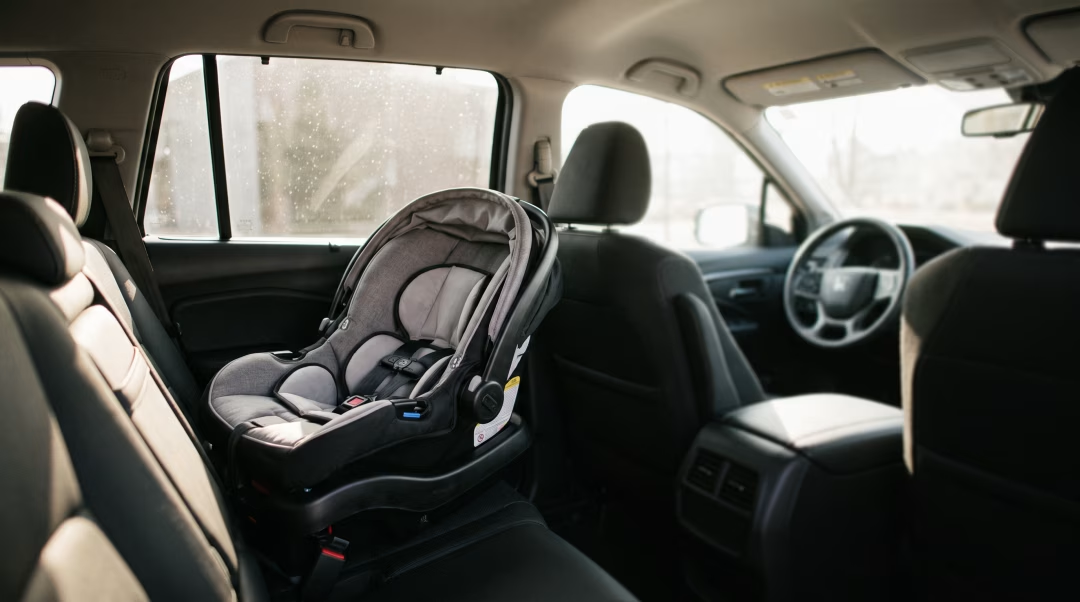
A Comprehensive Guide to Car Seat Selection and Installation
The journey to finding the perfect car seat begins with understanding the different types available and how they correspond to your child's developmental stage. Federal safety standards are rigorous, but the "best" car seat is ultimately the one that fits your child, fits your vehicle, and is used correctly on every single ride. Let's break down the options and the crucial factors that will influence your decision when browsing our used-inventory.
Understanding the Four Main Types of Car Seats
Child safety seats are designed to protect children at specific stages of growth. Using a seat that is inappropriate for your child's age, weight, or height can compromise its effectiveness in a crash.
- Infant Car Seats (Rear-Facing Only): These seats are designed for newborns and small infants, offering a snug and secure fit. They consist of a carrier that clicks into a base that stays in the car, making it convenient to transport your baby without unbuckling them. They must always be installed in a rear-facing position.
- Convertible Car Seats: A versatile and long-lasting option, convertible seats can be used rear-facing for infants and toddlers and then transition to forward-facing as the child grows. While they are a greater initial investment, they can be used for several years, though they are not portable like infant seats.
- All-in-One Car Seats: These "3-in-1" or "4-in-1" seats are designed to be the only seat you will ever need. They transform from a rear-facing seat to a forward-facing seat and then to a high-back or backless booster seat. Their main drawback is their typically larger size, which can be a challenge in smaller vehicles.
- Booster Seats: Once a child outgrows the height or weight limits of their forward-facing seat's harness, they move to a booster. A booster seat's job is to "boost" the child up so that the vehicle's seat belt fits them correctly across the strong bones of their chest and hips. They come in high-back and backless versions.
Matching a Car Seat to Your Used Vehicle
Not every car seat fits well in every vehicle. This is especially true with the wide variety of models, years, and body styles found in the used car market. Before you get pre-qualified for a family vehicle, consider these compatibility factors.
LATCH System vs. Seat Belt Installation: The LATCH system (Lower Anchors and Tethers for Children) was designed to simplify car seat installation. Most vehicles manufactured after September 1, 2002, are required to have LATCH anchors in at least two rear seating positions. When you are looking at a used car, you can check for small plastic buttons or tags on the seat indicating the anchor locations, or feel for the metal bars in the crack where the seat back and bottom cushion meet. However, it is crucial to know that a seat belt installation, when done correctly, is just as safe. Many older vehicles in our sold-inventory have provided safe transport for families for years using the seat belt method. The most important thing is achieving a secure fit, regardless of the method.
Vehicle Size and Interior Space: The physical size of the car seat matters. A bulky all-in-one seat might fit perfectly in a three-row SUV but could make the front seats unusable in a compact sedan. If you are considering a specific vehicle, it is a great idea to measure the back seat or even schedule a test drive and bring your car seat with you to test the fit. Think about how the seat will affect other passengers and whether you will need to fit multiple car seats across one row.
Rear Seat Shape: Some vehicles have steeply sloped or heavily contoured "bucket" style back seats. This can sometimes interfere with getting a car seat installed flat and securely against the vehicle seat. You may need to use pool noodles or a rolled towel to achieve the correct recline angle for a rear-facing seat, but only if both the car seat and vehicle manufacturer permit it in their manuals.
Installation is Everything: Getting It Right
A top-of-the-line car seat is only effective if it is installed correctly. National statistics show that a high percentage of car seats are used improperly, putting children at unnecessary risk. Follow these steps for a safer installation.
- Read the Manuals: You must read two manuals: the car seat instruction manual and your vehicle's owner manual. The vehicle manual will provide crucial information about where to install a car seat, how to use the locking mechanism on your seat belts, and the locations of your LATCH anchors and top tethers.
- Perform the Inch Test: Once installed, grab the car seat at the belt path (where the LATCH strap or seat belt runs through it) and try to move it side-to-side and front-to-back. It should not move more than one inch in any direction. If it does, you need to uninstall it and try again, applying more pressure to the seat as you tighten the belt or strap.
- Check the Harness: After your child is buckled in, the harness straps should be snug. Use the "pinch test": if you can pinch a horizontal fold of webbing at your child's collarbone, the harness is too loose. The chest clip should be positioned at armpit level.
- Seek Professional Help: To be absolutely certain your installation is correct, find a certified Child Passenger Safety Technician (CPST). They can teach you how to install your seat correctly in your vehicle and provide invaluable safety tips. Organizations like Safe Kids Worldwide offer directories of local technicians.
Choosing the right car seat is a vital part of your vehicle ownership journey. Whether you are looking for one of the best used SUVs for families with three kids or a fuel-efficient commuter car, our team is here to help you find a vehicle that meets your needs. If you have questions about a specific car's features, do not hesitate to contact us.
Where is the safest place for a car seat in a used car?
The back seat is always the safest place for any child under 13. The center of the back seat is statistically the safest position, as it is furthest from any potential point of impact. However, a secure installation is more important than location. If you cannot get a tight installation in the center seat (some vehicles lack LATCH anchors there or have a hump), it is safer to install the car seat correctly in one of the outboard (side) positions.
Can I use the LATCH system in the middle seat?
It depends entirely on your vehicle. Some cars allow you to "borrow" the innermost lower anchors from the two outboard seats to install a seat in the middle, but most do not. You must check your vehicle's owner manual to see if this is permitted. If the manual does not explicitly state you can, you must use the vehicle's seat belt for a middle seat installation.
How do I know if my used car has the LATCH system?
For vehicles made after September 2002, look for small, round plastic buttons or tags on the seat cushion that mark the location of the lower anchors. You can also slide your hand into the crevice between the seat back and bottom cushion to feel for the small, horizontal metal bars. The top tether anchor is usually on the rear shelf behind the headrest, on the back of the seat, or sometimes on the floor or ceiling of an SUV or minivan.
Do car seats expire? Why?
Yes, all car seats have an expiration date, typically between 6 and 10 years from the date of manufacture. You can find this date printed on a sticker on the seat or molded into the plastic shell. They expire because the plastic can degrade over time due to exposure to sunlight and extreme temperatures, making it brittle and less likely to perform as designed in a crash. Additionally, safety standards and technology are constantly improving.
Is it okay to install a car seat with the vehicle's seat belt instead of LATCH?
Absolutely. A car seat installed correctly with a vehicle's seat belt is equally as safe as one installed with the LATCH system. LATCH was created to make installation easier, not necessarily safer. The most important thing is to achieve a secure fit where the seat moves less than one inch at the belt path. Never use both the LATCH system and the seat belt at the same time unless the car seat manufacturer specifically allows it.
