

How to Decode the
VIN on a Used Car
Every vehicle has a unique story, and the key to unlocking it is the Vehicle Identification Number, or VIN. Think of this 17-character code as the car's fingerprint—a one-of-a-kind identifier that contains a wealth of information about its history and specifications. For anyone shopping for a pre-owned vehicle, learning how to decode a VIN is one of the most powerful tools at your disposal. It allows you to verify details provided by the seller, understand the vehicle's origins, and uncover crucial information about its past. Understanding what each character means can transform you from a hopeful buyer into a confident, informed shopper. This knowledge empowers you to look beyond the shiny paint and see the vehicle for what it truly is, helping you make a decision that you will be happy with for years to come. It is your first step toward true peace of mind in the used car buying process.
Moving beyond the basic sticker price and visual inspection is what separates savvy buyers from the rest. By taking a few moments to understand and decode a used car's VIN, you are performing your own initial background check. This simple step helps confirm that the vehicle's trim level, engine size, and even model year are accurate. It is a critical layer of transparency that protects you and helps you verify you are getting exactly what you are paying for, ensuring a smarter and more secure purchase.
Your Comprehensive Guide to Understanding a Vehicle Identification Number
The VIN is more than just a random assortment of letters and numbers; it is a standardized code that manufacturers have used since 1981 to catalog every car, truck, and SUV. This system creates a unique identifier that stays with the vehicle for its entire life. Decoding it reveals specific details about its manufacturing journey and its core characteristics. Knowing how to read this code is an essential skill for any prospective car owner, giving you access to information that is not always obvious during a visual inspection or test drive. This guide will walk you through the process, character by character, so you can approach your next vehicle purchase with expert-level insight.
Locating the VIN on a Used Car
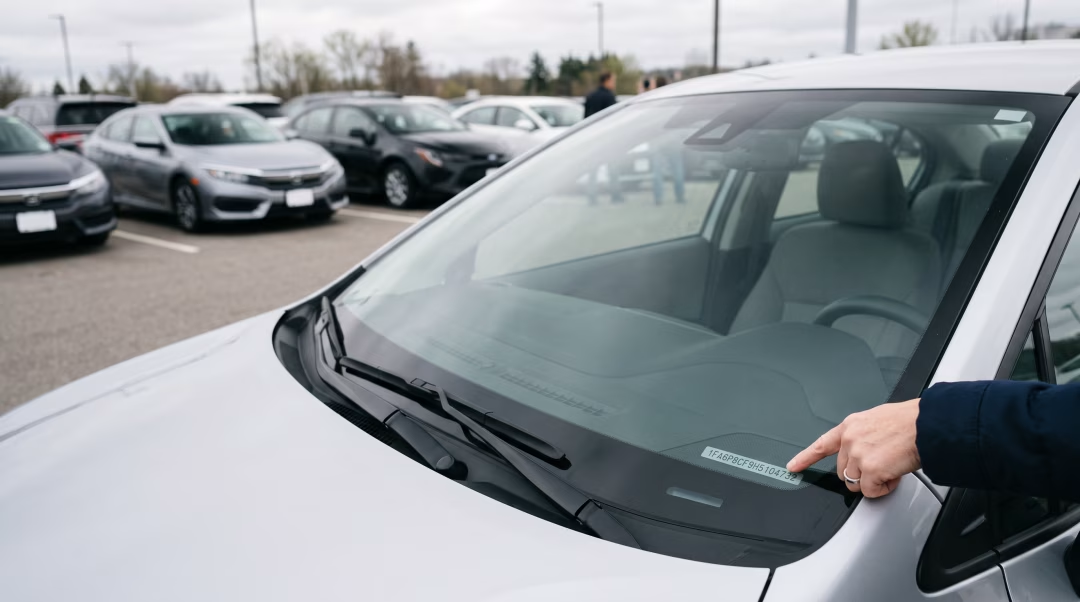
Before you can decode the VIN, you need to find it. Manufacturers place the VIN in several locations on a vehicle to ensure it can be found even if one area is damaged. When you are looking at a car on our lot or anywhere else, check these common spots:
- The driver's side of the dashboard, visible through the windshield from the outside.
- A sticker or plate on the driver's side door jamb or door post.
- On the vehicle's title, registration, and insurance documents.
- Sometimes etched on the engine block, transmission, or on various body panels.
It is a good idea to check the VIN in multiple locations. The numbers should match perfectly. Any discrepancy could be a red flag that warrants further investigation.
Decoding the VIN: A Character-by-Character Breakdown
The 17-character VIN is divided into three main sections. Each part tells a different piece of the vehicle's story. It is important to note that the letters I, O, and Q are never used in a VIN to avoid confusion with the numbers 1 and 0.
Characters 1-3: World Manufacturer Identifier (WMI)
The first three characters identify the vehicle's manufacturer. This is known as the WMI.
- Position 1: This indicates the country where the vehicle was assembled. For example, 1, 4, or 5 means the United States, 2 is for Canada, 3 is for Mexico, J is for Japan, and W is for Germany.
- Position 2: This specifies the manufacturer. For instance, 'G' often stands for General Motors and 'F' for Ford. This character is assigned by the Society of Automotive Engineers.
- Position 3: This character, in combination with the first two, identifies the specific vehicle type or manufacturing division, such as sedan, SUV, or truck.
Characters 4-9: Vehicle Descriptor Section (VDS)
These six characters provide a detailed description of the vehicle itself. The manufacturer determines how they use these characters to encode information, but it typically includes:
- Positions 4-8: Information about the car model, body style, engine type, transmission, and restraint systems (like airbags and seat belts). This is where you can verify if a car advertised as a V8 model actually has one, for example.
- Position 9: This is the "check digit." It is the result of a complex mathematical formula that uses all other characters in the VIN. Its purpose is to verify the authenticity of the VIN and detect fraudulent numbers. If the check digit does not match the calculated result, the VIN is likely incorrect or fake.
Characters 10-17: Vehicle Identifier Section (VIS)
The final eight characters are the VIS, which uniquely identifies the specific vehicle in question.
- Position 10: This indicates the model year. The code uses a combination of letters and numbers. For example, 'A' was 2010, 'B' was 2011, and so on. Note that this is the model year, not necessarily the year it was manufactured.
- Position 11: This character reveals which manufacturing plant assembled the final vehicle. Each automaker has its own set of plant codes.
- Positions 12-17: These are the vehicle's unique serial number. This is the sequential number of the vehicle as it rolled off the assembly line.
Beyond the Code: What a Full VIN Check Reveals
While decoding the characters gives you the vehicle's blueprint, the VIN is also the key to its complete life story. Using the VIN with a reputable service provides a detailed vehicle history report. This report compiles data from DMVs, insurance companies, and repair shops to give you a comprehensive overview of the car's past. A history report can tell you about:
- Title History: It shows if the car has ever been issued a branded title, such as "salvage," "rebuilt," or "flood damage."
- Accident Records: The report may list reported accidents, from minor fender-benders to more serious collisions.
- Odometer Readings: It tracks mileage at various points, like inspections and title transfers, helping you spot potential odometer rollback fraud.
- Service and Repair Information: Some reports include maintenance records, giving you insight into how well the car was cared for.
- Open Recalls: You can see if the vehicle has any outstanding safety recalls that need to be addressed.
Checking the VIN is a non-negotiable step in the used car buying process. It offers protection, transparency, and the confidence needed to choose a reliable vehicle. Once you find a car in our used inventory that you like, we encourage you to use its VIN to do your research. If you have questions about financing or want to see what options might be available to you, you can get pre-qualified online or read through our financing frequently asked questions page for more information. Our team is always here to help you navigate the process. Feel free to contact us with any questions.
Can I find out the original owner from a VIN?
No, a VIN does not contain personal information about previous owners due to privacy laws. While a vehicle history report will tell you how many owners a car has had and the type of ownership (personal, lease, fleet), it will not disclose names, addresses, or other private data.
Does a VIN tell me all the options a car came with?
The VIN itself provides general information like the model, engine, and body style. To get a complete list of factory-installed options and packages, you would typically need to use a specialized VIN decoder service, sometimes offered by the manufacturer or third-party companies, which can provide a "build sheet" for that specific serial number.
Is it possible for a VIN to be fake or altered?
While rare, it is possible for a VIN to be tampered with on a stolen vehicle or one with a hidden history. This is why the "check digit" (the 9th character) is so important, as it helps verify the VIN's authenticity. It is also why you should always compare the VIN on the dashboard with the one on the door jamb and title documents.
What is the difference between decoding a VIN and getting a vehicle history report?
Decoding a VIN is the act of translating the 17 characters to understand the car's factory specifications like its model year, manufacturing plant, and engine type. Getting a vehicle history report is using that VIN to access a database of records from its entire life, including title history, accident reports, and odometer readings.
Where can I get a free VIN check?
Several online resources offer free VIN decoding services that provide the basic manufacturing details. The National Highway Traffic Safety Administration (NHTSA) also offers a free tool to check for open safety recalls. For a comprehensive vehicle history report detailing accidents and title issues, you typically need to use a paid service like CarFax or AutoCheck.
