

How to Read and
Understand Your Dashboard Warning Lights
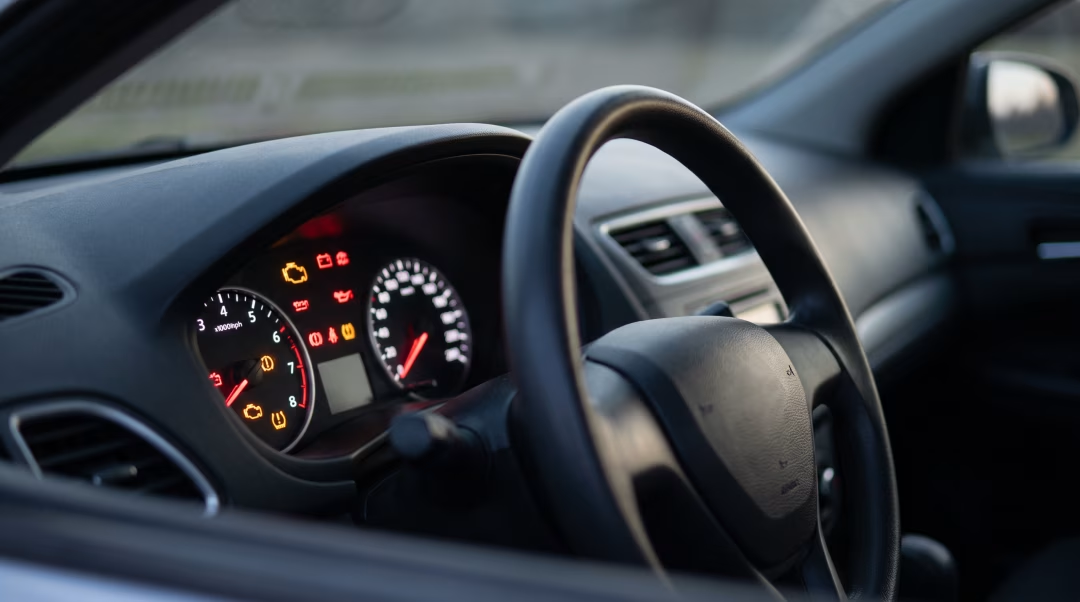
Your vehicle's dashboard is a complex communication hub, constantly monitoring vital systems to keep you safe on the road. When a symbol illuminates, it is your car's way of telling you something needs attention. Understanding how to read these dashboard warning lights is a crucial part of responsible car ownership. These colorful icons are not just decorations; they are important indicators of your vehicle’s health, ranging from simple reminders to critical alerts about the engine, brakes, or safety systems. Ignoring them can lead to more significant and costly repairs down the road, or worse, compromise your safety. This guide will help you decode the most common symbols, understand their urgency based on color, and know what steps to take next. Learning this visual language empowers you to make informed decisions, whether you are driving your current car or evaluating a potential purchase from our used inventory.
Knowing what your car is trying to tell you builds confidence behind the wheel. At our dealership, we believe an informed driver is a happy driver. Every vehicle in our used inventory undergoes a thorough inspection to ensure its systems are in good working order, giving you peace of mind. Should you have questions about financing a reliable vehicle, our team in our financing area is here to walk you through the process and explain your options clearly and respectfully.
Decoding the Colors: A Traffic Light for Your Car
The first step in understanding your dashboard is recognizing the color code. Just like a traffic light, the colors of the warning icons indicate the severity of the issue and the required action. Think of it as your car’s way of prioritizing information for you.
- Red Warning Lights: A red light signals a potentially serious problem or a critical safety issue that requires immediate attention. If you see a red warning light, it is safest to pull over as soon as you can, turn off the engine, and assess the situation. Driving with a red warning light illuminated could cause severe damage to your vehicle or put you at risk.
- Yellow or Amber Warning Lights: These lights typically indicate that a vehicle system needs service or repair soon. While not usually an emergency, a yellow or amber light should not be ignored. It could be a sensor failure, a maintenance reminder, or a non-critical system issue. You should have the vehicle checked by a qualified mechanic at your earliest convenience.
- Green or Blue Indicator Lights: These are not warning lights. Instead, they are purely informational, letting you know that a specific vehicle system is active and operating as it should. Common examples include your headlights, high beams, or cruise control.
Common Red Warning Lights (Immediate Action Required)
When one of these lights appears, find a safe place to stop. Continuing to drive could be dangerous and lead to expensive engine, transmission, or brake damage.
Engine Temperature Warning Light
This icon, which often looks like a thermometer floating in liquid, indicates that your engine is overheating. This is a critical issue. An overheating engine can suffer catastrophic damage, including a cracked block or warped cylinder head. Pull over immediately, turn off the engine, and let it cool down completely before attempting to check the coolant level. Never open a hot radiator cap, as the pressurized steam can cause severe burns.
Oil Pressure Warning Light
Often resembling an old-fashioned oil can, this light signals a loss of oil pressure. This is one of the most serious warnings your vehicle can give. Oil pressure is essential for lubricating the moving parts of your engine. Without it, the engine can seize in a matter of minutes. Turn the engine off immediately and do not restart it. The vehicle will need to be towed to a service center for diagnosis.
Brake System Warning Light
This light usually appears as the word "BRAKE" or an exclamation point inside a circle. It can mean several things: the parking brake is engaged, the brake fluid level is low, or there is a more serious issue within the brake system itself. If the light stays on after you have fully disengaged the parking brake, have your vehicle inspected immediately as your stopping power could be compromised.
Battery / Charging System Light
This icon, shaped like a car battery, indicates a problem with the vehicle's electrical charging system. While your car may run for a short time on battery power alone, it will eventually die. The problem is often a failing alternator, a broken serpentine belt, or bad wiring. It is best to drive directly to a service center or a safe location before the vehicle loses all electrical power.
Common Yellow/Amber Warning Lights (Proceed with Caution)
A yellow or amber light is a call to action, but not necessarily an emergency stop. It is your car’s way of saying, "Hey, let's get this checked out soon."
Check Engine Light
Perhaps the most misunderstood icon, the check engine light (shaped like an engine) can illuminate for hundreds of different reasons, from a loose gas cap to a failing catalytic converter. If the light is steady, you can generally continue driving, but you should schedule a diagnostic check. If the light is flashing, it indicates a more severe problem, like an engine misfire, that could damage expensive components. In this case, you should reduce your speed and have the vehicle serviced as soon as possible. Driving with a flashing check engine light can be one of the key warning lights that should stop you from buying a used car.
Tire Pressure Monitoring System (TPMS)
This light, which looks like a horseshoe with an exclamation point inside, means that the pressure in one or more of your tires is significantly low. Driving on under-inflated tires is unsafe, affects handling, and can reduce fuel economy. Pull over when it is safe and visually inspect your tires. Use a tire gauge to check the pressure and inflate them to the recommended level found on the sticker inside your driver's door jamb.
Anti-lock Braking System (ABS) Light
When the letters "ABS" light up, it means there is an issue with the anti-lock braking system. Your regular brakes will still function, but the anti-lock feature, which prevents the wheels from locking up during a hard stop, will be disabled. You should have the system inspected to restore this important safety feature.
Dashboard Lights and Your Used Car Search
Understanding these lights is especially important when you are in the market for a pre-owned vehicle. During a test drive, pay close attention to the dashboard. All the lights should illuminate for a few seconds when you first turn the key and then go out. If a warning light remains on, it is a clear sign that the vehicle has an issue that needs to be addressed. Do not let a seller tell you "it's just a sensor." Any active warning light warrants a professional pre-purchase inspection. When you schedule a test drive with us, we encourage you to ask questions. Our team is here to provide clarity and help you find a vehicle you can feel confident in. If you are thinking about your budget, you can even get pre-qualified to better understand your financing options before you shop.
Is it safe to drive with the check engine light on?
If the check engine light is steady, it is generally safe to continue driving, but you should have the vehicle diagnosed as soon as possible. The issue could be minor, like a loose gas cap, or more significant. However, if the light is flashing, it indicates a serious problem, such as an engine misfire, that could damage your catalytic converter. In this case, you should reduce your speed and have the car serviced immediately.
What is the difference between the oil pressure light and a low oil level light?
These two are often confused but signal very different issues. The red oil pressure light (oil can symbol) is a critical warning of low oil pressure, which can destroy an engine quickly. You should stop the car immediately. A low oil level light, which may be yellow and show an oil can with a wavy line, is a maintenance reminder that you need to add oil soon. It is less urgent but still important to address.
Why did my tire pressure (TPMS) light come on when the weather got cold?
Air contracts when it gets cold, which causes the pressure inside your tires to drop. It is very common for the TPMS light to come on after a sudden drop in ambient temperature, such as the first cold snap of the season. This is a normal function of the system. You should check your tire pressures with a gauge and add air as needed to bring them back to the manufacturer's recommended level.
My battery light is on, but my car starts. What does this mean?
The battery light does not actually indicate the condition of the battery itself, but rather the performance of the charging system. If this light is on while the engine is running, it usually means the alternator is no longer charging the battery. The car is running solely on the battery's stored power, which will eventually be depleted, causing the car to stall. You should seek service immediately.
What should I do first when a red warning light appears on my dashboard?
The first and most important step is to ensure your safety. Signal, and pull over to a safe location like a shoulder or parking lot as soon as possible. Turn off the engine to prevent further potential damage. Once you are safely stopped, you can try to identify the light by consulting your vehicle's owner's manual. For critical warnings like oil pressure or engine temperature, do not attempt to restart the engine.
