

How to Spot a
Flood-Damaged Car in Texas
Texas weather is known for its unpredictability, and severe storms or hurricanes can leave a trail of flooded vehicles. Unfortunately, some of these water-damaged cars are cleaned up and put back on the market, posing a significant risk to unsuspecting buyers. A car that has been submerged can suffer from a host of hidden problems, from a compromised electrical system and rusted frame to mold growth and engine failure. These issues may not be apparent at first glance but can lead to expensive repairs and serious safety concerns down the road. Knowing the tell-tale signs of flood damage is one of the most important skills a used car shopper can have in the Lone Star State. This guide will empower you with the knowledge to inspect a vehicle like a pro and protect yourself from making a costly mistake. Being informed is your best defense against a bad investment.
While a shiny exterior and a low price might be tempting, the real story of a used car is often found in the details. At our dealership, we carefully inspect every vehicle in our used inventory, but we believe every buyer should be equipped with the skills to perform their own initial check. Understanding how to identify potential flood damage gives you confidence and control during your car search. This knowledge not only helps you avoid problem vehicles but also makes you a more discerning and prepared customer.
Your Comprehensive Guide to Identifying Water-Damaged Vehicles
Purchasing a used car is a major decision. The last thing you want is to discover that your new-to-you vehicle has a hidden, water-logged past. Flood damage can be expertly concealed, but it almost always leaves clues behind for those who know where to look. Follow this detailed checklist to methodically inspect any potential purchase.
Step 1: Start with the Paperwork
Before you even see the car in person, do your homework. A Vehicle History Report (VHR) from a service like CarFax or AutoCheck is your first line of defense. When you read a vehicle history report, look for specific branding on the title. A "Flood," "Salvage," or "Rebuilt" title is a major red flag. However, a clean report is not a free pass. Sometimes, cars are repaired and sold before an insurance claim is processed, or the damage occurs in a state where title branding laws are different. This practice, known as "title washing," is why a physical inspection is non-negotiable.
Step 2: Trust Your Senses
Your nose can be one of your most effective tools. When you first open the car door, take a deep breath. A persistent musty, moldy, or mildew-like odor is a classic sign that the interior has been soaked. Be wary if the car has an extremely strong air freshener or disinfectant scent, as this could be an attempt to mask an underlying problem. Check out our guide on what smells in a used car could signal a problem for more insights. Also, listen carefully during the test drive for any unusual sounds from the engine or other components that could indicate water-related corrosion or damage.
Step 3: Conduct a Thorough Interior Inspection
This is where you need to be a detective. Water gets everywhere, and the evidence is often found in the places people forget to clean. Take your time and check the following areas meticulously.
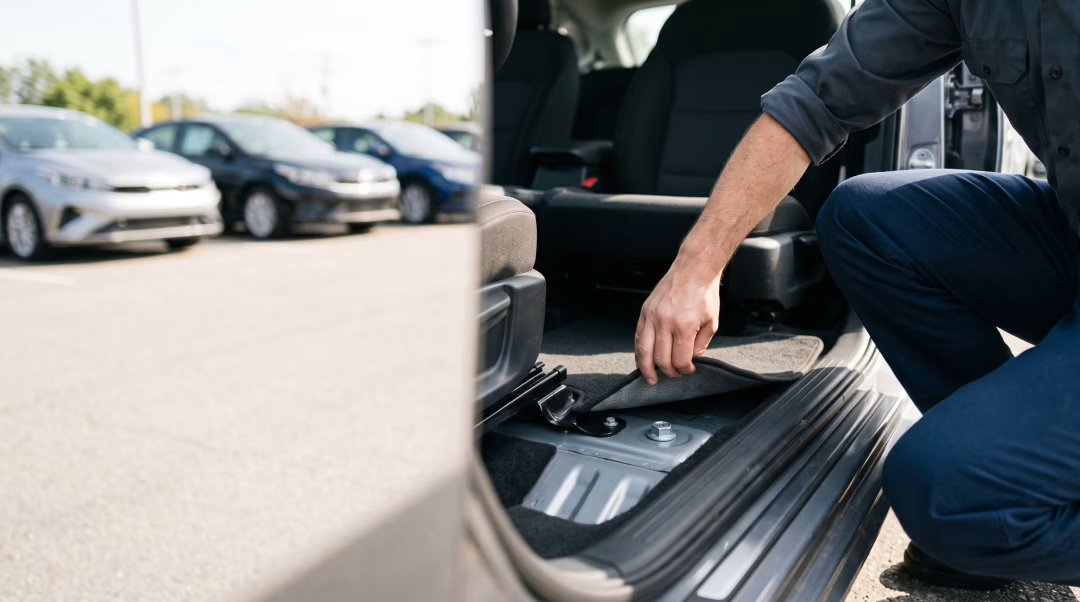
- Carpets and Upholstery: Press your hand firmly into the carpet in several spots, especially in the footwells and under the seats. Feel for any dampness. Pull back the carpet in a few inconspicuous areas to look at the padding and floor pan underneath. You are looking for moisture, caked-on mud, silt, or rust. Check for mismatched, unusually new, or ill-fitting carpets, which could indicate a recent replacement. Look for water stains or discoloration on the seats and door panels.
- Under the Dashboard: Take a flashlight and look at the wiring and unpainted metal brackets under the dashboard. These areas are rarely cleaned. Flakes of rust, mud, or debris on wires and brackets are clear indicators of water intrusion.
- Seat Mounting Bolts: Inspect the bolts that hold the seats to the floor. These factory-installed bolts should not be rusty. The presence of rust suggests that water pooled on the vehicle's floor. Also check the seat tracks for rust or debris.
- Spare Tire Well: Do not forget to check the trunk. Lift the trunk floor panel and remove the spare tire. This area is a low point where water collects and often goes unnoticed during a quick cleanup. Look for water, rust, mud, or silt.
For more tips on this process, review our detailed article on how to inspect a used car interior.
Step 4: Examine the Exterior and Under the Hood
The inspection continues on the outside. Look for signs that do not align with the vehicle's age and mileage.
- Lights: Check the headlights, taillights, and fog lights for any internal moisture, condensation, or a visible water line. Seals can fail in a flood, trapping water inside the housing. Foggy lenses on a late-model car are a significant warning sign.
- Engine Bay: Pop the hood and use a flashlight to examine the engine compartment. Look for dirt, silt, and debris in unusual places, such as in the crevices of the engine block or on top of the alternator. Check for rust on unpainted metal components, screws, and brackets. Pull the oil dipstick; if the oil looks milky or like coffee with cream, it may be contaminated with water.
- Undercarriage: Look underneath the car for excessive or premature rust on the frame, exhaust system, and brake components. While some surface rust can be normal, flaking or heavy corrosion is a bad sign.
Step 5: The Critical Test Drive and Electronics Check
Modern cars are packed with complex electronics that are extremely vulnerable to water damage. A thorough test drive is crucial for uncovering these hidden issues. Before you start driving, turn the key to the "on" position without starting the engine. All the dashboard warning lights should illuminate and then turn off. If any stay on or fail to light up, it could signal a problem. During the drive, methodically test every single electronic function:
- Air Conditioning and Heater
- Radio and Infotainment System
- Power Windows, Locks, and Mirrors
- Interior and Exterior Lights
- Power Seats and Sunroof
Flickering lights, a radio that cuts out, or windows that operate slowly can all be symptoms of corroded wiring and failing components due to water exposure.
Step 6: Get a Professional Opinion
If you have any suspicions after your own inspection, or even if the car seems perfect, the final step should always be a professional evaluation. You should always consider if you should get a pre-purchase inspection from a qualified, independent mechanic. Inform them of your concerns about potential flood damage. They have the tools and experience to lift the car and spot problems you might miss. This small investment can save you thousands of dollars and give you true peace of mind about your purchase.
Frequently Asked Questions About Flood-Damaged Cars
Can a vehicle history report always detect flood damage?
No, a vehicle history report is not foolproof. If a car was flooded and repaired with cash without an insurance claim, or if it was moved from a state with different title regulations, the flood damage may not appear on the report. This is why a thorough physical inspection is always essential.
What is the difference between a "Flood Title" and a "Salvage Title" in Texas?
In Texas, a "Flood Title" is specifically issued to vehicles that have been damaged by water. A "Salvage Title" is issued when a vehicle has been damaged to the point where the cost of repairs exceeds its value, which can be for many reasons including flood, accident, or hail. A flooded car will often be given a salvage title first, which can then be converted to a "Rebuilt" title after repairs, but the history of damage remains.
Is it ever a good idea to buy a car with known flood damage?
Generally, it is best to avoid vehicles with a history of flood damage. The long-term effects on the electrical system, engine, and frame are unpredictable and can lead to recurring, expensive problems. Even if repaired and carrying a "Rebuilt" title, these cars have a significantly lower resale value and can be difficult to insure.
How long after a flood do these damaged cars start appearing on the market?
It can take several weeks to a few months for flood-damaged vehicles to start showing up on used car lots or in private sales. The process involves the cars being collected by insurance companies, sold at auction, transported, cleaned up, and retitled. Be especially vigilant in the months following a major storm or flooding event in the region.
What should I do if I suspect a dealership is knowingly selling a flood-damaged car without disclosure?
In Texas, it is illegal for a dealer to fail to disclose that a vehicle has a branded title, such as "Flood" or "Salvage." If you have evidence that a dealer is not being transparent, you should walk away from the deal and consider reporting the dealership to the Texas Department of Motor Vehicles (TxDMV) and the Office of the Attorney General.
