

How to Tell if a
Used Car's Transmission is Slipping
Recognizing the Early Warnings of Transmission Trouble
When you are considering a pre-owned vehicle, the transmission is one of the most critical and expensive components to evaluate. A slipping transmission is a serious issue where the system fails to properly engage gears, leading to a loss of power and potential safety hazards. Understanding how to tell if a used car transmission is slipping can save you from costly future repairs and a great deal of stress. The symptoms can be subtle at first, often appearing as a slight hesitation or an unusual sound, but they rarely get better on their own. Learning to identify these red flags during your initial inspection and test drive is a vital skill for any used car shopper. This knowledge empowers you to make a more informed decision, helping you choose a reliable vehicle that you can depend on for years to come. Our goal is to equip you with the insights needed to spot these signs confidently.
Now that you know some of the key indicators of potential transmission issues, you are better prepared to evaluate any used car with a critical eye. A thorough test drive is your best opportunity to observe the vehicle's performance firsthand. By paying close attention to how the car shifts, sounds, and responds to your commands, you can detect problems that are not visible from the outside. Remember, identifying a potential issue is the first step toward making a smart purchase. We believe in transparency and helping our customers find the right vehicle for their needs.
A Deep Dive into Diagnosing a Slipping Transmission
The transmission is the heart of your vehicle's drivetrain, responsible for transferring power from the engine to the wheels. Whether automatic or manual, its health is paramount to the car's performance and reliability. A "slipping" transmission means the internal components, like clutches or bands, are worn and can no longer hold the gear securely. This causes the engine's RPMs to rise without a corresponding increase in the vehicle's speed. Imagine pressing the gas pedal and hearing the engine roar, but the car barely accelerates—that is the classic sensation of a slipping gear. This problem not only affects performance but can also lead to complete transmission failure if left unaddressed. Before you get pre-qualified for a loan, it is crucial to know what to look for to avoid inheriting someone else's expensive mechanical problems.
Key Symptoms of a Failing Transmission
Being able to spot the signs of transmission slippage can make all the difference when shopping for a used vehicle. These symptoms can range from barely noticeable to glaringly obvious. Keep your senses tuned during your evaluation and test drive.
- Delayed or Hard Shifting: One of the most common signs is a noticeable pause or a jarring thud when the car shifts from one gear to the next. When you shift from Park to Drive, it should engage smoothly within a second or two. A long delay or a harsh clunk could signal internal problems.
- Unusual Noises: A healthy transmission is nearly silent. If you hear whining, humming, or buzzing sounds that change pitch as the gears shift, it could be a sign of trouble. Clunking or grinding noises are even more serious red flags indicating significant internal wear.
- A Burning Smell: Transmission fluid has a uniquely sweet or tart smell. If you detect a burnt aroma, it often means the fluid is overheating. Overheating breaks down the fluid's lubricating properties and is a primary cause of transmission failure. This smell is a serious warning sign.
- Check Engine Light: While the check engine light can indicate many different issues, modern vehicles have sophisticated sensors that can detect transmission problems. If the light is on, a mechanic can pull the specific trouble codes to see if they are related to the transmission's solenoids, speed sensors, or torque converter.
- Vehicle Feels Underpowered: If the car struggles to accelerate or feels sluggish and weak, the transmission may not be transferring power effectively. This lack of response is a classic symptom of internal slipping.
- Inability to Go in Reverse: Difficulty or failure to engage the reverse gear is a specific and serious sign of transmission trouble that often points to specific internal component failure.
How to Check for Slipping During Your Test Drive
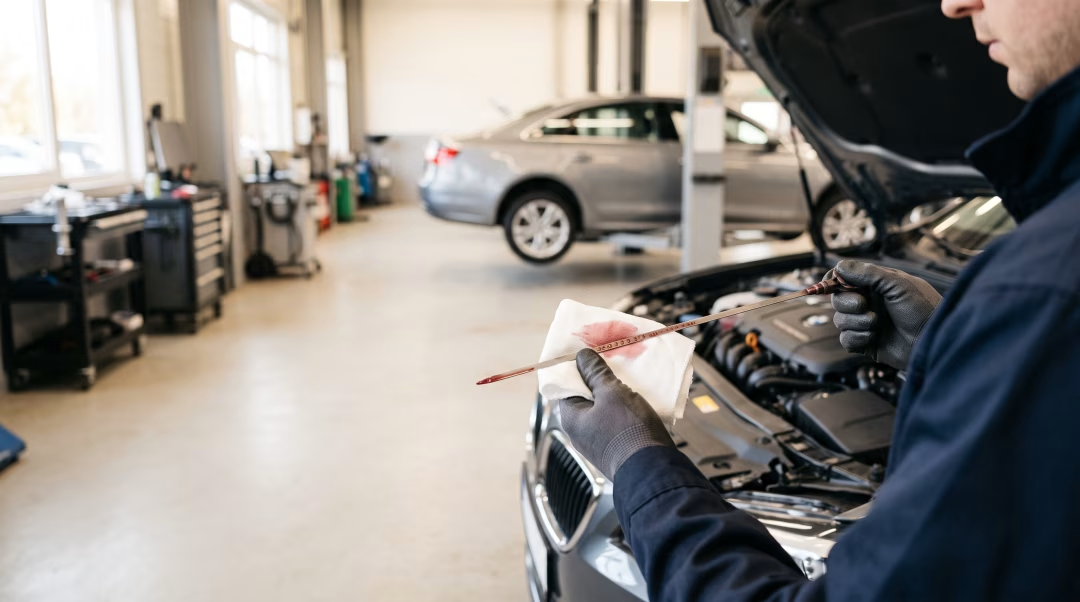
Your test drive is the perfect time to put the transmission through its paces. Do not be timid; you need to see how it performs under various conditions. Start with the radio off so you can listen carefully to the vehicle. First, check the transmission fluid if the car has a dipstick. The fluid should be reddish-pink and translucent, not brown, black, or gritty. A burnt smell from the dipstick is a major red flag. Once on the road, accelerate gently from a complete stop and pay attention to the smoothness of the shifts. Then, try more moderate acceleration to see how it responds under load. Find a safe, open road to test acceleration to highway speeds. The shifts should be crisp and timely. If possible, drive up a slight incline, which puts more strain on the transmission and can reveal slipping that is not apparent on flat ground. Finally, find a safe place to test the transition from Drive to Reverse and back. Any significant hesitation or clunking is cause for concern.
What Causes a Transmission to Slip and Why It Matters
Several factors can lead to a slipping transmission, with the most common being low or burnt-out fluid. Transmission fluid is the lifeblood of the system, acting as both a lubricant and a hydraulic fluid that facilitates gear changes. When it is low, components overheat and wear out prematurely. Other causes include worn internal parts like clutch plates, bands, or seals, as well as failing solenoids that control the fluid flow. A faulty torque converter can also mimic the symptoms of slipping. Ignoring these signs is not an option. A slipping transmission is a safety issue, as the vehicle may not accelerate when you need it to, such as when merging into traffic. Furthermore, what starts as a minor slip can quickly cascade into a complete transmission failure, which is one of the most expensive repairs a car can need, often costing thousands of dollars.
Peace of Mind with Our Vehicles
We understand that the condition of the transmission is a major concern for anyone browsing our used inventory. That is why we are committed to transparency and quality. Every vehicle on our lot undergoes a thorough inspection process where major components, including the engine and transmission, are carefully evaluated. We strive to provide reliable transportation options for our community. If you ever have questions about a specific vehicle or our inspection process, do not hesitate to contact us. Our team is here to provide the answers you need to shop with confidence.
Can a slipping transmission be fixed?
Yes, it often can be, but the cost and complexity vary widely. Sometimes, the issue can be resolved with a fluid and filter change or by replacing a faulty solenoid. However, in many cases, slipping indicates significant internal wear that requires a partial or complete rebuild of the transmission, which is a major and expensive repair.
Is a car with a slipping transmission safe to drive?
It is generally not recommended. A slipping transmission can be unpredictable, failing to provide power when you need it most, such as merging onto a highway or pulling out into traffic. This can create a significant safety hazard. It is best to have the vehicle inspected by a professional immediately.
How much does it cost to fix a slipping transmission?
The cost can range from a couple of hundred dollars for minor repairs like a fluid change or sensor replacement to several thousand dollars for a complete rebuild or replacement. The final cost depends on the vehicle's make and model and the extent of the internal damage.
Will a slipping transmission show up on a vehicle history report?
Not usually. A vehicle history report tracks things like accident history, title status, and reported odometer readings. It does not typically include detailed mechanical service records unless a major repair was part of a reported insurance claim. You cannot rely on a history report to diagnose mechanical health.
What is the difference between a transmission slipping and hard shifting?
Slipping is when the engine revs up, but the car does not accelerate accordingly, as if the gear is not fully engaged. Hard shifting refers to a noticeable clunk or jolt when the transmission changes gears. While both are signs of a problem, hard shifting can sometimes be a less severe issue related to fluid pressure or electronics, whereas slipping often points to worn internal friction components.
