

Is It Smart to Drain Savings for
a Bigger Down Payment on a Car?
Deciding on the right down payment for a used car is a crucial financial step. You have likely heard that a larger down payment is always better. It can lower your monthly payments, reduce the total interest you pay, and may improve your financing options. However, this advice often overlooks a critical question: where is that money coming from? If putting more money down means depleting your emergency savings, the decision becomes much more complex. A car is a necessity for many, but so is having a financial safety net for life’s unexpected challenges. This page will help you navigate this important choice, weighing the immediate benefits of a large down payment against the long-term security of maintaining a healthy savings account. Understanding the pros and cons will empower you to make a decision that aligns with your overall financial well being, not just your desire for a new vehicle.
Finding the perfect balance between a significant down payment and a secure savings account is key to a smart vehicle purchase. There is no single answer that fits everyone; the right path depends entirely on your unique financial circumstances, from your job stability to your monthly budget. By carefully considering the risks and rewards, you can confidently structure a car deal that provides reliable transportation without creating unnecessary financial vulnerability. Let us explore the factors you should evaluate to make the best choice for your situation.
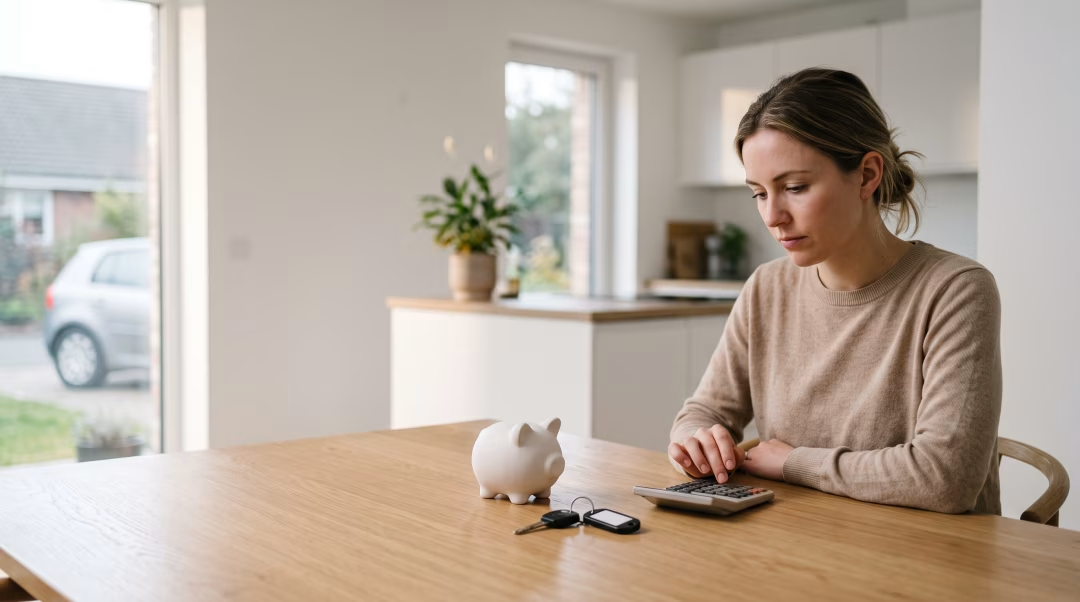
The Down Payment Dilemma: Financial Security vs. Lower Car Payments
When you are ready to browse our used inventory and find your next vehicle, the conversation inevitably turns to financing. One of the biggest levers you can pull in this process is the size of your down payment. A substantial down payment is often presented as the wisest move, and in many ways, it is. But when that down payment comes at the cost of your entire savings account, you are trading one form of financial health for another. The goal is to achieve both: an affordable car payment and a resilient personal budget. Let us break down the argument for a larger down payment and the critical reasons to protect your emergency fund.
The Compelling Advantages of a Larger Down Payment
Putting more money down upfront has several powerful benefits that can make your car loan much more manageable over its lifespan. These advantages are why it is such common advice. Understanding them is the first step in your decision-making process.
- Lower Monthly Payments: This is the most immediate and noticeable benefit. Every extra dollar you put down is a dollar you do not have to finance. A lower loan principal directly translates to a smaller, more manageable monthly payment, freeing up cash flow for other necessities. You can explore how different amounts affect your payment in our financing area.
- Reduced Total Interest Cost: Because you are borrowing less money, the total amount of interest you pay over the life of the loan will be lower. Even with the same interest rate, financing a smaller amount means the lender earns less interest from you, saving you hundreds or even thousands of dollars in the long run.
- Mitigating Negative Equity: A new or used car begins to depreciate the moment you drive it off the lot. A small down payment can mean you owe more on the loan than the car is actually worth, a situation known as being "upside-down" or having negative equity. A larger down payment creates instant equity, protecting you from this financial trap.
- Potentially Better Loan Terms: Lenders view a larger down payment as a sign of financial stability and commitment. It reduces their risk in the loan. For some borrowers, this might lead to more favorable loan terms or a wider range of financing options.
The Critical Risks of Draining Your Savings
While the benefits above are attractive, they should not be pursued at all costs. Your savings account is your primary defense against financial hardship. Wiping it out for a car, even a necessary one, can expose you to significant risks.
- No Emergency Fund: Financial experts typically recommend having three to six months of essential living expenses saved. This fund is for true emergencies: a sudden job loss, an unexpected medical bill, or a major home repair. Without it, these events can quickly spiral into a debt crisis.
- Unforeseen Car Expenses: Your down payment is not the only cost you will face. You will need to cover title, taxes, and registration fees. Furthermore, even a reliable used car might need a new set of tires, an oil change, or an unexpected repair shortly after purchase. If your savings are gone, you might have to put these expenses on a high-interest credit card.
- Increased Financial Stress: Living without a financial buffer is stressful. Every minor setback feels like a potential catastrophe. This constant anxiety can take a toll on your well-being and lead to poor financial decisions made under pressure.
Striking the Right Balance for Your Situation
The smart move is not to choose one extreme over the other, but to find a middle ground that works for you. Start by defining what a "healthy" savings account means for your household. Calculate your essential monthly expenses—rent or mortgage, utilities, food, insurance—and multiply that by at least three. This number is your non-negotiable emergency fund. Any money you have saved above this amount can be considered for a down payment.
If this calculation leaves you with a smaller down payment than you would like, do not be discouraged. There are other strategies. You can value your trade to see how much equity you have in your current vehicle, which can serve as a significant portion of your down payment. Another approach is to adjust your target vehicle. Choosing a slightly more affordable car can make a smaller down payment more effective and result in a payment that still fits comfortably within your budget.
Ultimately, a slightly higher monthly payment is a manageable, predictable expense. A sudden, unexpected $1,500 repair bill with no savings is a crisis. Prioritize your ability to handle the unexpected. A car is a tool for stability; making a purchase that undermines your overall financial stability is counterproductive.
How much does a bigger down payment really save me?
The savings depend on the loan amount, interest rate, and term. For example, on a $15,000 loan at 12% APR for 48 months, a $1,000 down payment versus a $3,000 down payment could lower your monthly payment by about $50 and save you over $400 in total interest. The key is that a larger down payment reduces the principal, which is the amount you are paying interest on.
Should I use my entire tax refund for a car down payment?
Using a tax refund for a down payment is a very popular strategy. However, before dedicating the entire amount, consider your overall financial health. If you do not have an adequate emergency fund, it may be wiser to use a portion of the refund for the down payment and put the rest into savings for a safety net.
Is it better to have a small down payment or no emergency fund?
It is almost always better to keep your emergency fund and make a smaller down payment. A car payment is a predictable monthly expense you can budget for. An emergency, by definition, is not. Protecting your ability to handle unexpected job loss, medical bills, or major repairs is more critical to your long-term financial stability.
Can I pay my down payment with a credit card to keep my savings?
While some dealerships may allow this, it is generally not a recommended financial strategy. Using a credit card for a down payment essentially transfers the debt, often to a much higher interest rate than an auto loan. This can quickly erase any savings you might have gained and could end up costing you significantly more in the long run.
Does a large down payment help if I have challenging credit?
A larger down payment can be very helpful for buyers with less-than-perfect credit. It demonstrates financial commitment and reduces the amount of risk for the lender. By borrowing a smaller percentage of the vehicle's value, you may improve your chances of getting approved for financing. You can start the process by seeing if you get pre-qualified on our website.
