

What Counts as Proof of Insurance
for a Car Purchase in Texas?
Getting behind the wheel of a new-to-you vehicle is an exciting moment, but before you can drive off the lot, there is one crucial step you must complete: providing proof of auto insurance. In Texas, carrying car insurance is not just a suggestion, it is the law. More importantly, when you are financing a vehicle, the lender requires specific coverage to protect their investment. This means you will need to show valid, active insurance that meets both state and lender requirements before the sale can be finalized. Understanding what documents are accepted and what coverages are necessary can make the final steps of your car buying journey smooth and stress-free. This guide will walk you through exactly what counts as proof of insurance in Texas, so you can arrive at the dealership prepared and ready to take home your next car without any delays.
Navigating the paperwork for a vehicle purchase can feel overwhelming, but our team is here to help simplify the process. Having your proof of insurance ready is one of the biggest time-savers on delivery day. If you have any questions about what your policy needs to include or how to get the correct documents from your insurance provider, our experienced finance staff can offer guidance. We work with car buyers from all over the Dallas area every day and are experts at making the final steps as clear and efficient as possible.
Understanding Texas Auto Insurance Requirements
Every driver operating a vehicle on Texas roads must carry at least the minimum amount of liability insurance. This is often referred to as a "30/60/25" policy. While this is the legal minimum, it is important to understand what it covers and why it is usually not sufficient for a financed vehicle purchase.
- $30,000 Bodily Injury Liability per person: This covers injuries to one person in an accident that you cause.
- $60,000 Bodily Injury Liability per accident: This is the total amount your policy will pay for all injuries in a single accident you cause.
- $25,000 Property Damage Liability per accident: This covers damage you cause to another person's property, such as their vehicle or a fence.
Liability insurance only pays for damages you cause to others. It does not cover damage to your own vehicle. Because of this, any lender, including an in-house financing department, will require more comprehensive protection. To learn more about this, you can read our guide on minimum car insurance requirements in Texas.
Why Lenders Require Full Coverage Insurance
When you finance a car, the lender is the legal lienholder until the loan is paid in full. This means they have a financial stake in the vehicle and need to protect that asset from damage or loss. To do this, they will require you to carry what is commonly known as "full coverage" insurance. Full coverage is not an official policy type but a term used to describe a combination of liability, collision, and comprehensive coverages.
- Collision Coverage: This helps pay to repair or replace your vehicle if it is damaged in an accident with another object or vehicle, regardless of who is at fault.
- Comprehensive Coverage: This helps pay for damage to your vehicle from non-collision events, such as theft, vandalism, fire, hail, or hitting an animal.
You will also need to select a deductible, which is the amount you pay out of pocket before the insurance coverage begins. Lenders typically have a maximum allowable deductible, often $500 or $1,000. This ensures that the vehicle can be repaired without a significant upfront cost that a borrower may not be able to afford. You can explore this topic further on our page discussing why financed cars require full coverage.
Accepted Forms of Proof of Insurance
When you arrive at the dealership to finalize your purchase, you must present a valid document that proves you have the required insurance coverage. Simply telling us you have insurance is not enough. The following are universally accepted forms of proof:
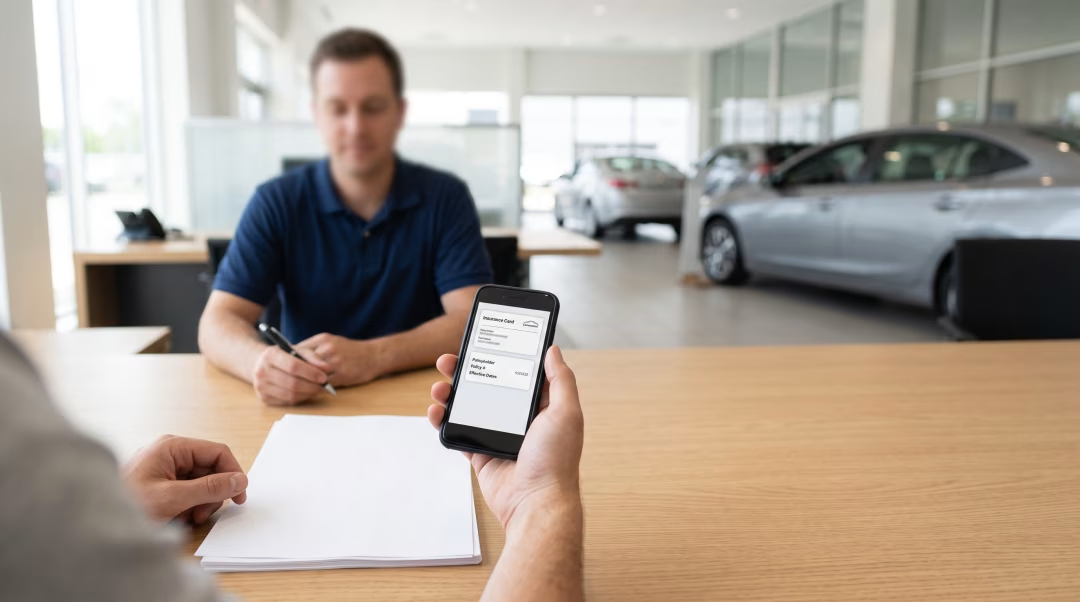
- Insurance ID Card: This is the most common form of proof. It can be a physical card mailed by your insurer or a digital version accessible through your insurance company's mobile app. The ID card must show the policy number, the name of the insured driver(s), the policy's effective and expiration dates, and the insured vehicle's information (Year, Make, Model, and VIN).
- Declarations Page: This document provides a detailed summary of your insurance policy. It explicitly lists the types of coverage you have (Liability, Collision, Comprehensive), the limits for each, the deductibles, and the name of the lienholder. Because of its detail, many dealerships and lenders prefer to see the declarations page.
- Insurance Binder: A binder is a temporary, formal proof of insurance issued by your agent or insurance company. It serves as evidence that you have secured a policy that will become active on a specific date. Binders are typically valid for 30 to 60 days and are used when the official policy documents have not yet been generated. This is very common for brand new policies.
The Step-by-Step Process for Getting Insured
If you do not have an existing auto policy or are a first-time buyer, you might wonder how you can insure a car you do not own yet. The process is straightforward and can often be completed right from the dealership.
- Select Your Vehicle: After you have chosen a car from our used inventory and have been approved for financing, we will provide you with the Vehicle Identification Number (VIN).
- Contact an Insurance Provider: You can call your preferred insurance agent or use a smartphone to get quotes from multiple insurance companies online.
- Provide the Necessary Information: You will need to give the insurance company the car's VIN, your personal information, and the lienholder's information. The lienholder is the lender financing the car, and they must be listed as a "loss payee" on the policy.
- Purchase the Policy: Once you select your coverages and pay your first premium, the insurance company can instantly email you a digital ID card and a binder or declarations page.
- Present Proof to the Dealership: Show us the digital document on your phone or a printed copy. We will verify the information, and once everything checks out, you can sign the final paperwork and drive away in your new vehicle.
Frequently Asked Questions About Proof of Insurance
Can I use the insurance from my old car for the new one?
Yes, you can typically add a new vehicle to your existing policy. However, you must contact your insurance provider before you complete the purchase to add the new car. You will need to provide them with the VIN and ensure the policy is updated to include the required comprehensive and collision coverages with the correct deductible. You must also add the new lender as the lienholder. Then, request an updated ID card or declarations page as proof.
What happens if I cannot get proof of insurance on the day I want to buy the car?
Unfortunately, the sale cannot be completed until you provide valid proof of insurance. Texas law prohibits dealerships from letting a customer drive a car off the lot without it. We can hold the car for you while you arrange coverage, and the entire process can often be completed in less than an hour by phone or online.
Does the name on the insurance policy have to match the name on the car loan?
Yes, the primary borrower listed on the financing agreement must be a "named insured" on the auto insurance policy. The lender needs to confirm that the person legally responsible for the loan is also insured to drive and protect the vehicle.
Can I buy a car in Texas using an out-of-state insurance policy?
This can be complicated. If you are moving to Texas, your out-of-state policy may be accepted temporarily, but you will be required to switch to a Texas policy shortly after registering the vehicle here. Most lenders prefer to see a policy that reflects your current or soon-to-be Texas address and meets all state requirements from the start.
How quickly can I get proof of insurance if I am starting a new policy?
In most cases, you can get insured very quickly. By calling an insurance agent or using an insurance company's website or app, you can often get a policy and receive digital proof of insurance via email within minutes. This allows you to secure coverage while you are at the dealership and avoid a second trip.
