

What Is the Difference Between a
Used Car and a Pre-Owned Car?
When you are shopping for your next vehicle, you will encounter many different terms, but two of the most common are "used" and "pre-owned." On the surface, they seem to mean the same thing: a car that has had at least one previous owner. While all pre-owned cars are technically used, not every used car qualifies for the pre-owned designation at a reputable dealership. The primary difference lies in the level of quality, inspection, and assurance that comes with the vehicle. A pre-owned car from a dealership has typically undergone a thorough inspection and reconditioning process to meet specific standards. This is a step above a vehicle you might buy from a private seller. An even higher tier exists, known as Certified Pre-Owned (CPO), which involves a manufacturer-backed program with even stricter requirements. Understanding these distinctions is the key to finding the right vehicle with the right level of confidence for your needs and budget.
Essentially, think of these terms as a spectrum of quality and assurance. "Used" is the broadest category, covering any car that is not brand new. "Pre-owned" suggests a higher standard, typically a vehicle that a dealer has inspected, serviced, and prepared for sale on their lot. "Certified Pre-Owned" or CPO represents the top tier of previously owned vehicles, having passed a rigorous, manufacturer-specified inspection and coming with an extended warranty. Knowing what each term implies helps you align your expectations with the price and protection offered.
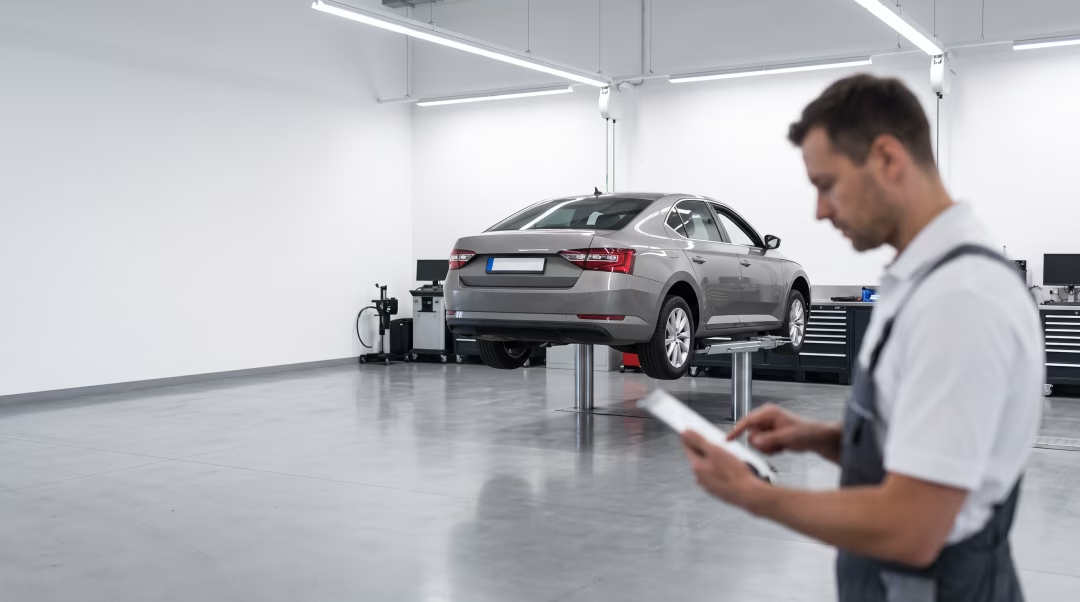
Diving Deeper: Used, Pre-Owned, and CPO Explained
Navigating the world of previously owned vehicles can feel like learning a new language. While the terms "used" and "pre-owned" are often used interchangeably in casual conversation, in the automotive industry, they can signify important differences that impact your purchase. Making an informed decision starts with understanding the nuances behind the labels you see on the window sticker. This knowledge empowers you to ask the right questions and find a vehicle that offers the perfect balance of value, reliability, and peace of mind for your life in Dallas.
The Baseline: What Defines a "Used Car"?
At its most basic, a "used car" is any vehicle that has been registered and owned by at least one person. This is the all-encompassing category. It includes vehicles sold by private individuals, independent lots, and franchised dealerships. When you buy a used car from a private party, you are often buying it in "as-is" condition. This means you are responsible for any repairs or issues that arise after the sale. At a dealership, every vehicle will have an FTC Buyers Guide on the window, which clearly states whether the car is being sold with a warranty or "as-is." While many dealerships inspect their used cars for safety and basic functionality, the term itself does not imply any specific level of reconditioning or warranty coverage.
A Step Up: The "Pre-Owned" Promise
Dealerships often prefer the term "pre-owned" to describe the vehicles in their used inventory. This is not just a marketing tactic; it is meant to signal a higher standard. A pre-owned vehicle from a dealer like ours has typically been selected because of its good condition and has undergone a more thorough inspection and reconditioning process than a standard used car. While it is not part of a formal manufacturer program, a pre-owned car is one the dealership is confident in selling. It may come with a limited warranty or service contract offered by the dealership itself, providing an extra layer of protection that you would not get from a private sale. This is the sweet spot for many buyers, offering a reliable, inspected car at a competitive price.
The Top Tier: Certified Pre-Owned (CPO)
Certified Pre-Owned is a specific, formal program backed directly by the vehicle's original manufacturer (e.g., Honda Certified, Ford Blue Advantage). This is the highest standard a previously owned vehicle can achieve. To qualify for a CPO program, a vehicle must meet strict criteria:
- Age and Mileage Limits: The vehicle must be a recent model year and fall under a specific mileage cap.
- Comprehensive Multi-Point Inspection: The car undergoes a rigorous inspection covering anywhere from 100 to 200+ specific points, from the engine and transmission to the interior buttons and upholstery. This inspection is dictated by the manufacturer, not the dealer.
- Reconditioning with OEM Parts: Any parts that do not pass inspection are repaired or replaced with genuine Original Equipment Manufacturer (OEM) parts.
- Manufacturer-Backed Warranty: CPO vehicles come with an extended powertrain and/or comprehensive warranty that is honored at any of the brand's dealerships nationwide.
- Additional Perks: CPO programs often include benefits like 24/7 roadside assistance, a free vehicle history report, and sometimes even special low-APR financing offers.
Because of these stringent requirements and added benefits, CPO vehicles typically command the highest prices among previously owned cars. They offer a near-new-car experience and significant peace of mind for a lower price than a brand-new model.
Comparing Your Options: Which is Right for You?
Choosing between used, pre-owned, and CPO depends entirely on your personal priorities, budget, and how much risk you are comfortable with. If you are a skilled mechanic on a tight budget, a privately sold "used" car might be a great project. However, for most people, the choice is between a dealer's pre-owned vehicle and a manufacturer-certified one.
A dealership's quality pre-owned car offers a fantastic middle ground. You get the assurance of a professional inspection and a vehicle that the dealer stands behind, without the premium price of a CPO car. This is often the best value for your money. No matter which you lean towards, the financing process is a crucial step. Understanding your options in our financing area or taking a moment to get pre-qualified online can streamline your purchase and clarify your budget.
The best way to feel the difference is from behind the wheel. Once you have browsed our inventory and found a few options, we encourage you to schedule a test drive. This gives you a real-world feel for the vehicle's condition and performance. You can also learn more about how to get the most out of your time with the car by reading our guide on what questions to ask during a used car test drive.
Is "pre-owned" just a fancy marketing term for "used"?
While all pre-owned cars are used, the term "pre-owned" is used by dealerships to signify a vehicle that meets a higher standard of quality. It implies the car has passed a dealership inspection and reconditioning process, offering more assurance than a typical private-party used car sale.
Are all pre-owned cars from a dealership certified?
No. "Certified Pre-Owned" (CPO) refers to a specific, formal program backed by the vehicle's original manufacturer with strict age, mileage, and inspection requirements. A dealership's standard "pre-owned" vehicle has been inspected to the dealer's own standards but is not part of a manufacturer's CPO program unless explicitly stated.
Is a Certified Pre-Owned (CPO) car always more expensive?
Generally, yes. CPO vehicles command a higher price than non-certified pre-owned cars because of the rigorous manufacturer-mandated inspection, the comprehensive reconditioning process, and the valuable manufacturer-backed extended warranty that is included in the cost.
Can I get a warranty on a regular "used" car?
Sometimes. While many used cars, especially from private sellers, are sold "as-is," dealerships may offer a limited warranty on their pre-owned vehicles. You can also often purchase a third-party extended warranty or vehicle service contract for additional protection. Always check the FTC Buyers Guide on the vehicle's window for warranty information.
Does the FTC Buyers Guide tell me if a car is used or pre-owned?
The FTC Buyers Guide does not use the terms "pre-owned" or "CPO." Its purpose is to clearly state whether a used vehicle (any vehicle that is not new) is being sold with a warranty or "as-is." It will detail the specifics of any warranty coverage offered by the dealer, which is a key factor in your decision.
