

What Is Paintless Dent Repair and
How Does It Affect Used Car Value?
When shopping for a used vehicle, its cosmetic condition plays a significant role in your decision and its overall market price. Minor dings, dents, and hail damage can be eyesores, but they do not have to be deal-breakers or permanent flaws. Enter Paintless Dent Repair, often called PDR. This is an innovative and highly effective method for removing minor dents and dings from a car's body panels without disturbing the original factory paint. Unlike traditional body shop work that involves sanding, fillers, and repainting, PDR specialists use specialized tools to meticulously massage the metal back into its original shape from behind the panel. This technique is faster, often more affordable, and critically, it preserves the vehicle's factory finish. Understanding how PDR works is essential for any savvy used car buyer, as it directly impacts a car's condition, history, and ultimately, its long-term value and appeal.
The primary benefit of high-quality Paintless Dent Repair is its ability to maintain the integrity of the manufacturer's paint job. A vehicle with its original paint is almost always more desirable than one that has been repainted, as it suggests the absence of major collision damage. When PDR is performed correctly, the repair is virtually undetectable, leaving no signs of the previous imperfection. This means a vehicle can be restored to its original look, preserving its aesthetic appeal and helping it hold its value more effectively over time.
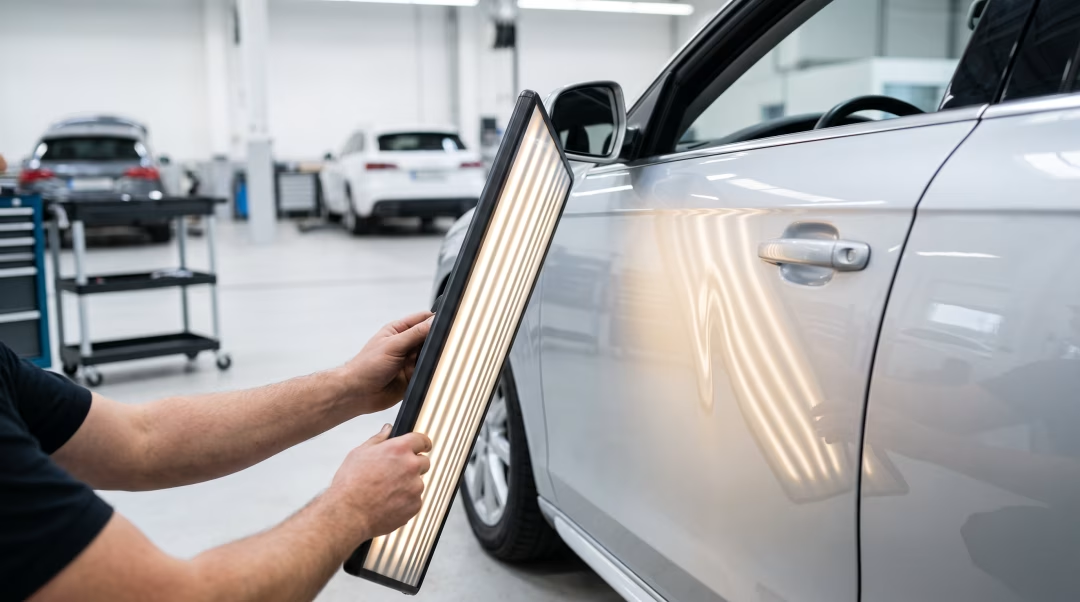
A Deeper Look into Paintless Dent Repair
Paintless Dent Repair is as much an art as it is a science. It relies on a skilled technician's ability to "read" the damaged metal and understand how to manipulate it without causing further harm. The process begins with a thorough assessment of the dent. A technician will evaluate its size, depth, and location to determine if it is a suitable candidate for PDR. The best candidates are typically smooth, shallow dents where the paint has not been cracked or broken, such as those caused by hail, door dings, or minor bumps.
To perform the repair, the technician needs access to the back of the damaged panel. This might involve carefully removing interior trim panels, headlights, or taillights. Once access is gained, they use an array of specialized metal rods and picks. By applying slow, precise pressure to the backside of the dent, they gently push the metal back into its original position. The technician uses a special reflective light board placed over the dent, which shows the distorted reflection of the dent. As they work the metal, they watch the reflection, using it as a guide to ensure every millimeter of the panel is returned to its correct contour. This process requires immense patience and skill, as pushing too hard or in the wrong spot could damage the panel or the paint.
PDR vs. Traditional Body Shop Repairs: A Comparison
When a car suffers a dent, owners traditionally thought of a conventional body shop. While necessary for severe collision damage, these methods are often excessive for minor imperfections. Understanding the differences can help you appreciate why PDR is a superior choice for preserving a vehicle's value. Here is a look at how the two methods stack up.
- Method: PDR uses specialized tools to massage metal from the inside out, keeping the original paint intact. Traditional repair involves sanding the area down to the bare metal, filling the dent with body filler (like Bondo), sanding it smooth, and then priming and repainting the entire panel or a section of it.
- Preservation of Value: PDR maintains the vehicle's original factory paint finish, which is a major factor in resale value. A repainted panel, no matter how well done, can raise questions about the extent of previous damage. You can learn more about how to check for prior issues by reading about how to read a vehicle history report.
- Time: Most PDR jobs can be completed in a few hours, while traditional bodywork can take several days or even weeks, depending on the paint and curing time required.
- Cost: Because it involves less labor and no materials like paint or filler, PDR is typically much more affordable than conventional body shop repairs for the same type of minor damage.
- Environmental Impact: PDR is an environmentally friendly process. It creates no chemical waste from paints, solvents, or fillers that are part of the traditional repair process.
How Does PDR Truly Affect a Used Car's Value?
The impact of PDR on a car's value is overwhelmingly positive, primarily because of what it prevents: a loss of value. Unrepaired dents and dings, even small ones, can significantly lower a vehicle's perceived worth. A potential buyer sees these flaws and immediately factors in the cost and hassle of getting them fixed, or simply sees the car as poorly maintained. This can lead to lower offers and a longer time on the market.
When you properly repair these dents using PDR, you are essentially erasing the flaw without creating a new one. Since the original paint is preserved, there is no evidence of the repair to the untrained eye and no need to disclose a "repaint" to a future buyer. The car simply looks as it should. This is critical when you decide to value your trade. A vehicle with a clean body and original paint will almost always receive a higher valuation than one with visible dings or one with repainted panels.
A key point is that PDR itself does not usually appear on a vehicle history report. Services like CarFax and AutoCheck typically track events reported by insurance companies, law enforcement, and repair shops for collision work that involves a claim or a structural repair. Since PDR is often paid for out-of-pocket and does not involve major accidents, it flies under the radar. This is a benefit, as it keeps the car's record clean of minor cosmetic incidents.
Identifying Quality PDR and Its Limitations
As a buyer browsing our used inventory, you may want to know how to spot evidence of prior repairs. A high-quality PDR job is nearly impossible to detect. The surface will be smooth, the reflection will be clear and undistorted, and the paint finish will match the surrounding areas perfectly because it is the original paint. However, a poor PDR job can leave behind subtle signs. Look for "push marks" or small high spots on the panel, a wavy or distorted appearance when viewed from an angle, or tool marks on the backside of the panel if it is visible.
It is also important to recognize the limitations of PDR. This technique is not a solution for all types of damage. PDR is generally not suitable for:
- Dents with cracked, chipped, or broken paint.
- Extremely sharp or deep creases in the metal.
- Damage located on the very edge of a body panel where the metal is double-thick.
- Damage to panels that have had previous, thick body filler applied.
In these cases, traditional bodywork is necessary. Being aware of these limitations helps you set realistic expectations for what can be repaired and what might indicate more significant past damage. If you have questions about a vehicle's condition, do not hesitate to contact us for more information.
Is paintless dent repair a permanent fix?
Yes, absolutely. Once a dent has been properly removed using PDR, the metal is restored to its original shape and strength. The dent will not come back on its own. The repair is permanent and will last for the life of the vehicle, barring any new impacts to the same area.
Can PDR be used to fix hail damage?
Paintless dent repair is the preferred method for repairing hail damage. A car with dozens or even hundreds of small, smooth dents from hail is the ideal candidate for PDR. It allows for the complete removal of all dents without compromising the factory paint job, making it a far superior and more cost-effective solution than repainting the entire vehicle.
Will paintless dent repair show up on a vehicle history report?
Typically, no. Most PDR work is considered minor cosmetic reconditioning and is often paid for by the owner or dealership directly rather than through an insurance claim. Vehicle history reporting agencies like CarFax primarily track data from insurance claims, police reports, and major body shop repairs. Because PDR does not usually involve these channels, it does not get reported.
How much does paintless dent repair usually cost?
The cost of PDR varies widely based on the dent's size, depth, and location on the vehicle. A single small door ding might cost a little over one hundred dollars, while extensive hail damage could cost several thousand. However, it is consistently more affordable than traditional body shop repairs for the same level of damage because it requires less labor and no costly materials like paint and filler.
Does a PDR repair affect the factory paint warranty?
No, a proper PDR repair does not affect a vehicle's factory paint warranty. Since the original paint is never sanded, filled, or repainted, its integrity is not compromised. The warranty, which covers defects like fading or peeling, remains fully intact. This is another significant advantage over traditional repairs, which void the factory warranty on the repainted panel.
