

What to Check on
a Used Car Test Drive
The test drive is the single most important step in your used car buying journey. It is your opportunity to move beyond the online photos and vehicle history report and experience how the car truly performs in the real world. This is where the vehicle reveals its personality, its quirks, and any potential red flags that are not visible on paper. A thorough and thoughtful test drive empowers you to make a confident decision, transforming you from a shopper into an informed buyer. Think of it as an interview where you are in the hiring seat, and the car needs to prove it is the right fit for the job of being your reliable daily driver. Taking the time to properly evaluate a car on the road can help you avoid future headaches and find a vehicle you will love for years to come. It is your best tool for confirming quality.
Here, we believe a confident customer is a happy customer, which is why we encourage you to take your time and be thorough. We want you to feel completely comfortable with your choice. Our team is always on hand to answer any questions that may arise during your evaluation. Feel free to ask our staff to demonstrate features or clarify anything you notice. A transparent process is the foundation of a great relationship, and it all begins with a no-pressure test drive where you are in complete control of the evaluation.
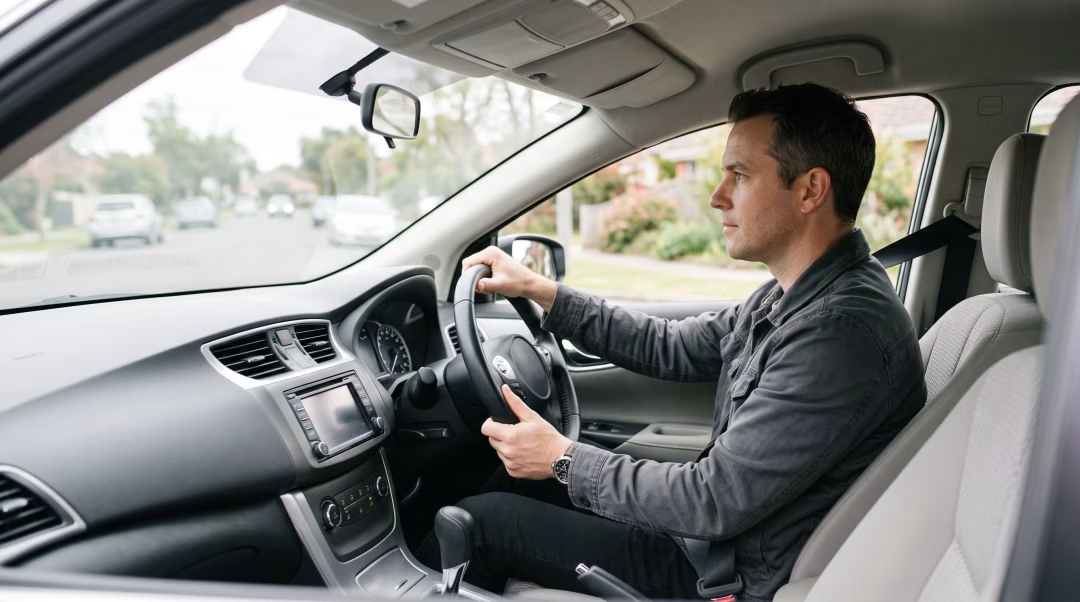
Your Comprehensive Used Car Test Drive Checklist
A great test drive is more than just a quick spin around the block. It is a systematic evaluation of the vehicle's condition and performance. By breaking it down into distinct phases, you can ensure you do not miss any crucial details. Use this guide to methodically check every aspect of the car, from its appearance in the parking lot to its behavior on the highway. Taking a structured approach will help you compare different vehicles on our used inventory page objectively and make the best choice for your needs and budget.
Phase 1: The Pre-Drive Static Inspection
Before you even insert the key, conduct a detailed walk-around inspection. What you find here can tell you a lot about the car's history and how it was maintained. Do this in good daylight to spot imperfections more easily.
- Exterior Body and Paint: Look down the sides of the car for waves or ripples in the paint, which could indicate past bodywork. Check for mismatched paint color between panels. Look for rust, especially around the wheel wells and under the doors. Check that all panel gaps are even and consistent.
- Tires and Wheels: The tires should have plenty of even tread. Uneven wear, such as on the inner or outer edges, can signal alignment or suspension problems. Check for cracks or bubbles in the sidewalls. Make sure all four tires are the same brand and model, as mixed tires can affect handling.
- Glass and Lights: Inspect the windshield for any chips or cracks, which can be costly to replace. Turn on all exterior lights, including headlights (high and low beams), tail lights, brake lights, and turn signals, to ensure they all function correctly.
- Under the Hood: With the engine cool and off, pop the hood. Look for any visible leaks or drips. Check fluid levels like oil and coolant; low levels could indicate a leak or poor maintenance. Inspect belts and hoses for cracks or fraying. A very clean engine bay on an older car might be a red flag that someone is trying to wash away evidence of leaks.
- Interior Comfort and Controls: Sit in every seat to check for comfort and space. Look for excessive wear, stains, or tears in the upholstery. Test every button, switch, and knob. This includes power windows, door locks, seat adjustments, radio, and especially the air conditioning and heater. Pay attention to any unusual smells, like mildew or smoke.
Phase 2: The Driving Evaluation
Now it is time to see how the car performs. The goal is to drive the car in a variety of conditions that mimic your daily commute and typical usage. If you are ready to get behind the wheel, you can always schedule a test drive with us ahead of time.
Starting Up and Low-Speed Maneuvers
When you first start the car, turn the radio off and listen carefully. The engine should start smoothly without a long, grinding crank. Note any rattling, knocking, or squealing noises. Once running, look at the dashboard. All the warning lights should illuminate for a moment and then turn off. A check engine light, ABS light, or airbag light that stays on indicates a problem that needs to be diagnosed. Before leaving the parking lot, test the brakes with a firm press. The pedal should feel firm, not spongy. As you pull out, notice how the steering feels. It should be smooth and responsive, without any notchiness or excessive play.
City and Suburban Streets
On surface streets, pay close attention to the transmission. Whether automatic or manual, shifts should be smooth and timely. Jerking, hesitation, or loud clunks during shifts are serious warning signs. As you accelerate from a stop, the car should feel responsive without stumbling. Find a safe place to test the brakes more assertively. The car should stop straight without pulling to one side. Drive over a few bumps or an uneven road surface. Listen for clunks or rattles from the suspension, and feel if the car absorbs the bumps well or feels overly bouncy.
Highway Speeds
If possible, take the car on a highway or a road where you can safely reach speeds of 60-70 mph. This is where issues like wheel balance problems, alignment issues, and certain transmission problems become apparent. Feel for any vibrations in the steering wheel, floor, or seats. The car should track straight and not wander or pull to one side. Test the acceleration needed for merging into traffic. The engine should provide adequate power without straining excessively. This is also a good time to test the cruise control and listen for excessive wind or road noise, which could indicate poor door seals.
Phase 3: The Post-Drive Wrap-Up
After you have returned to the dealership, do not just hand the keys back. Your evaluation is not quite done. With the engine still running, pop the hood one more time. Look and listen again. Are there any new smells like burning oil or sweet-smelling coolant? Do you see any smoke or new drips? Let the engine idle for a few minutes and watch the temperature gauge to make sure it stays in the normal range. Finally, take a moment to reflect on your experience. Were you comfortable? Did you enjoy driving the car? Could you see yourself driving it every day? Your comfort and confidence are just as important as the mechanical checks. If you have found a vehicle you feel good about, the next step is often to discuss your options with our financing area to see how it fits your budget.
How long should a used car test drive be?
A good test drive should last at least 20 to 30 minutes. This provides enough time to experience the car in various driving conditions, including city traffic, residential streets, and highway speeds, giving you a comprehensive feel for its performance and comfort.
What are the most important sounds to listen for?
Listen for any noises that are not part of normal operation. Key sounds to be wary of include squealing or grinding when you brake, clunking or rattling from the suspension when going over bumps, a high-pitched whine that changes with engine speed, and any knocking or tapping from the engine itself.
Should I test the air conditioning and heat, even if the weather is mild?
Yes, absolutely. Test both the A/C and the heater, regardless of the outside temperature. Turn the A/C on full blast to ensure it blows cold air, and then switch to the heat to confirm it gets hot. Repairing a climate control system can be expensive, so it is crucial to verify it works correctly before you buy.
Is it okay to drive the car aggressively on a test drive?
While you should always drive safely and obey traffic laws, you should not be afraid to test the car's capabilities. This includes firm acceleration (like when merging onto a highway) and firm braking in a safe, clear area. This helps reveal how the engine, transmission, and brakes perform under load, which a gentle drive might hide.
What should I do if I notice a potential problem during the test drive?
If you see, hear, or feel anything concerning, make a note of it and point it out to the salesperson immediately after the drive. A reputable dealership will be transparent and able to address your concerns, explain the issue, or have their service center inspect it. Do not ignore potential red flags; asking questions is a key part of the process.
