

When Should You Replace
Your Tires? A Complete Guide
Your tires are the only part of your vehicle that makes direct contact with the road, making their condition essential for your safety, fuel efficiency, and overall driving performance. Knowing when you should replace your tires is a critical piece of vehicle ownership, yet it is often overlooked. It is not just about how many miles you have driven; factors like tire age, visible damage, and tread depth all play a significant role. Worn-out tires can drastically increase your stopping distance, reduce your car's handling ability in wet conditions, and put you at a higher risk of a dangerous blowout. Understanding the key warning signs helps you make an informed decision, keeping you and your passengers safe on every journey. This guide will walk you through the simple checks you can perform to determine if it is time for a new set of tires for your car, truck, or SUV.
At our dealership, we understand that vehicle safety is paramount. That is why every vehicle in our used inventory undergoes a thorough inspection process, which includes a detailed check of the tire condition. We believe that providing our customers with reliable and safe transportation is our most important job. If you have questions about the tires on a specific vehicle or need advice on general maintenance, our knowledgeable team is always here to help. Feel free to contact us or visit one of our locations to learn more.
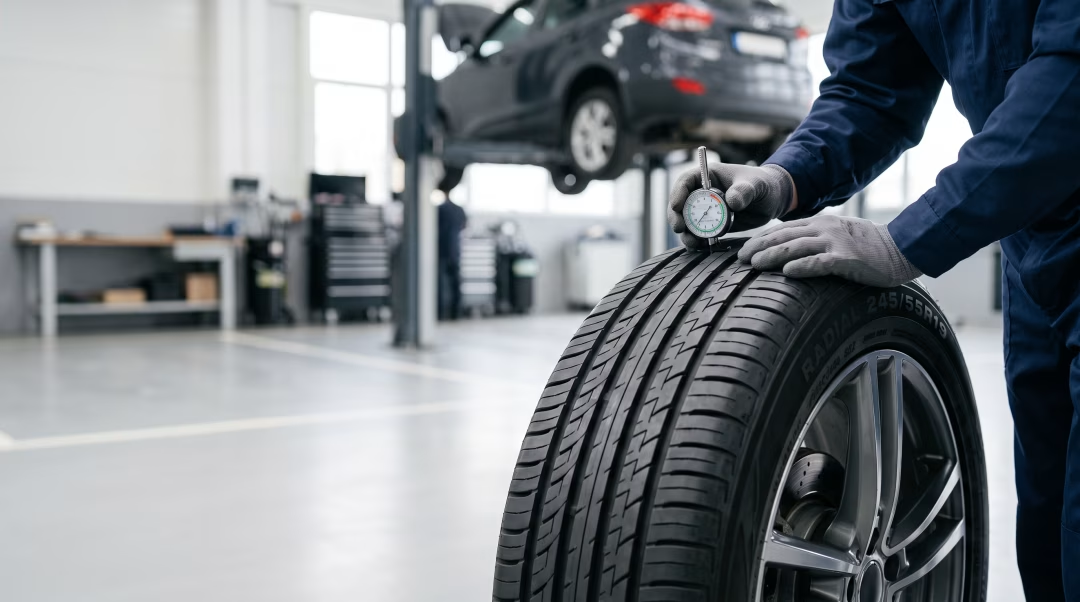
A Deep Dive into Tire Health and Replacement
Deciding when to replace your tires involves more than a simple glance. It requires a conscious effort to look for specific signs of wear and aging. By regularly inspecting your tires, you can proactively address issues before they become serious safety hazards. Let's explore the three primary indicators that signal it is time for a new set: tread depth, tire age, and visible damage.
Tread Depth: Your First Line of Defense
Tire tread consists of the grooves and channels on the surface of your tire. Its purpose is to channel water, slush, and snow away from the contact patch, allowing the tire to maintain a firm grip on the road. As you drive, the rubber wears down, and these grooves become shallower. When the tread is too low, your vehicle is at a much higher risk of hydroplaning in wet conditions, where a layer of water builds between the tires and the road surface, causing a loss of traction and control.
There are several easy ways to check your tread depth:
- The Penny Test: This is the most well-known method. Take a standard U.S. penny and place it upside down in one of the main tread grooves. If you can see the top of Abraham Lincoln's head, your tread depth is at or below 2/32 of an inch. This is the legal minimum in many states, including Texas, and a clear signal that your tires need immediate replacement.
- The Quarter Test: For a more cautious approach, use a U.S. quarter. Place it upside down into a tread groove. If the tread touches the top of George Washington's head, you have at least 4/32 of an inch of tread remaining. Many tire experts and safety organizations recommend replacing tires at this point, as performance, especially in rain and snow, begins to diminish significantly below this depth.
- Tread Wear Indicator Bars: Modern tires have a built-in convenience for checking tread wear. Molded into the bottom of the tread grooves are small, raised bars of rubber. As the tire wears down, these bars will become flush with the surface of the tread. If you can see one or more of these bars, it is a definitive sign that the tire has reached the end of its safe service life.
The Age of Your Tires: An Overlooked Factor
Even if a tire has plenty of tread left, its age matters. The rubber compounds in a tire break down over time due to exposure to the elements, such as UV rays from the sun and temperature fluctuations. The Texas heat, in particular, can accelerate this process. Old, brittle rubber is more prone to sudden failure, even if the tire looks fine from a distance. One of the most important things you can do when evaluating a used car is to learn how to read tire date code on used car to assess its age.
To find the age of your tires, look for the "DOT" code on the sidewall. The last four digits of this code represent the week and year the tire was manufactured. For example, a code ending in "3521" means the tire was made in the 35th week of 2021. Most vehicle and tire manufacturers recommend replacing tires every six to ten years, regardless of tread wear. If you are unsure about the age of your tires, it is best to have them inspected by a professional.
Inspecting for Visible Damage and Irregular Wear
A monthly visual inspection of your tires can help you spot trouble before it leads to a breakdown. Walk around your vehicle and look closely at each tire, including the inner and outer sidewalls. Any issues you find could indicate a need for replacement or point to another underlying problem with your vehicle, like poor alignment.
Here are some key things to look for:
- Bulges or Blisters: A bulge on the sidewall looks like a bubble and indicates that the internal structure of the tire has been compromised, often from hitting a pothole or curb. This is a serious condition, as the weak spot could rupture at any time. A bulging tire should be replaced immediately.
- Cracks, Cuts, and Grooves: Check the sidewalls for any cracks or cuts. Small, fine cracks in the rubber (often called weather checking) are a sign of aging and drying out. Deeper cuts or grooves that expose the internal fabric or cords are dangerous and mean the tire is no longer safe.
- Uneven Wear Patterns: The way your tires wear can tell you a lot. Wear on both outer edges suggests under-inflation. Wear down the center suggests over-inflation. Scalloped or "cupped" wear patterns can indicate problems with your suspension or wheel balance. These issues not only shorten tire life but also affect handling. Addressing the root cause, such as getting a wheel alignment, is crucial. Constant road construction around Dallas can easily throw your alignment off.
- Excessive Vibration: While some vibration is normal, a sudden increase or a persistent shimmy, especially at highway speeds, can be a sign of an unbalanced tire, a bent wheel, or even internal tire damage like tread separation. If you feel new or excessive vibrations through the steering wheel or seat, have your tires and suspension checked promptly.
Staying on top of your tire health is one of the most cost-effective ways to maintain your vehicle's safety and reliability. Before you even start thinking about financing options or how to calculate your debt to income ratio before buying car, understanding the basics of vehicle condition is key. If you determine that your current vehicle needs new tires and the cost is substantial, it might be time to consider upgrading. You can easily value my trade online to see how much your current car could be worth towards a safer, more reliable vehicle from our inventory.
How often should I check my tire pressure?
You should check your tire pressure at least once a month and before any long road trips. Temperature changes can cause pressure to fluctuate, so it is a good habit to maintain. Proper inflation ensures even wear, better fuel economy, and optimal handling. The correct pressure is listed on a sticker inside the driver's door jamb, not on the tire sidewall itself.
What is a tire rotation and why is it important?
Tire rotation is the process of moving each tire to a different position on the vehicle. This is important because tires on the drive axle (front or rear) and steering axle tend to wear differently. Regularly rotating them, typically every 5,000 to 7,500 miles, promotes more uniform tread wear across all four tires, extending their service life and maintaining balanced handling.
Can I replace just one tire if the others are still good?
While it is possible, it is generally recommended to replace tires in pairs (both front or both rear) to maintain even handling and stability. If you have an all-wheel drive (AWD) vehicle, many manufacturers require that all four tires be replaced simultaneously to avoid damaging the drivetrain due to differences in tire circumference.
Does the type of car I drive affect how often I need new tires?
Yes, absolutely. A high-performance sports car with soft, grippy tires will wear through them much faster than a family sedan with durable all-season tires. Similarly, heavy trucks and SUVs put more stress on their tires, which can lead to faster wear compared to lighter compact cars. Always follow the vehicle manufacturer's recommendations for tire type.
How can I find the correct tire size for my vehicle?
The correct tire size is printed on the same sticker inside your driver's door jamb that lists the recommended tire pressure. It will also be printed on the sidewall of your current tires. The sequence of letters and numbers (e.g., P225/60R17) indicates the tire type, width, aspect ratio, construction, and wheel diameter, all of which are crucial for selecting the right replacement.
