

Crew Cab vs. Extended Cab: Which
Used Truck Is Right For You?
Choosing the right used pickup truck involves more than just picking a brand or engine size. One of the most critical decisions you will make is selecting the cab configuration that fits your lifestyle. The debate between a Crew Cab and an Extended Cab is central to this choice, as it directly impacts passenger space, cargo capacity, and overall vehicle length. A Crew Cab offers four full-size doors and a spacious back seat, making it ideal for families or those who frequently travel with colleagues. In contrast, an Extended Cab prioritizes cargo by often pairing a longer bed with a more compact rear seating area, perfect for professionals who need more gear than guests. Understanding these fundamental differences is the first step toward finding a used truck that works as hard as you do. This guide will break down the details to help you decide.
Making the right choice between these two popular configurations comes down to a realistic assessment of your daily needs. Do you need a mobile office and a family hauler, or is your truck primarily a tool for the job site? As you explore our detailed comparison below, consider your priorities for passengers, payload, and parking. Each style offers distinct advantages, and our goal is to provide the clarity you need to select the perfect used truck from our used inventory with confidence.
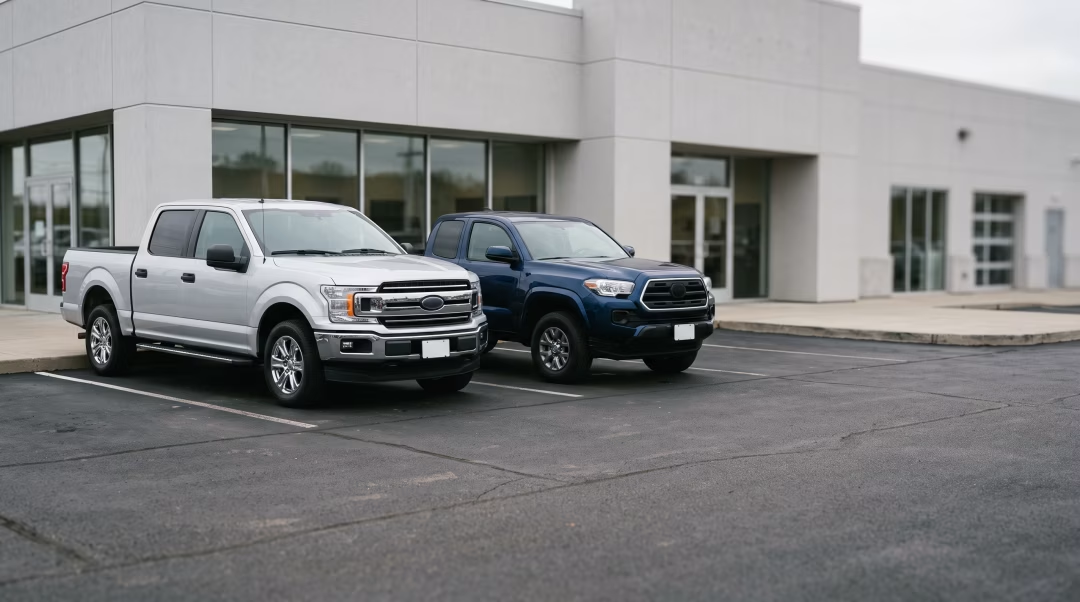
A Deep Dive into Truck Cab Configurations
When you start shopping for a pre-owned pickup, the terminology can be confusing. Manufacturers often use different names for the same basic design, but the two most common categories you will encounter are the Crew Cab and the Extended Cab. While a standard or regular cab truck has just one row of seats, both Crew and Extended Cabs offer a second row, but they do so in very different ways. The decision between them will shape your daily driving experience, from commuting and running errands to tackling major work projects. Let's explore the specific characteristics of each to see which one aligns with your personal and professional demands.
Understanding the Crew Cab
The Crew Cab is the most passenger-friendly option available in a pickup truck. Its defining feature is a set of four full-size, front-hinged doors, just like you would find on a typical SUV or sedan. This design allows for easy entry and exit for all passengers, especially those in the back. The rear seating area in a Crew Cab is designed to comfortably accommodate adults, offering ample legroom, headroom, and shoulder room. For this reason, it has become the go-to choice for truck buyers who also need a capable family vehicle.
Beyond passenger comfort, the large rear cabin provides significant secure, weatherproof storage space. You can easily fit toolboxes, luggage, groceries, or sensitive equipment inside the cab, protected from the elements and theft. This versatility is a major selling point. However, the larger cab size comes with trade-offs. To keep the truck from becoming excessively long, manufacturers often pair Crew Cabs with shorter beds (e.g., 5.5-foot or 6.5-foot beds). While longer beds are sometimes available, they result in a very long wheelbase, which can make parking and maneuvering in tight Dallas traffic more challenging.
- Spacious rear seating for adults and easy installation of car seats.
- Four large, conventional doors for convenient access.
- Ample secure, indoor storage space for valuables.
- Often holds its value well due to high demand.
Exploring the Extended Cab
The Extended Cab, sometimes called a Double Cab or Super Cab depending on the manufacturer, represents a middle ground between a two-door regular cab and a full four-door Crew Cab. Its primary distinction is its smaller rear seating area and unique rear door design. In many models, the rear doors are smaller than the front doors and are often rear-hinged (sometimes called "clamshell" or "suicide" doors). This means you must open the front door before you can open the back door on the same side. Some newer models have adopted smaller, front-hinged rear doors, but the principle remains the same: the focus is on utility over passenger comfort.
The back seat is typically a small bench or a pair of jump seats, best suited for children, short trips for adults, or storing items you need to access quickly. The main advantage of this configuration is that it allows for a longer cargo bed without making the truck's overall length unmanageable. For a contractor who needs to haul 8-foot sheets of plywood but only occasionally carries a passenger, the Extended Cab is an ideal solution. This often makes them a popular choice for work trucks, which you can find by checking out our page on the best used pickup trucks for contractors on a budget. They tend to be slightly more nimble and easier to park than a comparable Crew Cab.
- Prioritizes cargo bed length over rear passenger space.
- Often more affordable on the used market than a Crew Cab.
- Better maneuverability due to a potentially shorter wheelbase.
- Provides occasional-use seating without sacrificing utility.
Making Your Decision: Key Comparison Points
Choosing between these two excellent options requires an honest look at your day-to-day life.
1. Primary Use: If you plan to use your truck as a daily driver for your family, carpool, or frequently take friends out, the Crew Cab is the clear winner. The comfort and accessibility of the rear seat are unmatched. If your truck is primarily a work tool where hauling materials is more common than hauling people, the Extended Cab's focus on bed length gives it the edge.
2. Your Crew: Consider who will be riding in the back. For adults on any trip longer than a few minutes, the legroom and full-size doors of a Crew Cab are essential. For young children in car seats, a Crew Cab is also far more convenient. While you can fit car seats in many Extended Cabs, the tighter space and smaller doors can make it a daily struggle. If your back seat will mostly hold a toolbox or your four-legged friend, an Extended Cab is perfectly adequate.
3. Cargo Needs: Think about what you haul. Do you need to carry long items like ladders, lumber, or kayaks regularly? An Extended Cab often gives you access to a standard 6.5-foot or even an 8-foot bed, which might only be available on the longest, most cumbersome Crew Cab models. If your cargo consists of smaller items that are better kept secure and out of the Texas weather, the large interior of a Crew Cab acts as a giant, lockable trunk.
4. Budget and Financing: On the used market, you will often find that for a given year and mileage, an Extended Cab model is priced lower than its Crew Cab counterpart. This difference can affect everything from your down payment to your monthly payment. A lower purchase price can make financing more accessible. You can explore your options and even get pre-qualified to see what might fit into your budget. Understanding what is buy here pay here financing can also open up more possibilities. Our team is always here to help you navigate the process.
No matter which cab style you lean toward, the most important step is to experience them firsthand. We encourage you to schedule a test drive to see how each configuration feels from behind the wheel. Sit in the back seat, open and close all the doors, and imagine loading your gear. If you have a vehicle to trade in, you can get a head start by using our online tool to value my trade. Our knowledgeable staff is ready to answer your questions and help you find the used truck that perfectly matches your needs. Please feel free to contact us with any questions.
What is the biggest difference between a Crew Cab and an Extended Cab?
The most significant difference is in the back seat and rear doors. A Crew Cab has four full-size, front-hinged doors and a spacious rear seat comfortable for adults. An Extended Cab has smaller rear doors (often rear-hinged) and a much more compact rear seating area designed for occasional use.
Are Crew Cab trucks always more expensive?
Generally, when comparing used trucks of the same year, model, and condition, a Crew Cab version will be more expensive than an Extended Cab. This is due to higher initial cost when new and greater demand on the used market from buyers seeking a combination of utility and family-friendly space.
Can I fit child car seats in an Extended Cab?
While it is physically possible to install car seats in many Extended Cab trucks, it is often much more difficult than in a Crew Cab. The limited space, smaller door openings, and lack of rear legroom can make securing the seat properly and getting a child in and out a daily challenge. A Crew Cab is a much more practical choice for families with young children.
Do Extended Cabs always come with longer beds?
Not always, but an Extended Cab configuration gives you a better chance of finding a truck with a longer bed (like 6.5 feet) without an extremely long overall wheelbase. Because the cab itself is shorter, manufacturers can pair it with a longer bed while keeping the truck's total length reasonable for easier driving and parking.
What are other names for an Extended Cab?
Manufacturers use their own marketing terms, which can be confusing. Ford calls it a "SuperCab," while Chevrolet and GMC use "Double Cab." Ram has used the term "Quad Cab" for its four-door model that is smaller than its Crew Cab. Despite the different names, they all refer to a cab style that is larger than a regular cab but smaller than a full Crew Cab.
