

Half-Ton vs. Three-Quarter-Ton Trucks:
Which Do You Need?
Deciding on the right pickup truck can feel like a major challenge, especially when you are comparing half-ton and three-quarter-ton models. On the surface, they might look similar, but their capabilities are worlds apart. A half-ton truck, often called a "light-duty" pickup, is the versatile workhorse of the American road, perfect for daily commuting, weekend home improvement projects, and towing smaller boats or trailers. A three-quarter-ton truck, part of the "heavy-duty" class, is built for more serious work. It boasts a stronger frame, more robust suspension, and powerful engine options designed for hauling significant weight and towing heavy fifth-wheel campers or large equipment trailers. The key is to match the truck's capabilities not just to the job you have today, but to the biggest job you will need it for in the future. Choosing correctly means having a capable partner for work and play.
Making an informed decision between these two truck classes is crucial for your budget and your satisfaction. An overbuilt truck for your needs means spending more on fuel and a stiffer ride, while an under-equipped truck can struggle with heavy loads, leading to safety concerns and premature wear. By understanding the fundamental differences in performance, cost, and daily livability, you can confidently select the right used truck. Let us explore the details so you can find the perfect balance of power and practicality for your life.
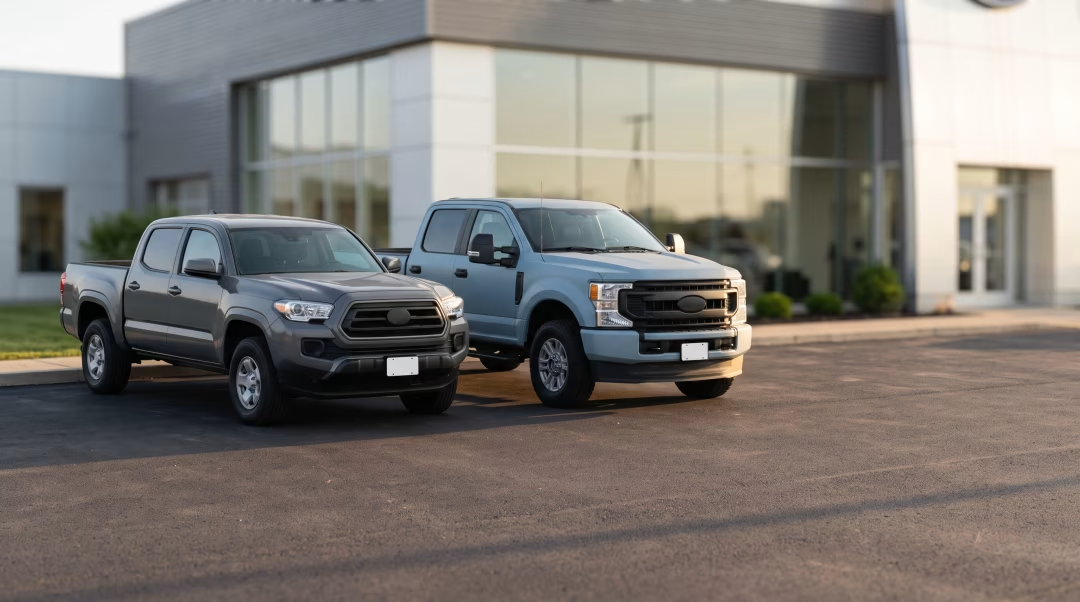
Understanding Truck Classifications: What the Numbers Mean
When you browse our used inventory, you will see trucks described as "half-ton," "three-quarter-ton," and "one-ton." These terms can be confusing, as they no longer refer to the exact payload a truck can carry. The names are a holdover from a time when truck capabilities were much lower. A "half-ton" truck was historically rated to carry 1,000 pounds, a "three-quarter-ton" could carry 1,500 pounds, and so on. Today, these classifications are more like general categories for light-duty (half-ton) and heavy-duty (three-quarter-ton and up) trucks. Modern half-ton trucks can often handle payloads well over 1,500 pounds, but the traditional names have stuck.
Here is a simple breakdown:
- Half-Ton (Light-Duty): This class includes popular models like the Ford F-150, Ram 1500, Chevrolet Silverado 1500, and GMC Sierra 1500. They are the all-around champions, designed to balance capability with comfort and efficiency.
- Three-Quarter-Ton (Heavy-Duty): This class includes the Ford F-250, Ram 2500, Chevrolet Silverado 2500HD, and GMC Sierra 2500HD. These trucks are engineered from the ground up for more demanding tasks.
Payload and Towing Capacity: The Core Difference
The most significant distinction between these two truck classes is their ability to haul and tow. This capability is determined by the truck's frame, suspension, axles, brakes, and engine power. A three-quarter-ton truck is purpose-built with heavier-duty components in every one of these areas. While a top-trim half-ton might have an impressive tow rating on paper, a base model three-quarter-ton is fundamentally stronger.
Think about it this way: a half-ton is for occasional heavy use, while a three-quarter-ton is for consistent, demanding work. If you plan to tow a large travel trailer, a fifth-wheel camper, a heavy boat, or a trailer loaded with construction equipment several times a year, the stability and braking power of a heavy-duty truck provide a much safer and less stressful experience. You can learn more about what towing capacity really means on our research page. For smaller utility trailers, a pair of jet skis, or a modest fishing boat, a half-ton truck is more than capable and will be a more pleasant vehicle to drive when you are not towing.
Under the Hood: Engine, Powertrain, and Performance
Engine options vary widely between the two classes. Half-ton trucks offer a broad range of powertrains, from efficient V6 engines and small-displacement turbos to powerful V8s and even hybrid options. These are designed to provide a good mix of power for daily tasks and reasonable fuel economy for commuting.
Three-quarter-ton trucks typically come standard with a large, powerful gasoline V8 engine. The most notable upgrade in this class is the availability of a turbo-diesel engine. These diesel powerhouses produce immense torque, which is the rotational force that gets a heavy load moving from a standstill. This makes them ideal for towing heavy loads, especially up steep grades. If you are considering this option, be sure to read our comparison of gas vs. diesel used trucks to understand the long-term ownership costs.
The Driving Experience: Ride Comfort and Maneuverability
This is where the half-ton truck truly shines for the average driver. Manufacturers have invested heavily in making half-ton trucks ride and handle more like SUVs. They use sophisticated suspension systems to provide a smooth, comfortable ride, even when the bed is empty. They are easier to park, navigate through city traffic, and fit into a standard garage. If the truck will also serve as your family vehicle, a half-ton is almost always the more comfortable and practical choice. You can explore different cab sizes in our crew cab vs. extended cab guide to find the right fit for your passengers.
A three-quarter-ton truck has a much stiffer suspension. This is necessary to safely manage heavy payloads and trailers, but it results in a bouncier, harsher ride when the truck is unloaded. They are also physically larger, with a wider turning radius, making them more challenging to maneuver in tight parking lots and crowded urban environments. While modern heavy-duty trucks are more refined than ever, their primary mission is work, and the ride quality reflects that.
The Bottom Line: Fuel Efficiency and Cost of Ownership
There is no getting around it: a bigger, heavier truck will use more fuel. Half-ton trucks generally offer significantly better fuel economy than their three-quarter-ton counterparts. For a daily commuter, the fuel savings over a year can be substantial. Beyond the pump, three-quarter-ton trucks also tend to have higher ownership costs. They require larger, more expensive tires, have a greater oil capacity, and replacement parts for their heavy-duty components can be pricier. This is an important factor when you are planning your budget and exploring options in our financing area.
When searching for a quality used truck, mileage is always a consideration. While heavy-duty trucks are built to last, you will still want to know how many miles is too many for a used truck. Getting pre-qualified online can help you understand your budget before you start shopping. You can easily get pre-qualified on our website to see what options may be available to you.
Who Needs a Half-Ton Truck?
A half-ton truck is the perfect choice for a huge number of drivers. You are a great candidate if you:
- Use the truck as your primary daily vehicle.
- Frequently haul light to moderate loads like furniture, mulch, or camping gear.
- Tow a trailer weighing less than 8,000 pounds, such as a small camper, utility trailer, or boat.
- Value a comfortable ride, better fuel economy, and easier maneuverability.
Who Needs a Three-Quarter-Ton Truck?
Stepping up to a three-quarter-ton truck is a decision based on serious capability. This is the right truck for you if you:
- Regularly tow a trailer that weighs more than 9,000 pounds.
- Plan to use a fifth-wheel or gooseneck trailer for RVing or hauling equipment.
- Frequently haul very heavy loads in the bed, such as pallets of materials or a slide-in truck camper.
- Need the ultimate stability and confidence for your most demanding jobs.
Whether you are a contractor looking for used trucks for sale in Dallas, TX, or a weekend adventurer, we have a truck that fits your needs. You can even see what your current vehicle is worth by using our value my trade tool to help with your budget.
What are some examples of half-ton and three-quarter-ton trucks?
Common half-ton trucks include the Ford F-150, Ram 1500, Chevrolet Silverado 1500, GMC Sierra 1500, Toyota Tundra, and Nissan Titan. Their three-quarter-ton counterparts are the Ford F-250 Super Duty, Ram 2500, Chevrolet Silverado 2500HD, and GMC Sierra 2500HD.
Is a three-quarter-ton truck always a diesel?
No, not at all. All three-quarter-ton heavy-duty trucks come standard with a powerful gasoline V8 engine. A turbo-diesel engine is a popular and often expensive optional upgrade chosen specifically by buyers who need maximum towing torque and performance.
How much worse is the gas mileage on a three-quarter-ton truck?
While exact figures vary by model, engine, and driving style, you can generally expect a three-quarter-ton gas truck to get 3-5 MPG less than a comparable V8-powered half-ton truck. The difference can be even greater when comparing it to more efficient V6 or hybrid half-ton models.
Can I use a three-quarter-ton truck as a daily driver?
Yes, many people do. However, you should be prepared for a firmer, bouncier ride when the truck is unloaded. They are also larger and harder to park in tight spaces and will have higher fuel costs compared to a half-ton. It is a trade-off between daily comfort and ultimate capability.
Does a three-quarter-ton truck cost more to insure and maintain?
Generally, yes. Because they are heavier and have more powerful engines, insurance premiums can be slightly higher. Maintenance costs are also typically greater due to the need for larger tires, more oil for changes, and more robust and expensive parts like brakes and suspension components.
