

How Long Do Car Batteries
Typically Last in North Texas?
The North Texas Climate vs. Your Car Battery
If you have ever wondered how long car batteries last in North Texas, you are asking a question that is crucial for every local driver. While the national average for a car battery's lifespan is often cited as three to five years, that figure does not account for the unique challenges of the Dallas-Fort Worth climate. Here, the intense summer heat is a far greater enemy to your battery than the cold. High temperatures accelerate the chemical reactions inside the battery, causing vital internal fluids to evaporate and leading to faster degradation and corrosion. This means a battery that might last five years in a milder climate could fail in as little as two or three years in our region. Understanding the impact of our local weather, along with your driving habits and vehicle's age, is the first step toward avoiding the inconvenience of being stranded with a dead battery.
Proactive Checks for Peace of Mind
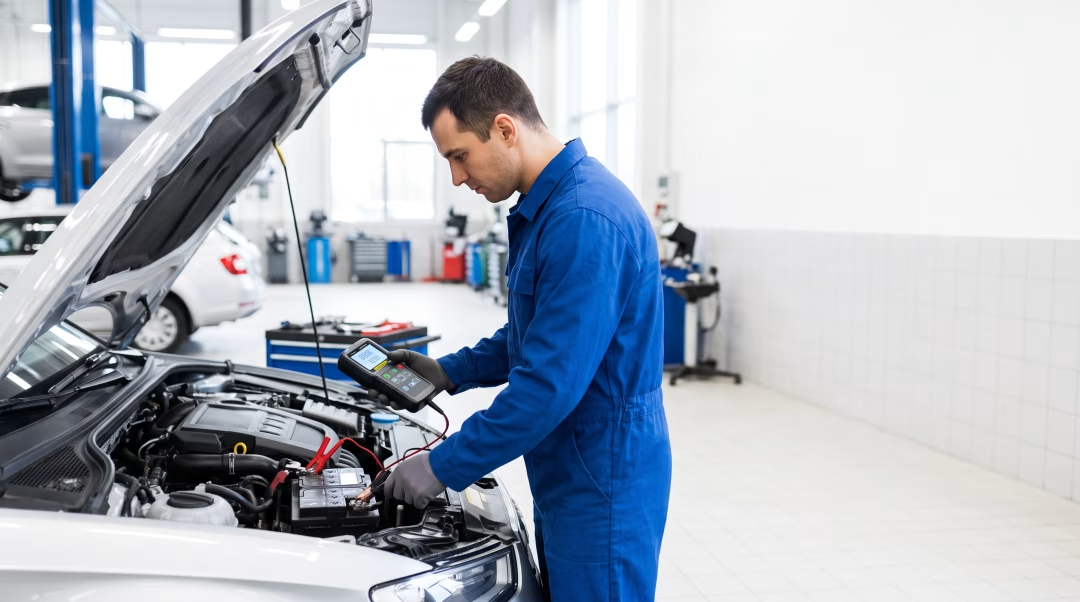
Staying ahead of battery failure is key to reliable transportation in the DFW area. Instead of waiting for the dreaded slow crank or dimming headlights, a proactive approach can save you time and stress. We recommend having your battery and charging system tested at least twice a year, ideally before the peak heat of summer and ahead of the first winter cold snap. When you explore our used inventory, you can feel more confident knowing that each vehicle undergoes a thorough inspection process which includes checking the health of the battery and its components.
A Deep Dive into DFW Car Battery Longevity
For drivers in North Texas, the question of battery life is not just about convenience, it is about reliability in a region known for its demanding climate and sprawling commutes. The often-repeated "three to five years" is a general guideline, but here in DFW, the reality is often closer to two to four years. The primary culprit is not the occasional ice storm but the relentless, triple-digit summer heat that defines our area for months on end.
Why Extreme Heat is a Battery's Greatest Foe
It is a common misconception that cold weather is what destroys car batteries. While cold can deliver the final blow to an already weakened battery, it is the prolonged exposure to intense heat that does the real, underlying damage. Think of what happens to a vehicle parked in an unshaded lot at a Dallas shopping center in August. The under-hood temperature can soar well above 150 degrees Fahrenheit. This extreme heat has several negative effects on a standard lead-acid battery:
- It accelerates the corrosion of the positive lead grids inside the battery.
- It causes the water in the battery's electrolyte solution to evaporate, exposing the lead plates and reducing the battery's capacity.
- It increases the rate of sulfation, a process where lead sulfate crystals build up on the plates, inhibiting the battery's ability to accept and hold a charge.
Essentially, the DFW summer bakes the life out of your car battery. For more details on this specific issue, you can read our article that explores how Dallas summer heat affects your car battery. This damage accumulates over time, and the battery becomes progressively weaker. Then, when the first cold morning of winter arrives, the weakened battery does not have enough power to turn over a cold engine, as you can learn more about in our guide on why your car battery dies after that first cold snap.
Beyond Heat: Other Factors Affecting Battery Life
While heat is the number one factor in North Texas, several other variables play a significant role in how long your battery will last:
- Driving Habits: Consistently taking short trips of less than 20 minutes does not give the alternator enough time to fully recharge the battery. This leaves it in a perpetual state of partial charge, which promotes sulfation and shortens its life.
- Vehicle Technology: Modern cars are packed with electronics. Infotainment systems, GPS, alarms, and various computer modules draw power even when the car is off. This is known as parasitic drain and can slowly discharge the battery over time.
- Vibration: Our ever-present road construction and bumpy roads can cause physical damage to the battery's internal components, leading to premature failure. Ensuring the battery is securely fastened in its tray can help mitigate this.
- Alternator Health: The alternator is responsible for recharging the battery while the engine is running. A failing alternator will not provide a consistent charge, causing the battery to work harder and fail sooner.
Warning Signs That Your Battery Is Nearing the End
Your vehicle will almost always give you clues that its battery is on its last legs. Paying attention to these signs can help you replace it before you are left stranded. One of the best practices when shopping for a pre-owned vehicle is to know how to check a used car's battery during your inspection. Look out for these common indicators:
- Slow Engine Crank: This is the most classic symptom. When you turn the key or press the start button, the engine turns over sluggishly before starting.
- Electrical Issues: You might notice your headlights and interior lights dim when you start the car or use power windows. The radio might also cut out or reset.
- Dashboard Warning Light: Many vehicles have a battery-shaped warning light that will illuminate if the system detects a problem with the battery or alternator.
- Corrosion on Terminals: A white, blue, or greenish powdery substance building up on the metal battery posts is a sign of leaking battery acid. This buildup can interfere with the electrical connection.
- Swollen Battery Case: If the sides of your battery case look bloated or warped, it is a sign that it has been damaged by excessive heat and should be replaced immediately.
- Age: If you know your battery is over three years old, it is wise to have it tested regularly, even if you have not noticed any symptoms.
Understanding your vehicle's needs is a key part of ownership. If you have questions about vehicle maintenance or financing, our team is always ready to help. You can learn more about our financing process on our financing area page or by visiting our locations in person.
Frequently Asked Questions About Car Batteries in North Texas
How often should I have my car battery tested in Texas?
It is a good practice to have your battery professionally tested twice a year in the North Texas climate. The best times are in late spring before the summer heat arrives, and in late fall before the first potential freeze. Most auto parts stores and repair shops offer this service for free.
Can a completely dead battery be recharged?
Sometimes, a dead battery can be jump-started and recharged by the alternator during a long drive. However, if a battery has been fully discharged, especially for an extended period, it can cause permanent damage to the internal plates, significantly reducing its future lifespan and reliability.
Does leaving my car unlocked drain the battery?
Yes, in many modern vehicles, leaving the car unlocked can cause a slow battery drain. This is because certain computer modules, security systems, and interior lights may remain in a "standby" mode, drawing a small amount of power continuously. Locking your car ensures these systems fully power down.
Is a more expensive battery always the better choice?
Not necessarily. The most important factors are choosing a battery that meets your vehicle manufacturer's specifications for size, terminal location, and Cold Cranking Amps (CCA). For modern cars with many electronics, an AGM (Absorbent Glass Mat) battery may be a better choice than a standard lead-acid one, though it costs more.
My new battery failed in less than a year. What could be the cause?
Premature battery failure is often not the fault of the battery itself. The most common culprits are an issue with the vehicle's charging system, such as a failing alternator, or a parasitic electrical drain caused by a faulty component that draws power when the car is off. It is important to have the entire system checked.
