

How to Check a Used
Car’s Brakes on a Test Drive
The test drive is your single best opportunity to evaluate the real-world condition of a pre-owned vehicle, and the braking system is one of the most critical safety components to assess. While a car may look great on the lot, its true performance is revealed on the road. Paying close attention to how the brakes feel, sound, and react can save you from potential headaches and costly repairs down the line. A thorough brake check is not just about stopping power; it is about understanding the vehicle's overall maintenance history and its readiness for the road. Learning how to properly check a used car's brakes is a simple yet powerful skill that empowers you to make a more informed and confident purchasing decision. Before you fall in love with a vehicle's features, make sure its fundamental safety systems are up to par. Ready to try these tips for yourself? Schedule a test drive today.
Beyond the initial check, remember that a trustworthy dealership is always your best partner. If you notice anything unusual with a vehicle's brakes, you should feel comfortable discussing it with the sales team. At our dealership, we pride ourselves on transparency and are committed to helping you find a reliable vehicle that fits your needs and budget. Our goal is to provide you with all the information necessary to feel secure in your choice, ensuring your new-to-you car is safe for you and your family from the moment you drive it home.
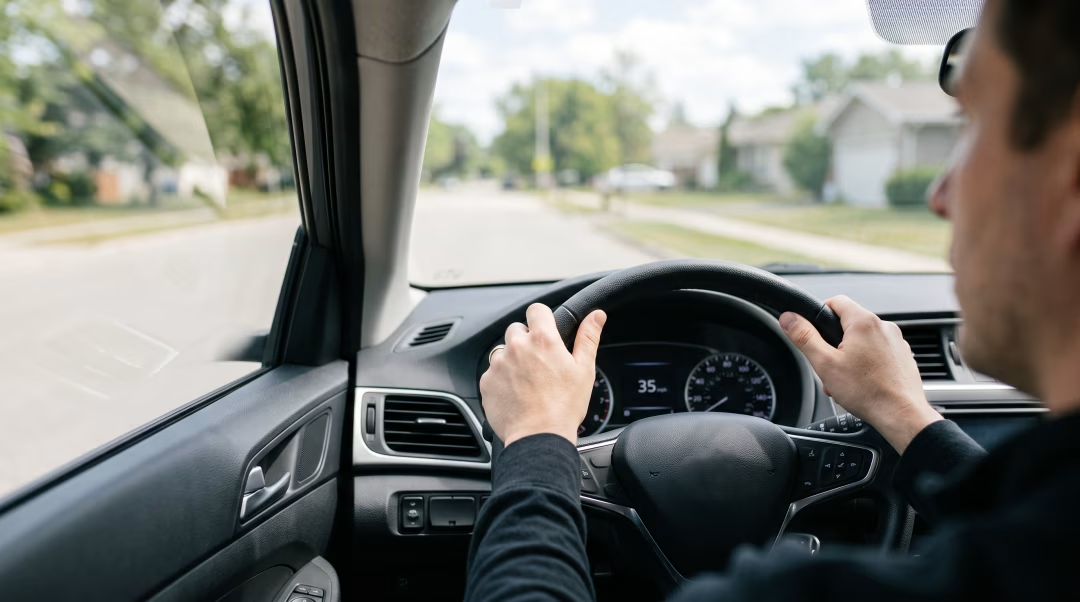
A Comprehensive Guide to Evaluating Used Car Brakes
When you are exploring our used inventory, the test drive is where your evaluation gets serious. The engine and transmission often get most of the attention, but the braking system is equally, if not more, important for your safety. A car that cannot stop reliably is a significant hazard. This guide will walk you through the essential steps to check a vehicle's brakes using your senses, helping you identify potential issues before you sign any paperwork. This process does not require any special tools, just your focused attention and a safe environment to perform a few simple tests.
Before You Turn the Key: The Visual and Static Check
While the majority of your brake inspection happens while driving, a quick look before you start the engine can offer some clues. First, with the engine off, press the brake pedal several times to deplete the power assist. Then, press the pedal down firmly and hold it. It should feel firm and not sink slowly to the floor. If it does sink, it could indicate a leak in the brake fluid system. Once you start the engine, you should feel the pedal drop slightly as the power brake booster engages, which is normal. This quick check gives you a baseline for how the pedal should feel. Also, take a moment to look at the dashboard when you turn the key to the "on" position. You should see the brake warning light and ABS (Anti-lock Braking System) light illuminate briefly and then turn off. If either of these lights stays on, it signals a problem that needs to be addressed.
Listen Carefully: What the Brakes Are Telling You
Your ears are one of your best tools during a test drive. As you begin to drive, find a safe area with minimal traffic, like a large, empty parking lot or a quiet side street. With the windows down and the radio off, perform several slow, gentle stops. Listen for any unusual noises.
- High-Pitched Squealing or Screeching: This is often the first sign that the brake pads are worn down. Most pads have a built-in wear indicator, which is a small metal tab that makes contact with the rotor when the pad material is low, creating this distinct sound as a warning.
- Grinding or Growling: A deep, metallic grinding noise is a major red flag. This typically means the brake pads are completely worn away, and the metal backing plate is grinding against the metal rotor. This not only results in poor stopping performance but also causes significant damage to the rotors, leading to a much more expensive repair.
- Clicking or Clunking: A clicking sound when you apply or release the brakes could point to loose or worn-out hardware, such as brake calipers or pads that are not secure in their mounting.
Any of these sounds warrant a conversation. A squeal might be a simple pad replacement, but a grind indicates a more urgent and costly problem. For a complete overview of what to look for, you can review our guide on what to check on a used car test drive.
Feel the Feedback: Pedal, Steering, and Chassis Sensations
How the car feels when you brake is just as important as how it sounds. Your sense of touch can detect subtle issues that might not make any noise. Pay attention to the feedback you get through the brake pedal and the steering wheel during braking at various speeds.
- Pulsating or Vibrating Pedal: If you feel a rhythmic pulsation or shuddering through the brake pedal, especially during firm stops from a higher speed (e.g., 40 mph), it is a classic symptom of warped brake rotors. The rotors are the discs that the pads clamp onto, and if their surface is uneven, it causes this vibration.
- Spongy or Mushy Pedal: A brake pedal that feels soft, sinks too easily, or goes down further than you expect could indicate air in the brake lines or low brake fluid. This is a serious safety concern as it can lead to a sudden loss of braking power.
- Car Pulling to One Side: When you apply the brakes firmly on a straight, level road, the vehicle should stop in a straight line. If it consistently pulls to the left or right, this often points to a problem with a brake caliper sticking on one side or a collapsed brake hose.
- Hard Pedal Feel: If the brake pedal feels unusually hard to press and requires excessive effort to slow the car down, there might be an issue with the power brake booster, which assists your foot pressure.
The Active Test: How to Safely Check Braking Performance
Once you have established a feel for the brakes in low-speed situations, it is time to test them under more realistic driving conditions. Find a safe, open stretch of road with no traffic behind you. From a speed of around 40-45 mph, apply firm, steady pressure to the brake pedal to bring the car to a complete stop. This is not a panic "slam on the brakes" stop, but a confident, assertive stop like you would make for a yellow light.
During this maneuver, you are checking for a combination of all the factors mentioned above. Does the car stop straight? Do you hear any grinding? Does the steering wheel shake or the pedal pulsate? The vehicle should come to a smooth, controlled stop without any drama. If you notice any issues, it is crucial to discuss them. A dealer who values their reputation, like one you would find by learning how to choose a reputable buy here pay here dealer, will appreciate your thoroughness and address your concerns openly.
Do Not Forget the Parking Brake
The parking brake (or emergency brake) is a separate system that is also important to check. If possible, find a gentle incline. Bring the car to a stop, put it in neutral, and firmly engage the parking brake. Then, slowly take your foot off the service brake pedal. The car should remain stationary. If it starts to roll, the parking brake is not holding properly and needs adjustment or repair. When you are ready to go, disengage the brake and make sure it releases completely without dragging.
A comprehensive brake check is a non-negotiable part of any used car test drive. By using your senses to listen and feel for warning signs, you can gain valuable insight into the car's condition and make a purchase with greater peace of mind. If you have questions about a vehicle or want to discuss its condition, do not hesitate to contact us. Our team is here to help.
What does a grinding sound mean when I brake?
A grinding sound almost always indicates that the brake pads have worn down completely. You are hearing the sound of the metal backing plate of the brake pad grinding directly against the metal brake rotor. This is a severe issue that requires immediate attention, as it significantly reduces stopping power and damages other expensive components.
Why does the car pull to one side when I brake?
If a car pulls to the left or right during braking, it means the braking force is not being applied evenly to both sides. This is commonly caused by a stuck brake caliper on one wheel, a blocked brake hose, or unevenly worn brake pads. It is a safety concern that should be professionally diagnosed and repaired.
Is a pulsating brake pedal a major problem?
A pulsating or vibrating brake pedal is most often caused by warped brake rotors. While the car will still stop, the vibration can be annoying and can get worse over time. It can also cause premature wear on other suspension components. It is not an emergency, but it is an issue that will need to be fixed by resurfacing or replacing the rotors.
What is the difference between a squeak and a grind?
A squeak is a high-pitched noise, often caused by the brake pad wear indicator, which is a warning that the pads are getting low. It can also be caused by dust or moisture. A grind is a much deeper, harsher, metallic sound that indicates the pads are completely gone and metal is grinding on metal. A squeak is a warning; a grind is a critical failure.
Should I still consider a car if the brakes feel a little soft?
A soft or "spongy" brake pedal can be a sign of air in the brake lines or a master cylinder issue. It is a significant safety concern because it can lead to reduced braking performance. You should always point this out to the dealer. Sometimes it can be a simple fix like bleeding the brakes, but it should be properly inspected before you make a purchase decision.
