

How to Check Whether a
Used Car Pulls to One Side
When you are considering a pre-owned vehicle, one of the most revealing parts of the process is the test drive. A common issue you might notice is the car pulling to one side. This is more than just a minor annoyance that requires you to constantly correct the steering. It can be a symptom of various underlying problems, ranging from simple fixes like uneven tire pressure to more complex issues involving the alignment, brakes, or suspension. Understanding how to properly check for a pull is a critical skill for any used car shopper. It empowers you to assess the vehicle’s mechanical condition accurately, ask informed questions, and ultimately make a confident purchase. This simple check can help you avoid unexpected repair bills and provide peace of mind, knowing you have chosen a vehicle that drives straight and true. It is a fundamental step in ensuring your next car is both safe and reliable for the road ahead.
Discovering that a car pulls to the left or right during a test drive is the first step in a deeper evaluation. Knowing the potential causes transforms you from a passenger into an informed inspector. Whether it is a straightforward tire issue or a more involved alignment adjustment, this knowledge allows you to understand the vehicle's condition more completely. A vehicle that maintains a straight path without constant correction is often a sign of proper maintenance and care. Here at our dealership, every vehicle in our used inventory is carefully inspected to address these types of concerns.
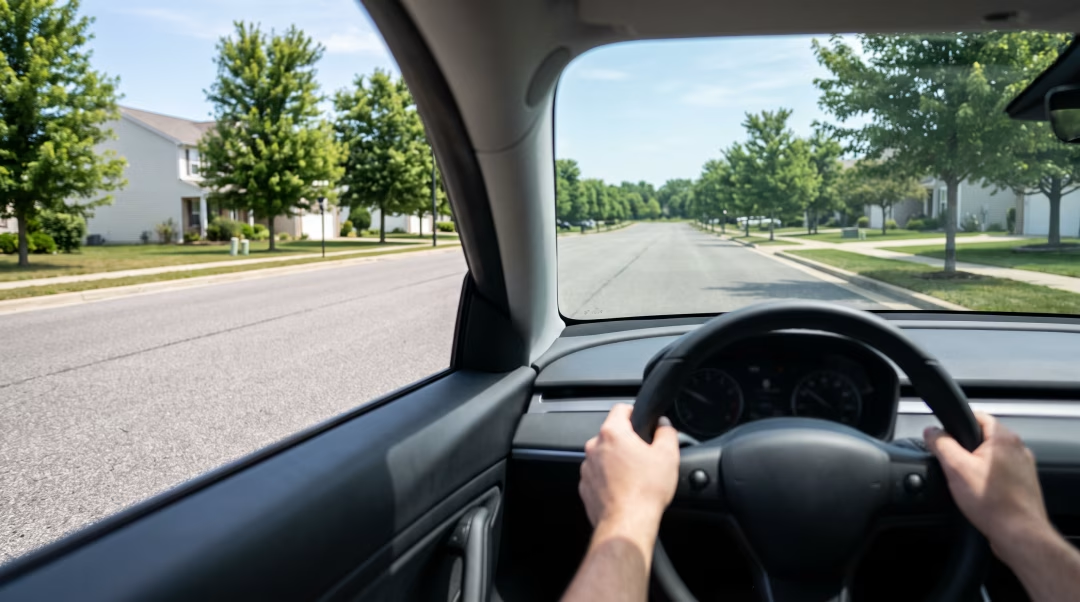
A Comprehensive Guide to Identifying and Understanding Vehicle Pulling
The feeling of a car pulling to one side is distinct. It is a persistent tug on the steering wheel, forcing you to apply constant counter-pressure to keep the vehicle traveling in a straight line. If you were to briefly let go of the wheel on a flat, straight road, the vehicle would begin to drift or veer to the left or right on its own. This is different from the natural crown of the road, which may cause a very slight drift to the right in the right-hand lane. A true pull is more pronounced and consistent. Identifying this behavior is a crucial part of any thorough used car test drive, as it provides valuable clues about the vehicle's health.
How to Perform the Test Drive Check
The best way to check for a pull is to find a safe, straight, and level stretch of road with minimal traffic. An empty parking lot or a quiet side street is ideal. Once you are up to a steady speed, such as 25-45 mph, and the road ahead is clear, follow these steps:
- The Hands-Off Test: For just a second or two, while holding your hands just above the wheel for safety, relax your grip completely. Observe if the car immediately starts to drift to one side. A well-maintained car should track relatively straight for a few moments.
- The Braking Test: On the same straight road, apply the brakes firmly but smoothly (not a panic stop). Pay close attention to the steering wheel. Does the car pull sharply to the left or right as it slows down? This specifically points toward a potential issue with the braking system.
- The Acceleration Test: From a low speed or a stop, accelerate briskly. A pull that only happens during acceleration can sometimes indicate a different set of issues, often related to the drivetrain or tires, known as torque steer. This is more common in front-wheel-drive vehicles but an excessive pull should be noted.
If you feel a pull, it is time to investigate the potential causes. While you may not be able to diagnose the exact problem on the spot, knowing what to look for can guide your questions and decisions. Feel free to schedule a test drive with us to experience one of our carefully vetted vehicles.
Common Causes of a Car Pulling to One Side
A vehicle can pull for many reasons. Fortunately, the most common causes are also the easiest and least expensive to address. However, a pull can also signal a more significant problem, which is why this check is so important.
Tire-Related Issues
Your tires are the most frequent source of pulling problems. Before you even start the car, take a moment to inspect them. Uneven wear, improper inflation, or mismatched brands can all lead to a pull.
- Uneven Tire Pressure: This is the number one cause. An underinflated tire on one side has more rolling resistance, causing the car to pull toward that side. This is a simple fix but indicates a potential slow leak or lack of regular maintenance.
- Uneven Tire Wear: If the tires have not been rotated regularly, the front tires may be more worn than the rears. If one front tire is significantly more worn than the other, it can cause a pull. You should also check for unusual wear patterns, as this can indicate alignment issues.
- Mismatched Tires: Having different brands, models, or sizes of tires on the same axle can create a pull because each tire may have a different construction, tread pattern, and level of grip.
- Tire Conicity: Sometimes, a defect in a tire's internal belts can cause it to behave as if it were cone-shaped, leading to a pull. This is often called "radial pull" and can be diagnosed by a mechanic by swapping the front tires to see if the pull switches sides.
Wheel Alignment Problems
After tires, wheel alignment is the next most likely culprit. Alignment refers to the angles of your wheels relative to the car and the road. Hitting a pothole, bumping a curb, or normal wear on suspension components can knock the alignment out of specification.
- Camber: This is the inward or outward tilt of the top of the wheel. Too much negative or positive camber on one side will cause the car to pull in that direction.
- Caster: This is the forward or backward tilt of the steering axis. Uneven caster between the left and right sides will cause a definite pull toward the side with less positive caster.
- Toe: This is the direction the front of the tires are pointing, either inward or outward. While incorrect toe primarily causes rapid tire wear, a severe difference can contribute to instability.
Brake System Malfunctions
If the car pulls specifically when you apply the brakes, the issue is almost certainly within the braking system. This is a significant safety concern that needs immediate attention.
- Sticking Brake Caliper: A brake caliper can seize or fail to release properly, causing the brake pad on that wheel to remain in contact with the rotor. This creates constant drag, making the car pull to that side and generating significant heat.
- Collapsed Brake Hose: An internal failure in a flexible brake hose can act like a one-way valve, preventing brake fluid from returning after you release the pedal, which has the same effect as a sticking caliper.
Suspension or Steering Component Wear
Worn parts in the steering and suspension system can also cause a pull. These issues are often accompanied by other symptoms like clunking noises, vibrations, or a loose feeling in the steering wheel. Worn components can allow the wheel alignment to shift while driving, resulting in an inconsistent pull or wandering.
- Worn Ball Joints or Control Arm Bushings: These components connect the wheels to the car's frame. When they wear out, they can create excessive play, affecting alignment and control.
- Bad Wheel Bearing: A failing wheel bearing can create drag and cause a pull, typically accompanied by a humming or grinding noise that changes with speed.
- Worn Tie Rod Ends: These connect your steering rack to the wheels. When loose, they can lead to erratic steering behavior and pulling.
Frame Damage
In a worst-case scenario, a persistent pull that cannot be corrected by alignment could be a sign of frame damage from a past accident. This is a major red flag. Reviewing a vehicle history report can help uncover reported accidents, but a professional pre-purchase inspection is the best way to identify potential frame issues.
Frequently Asked Questions
Is a slight pull always a serious problem?
Not always. A very slight drift, especially to the right, can be normal due to road crown designed for water drainage. Also, simple issues like low tire pressure can cause a pull but are easily fixed. However, any persistent or noticeable pull should be investigated to rule out more serious safety or mechanical issues.
Can I fix a car that pulls to one side myself?
It depends on the cause. You can easily check and adjust tire pressure at home or a gas station. However, diagnosing and fixing issues related to wheel alignment, brakes, or suspension components requires specialized tools and expertise. These repairs are best left to a qualified mechanic.
How much does it cost to fix a car that pulls?
The cost varies dramatically based on the cause. Adjusting tire pressure is virtually free. A four-wheel alignment typically costs between $80 and $200. Repairing a sticking brake caliper could be a few hundred dollars, while replacing worn suspension components could cost several hundred to over a thousand dollars, depending on the parts and labor involved.
Does "tire pull" or "radial pull" mean the tire is bad?
Yes, a radial pull is caused by an internal defect in the tire's construction. Even if the tire has plenty of tread and holds air, this defect will cause a consistent pull. The only solution for a radial pull is to replace the faulty tire.
Will a pre-purchase inspection find the cause of a pull?
Absolutely. A professional pre-purchase inspection (PPI) is one of the best ways to protect yourself. A skilled mechanic will not only confirm the pull during a test drive but will also put the car on a lift to thoroughly inspect the tires, brakes, suspension, and steering components to pinpoint the exact cause of the problem and estimate the repair costs.
