

How to Drive Safely
on Icy Dallas Overpasses
Here in Dallas, we are accustomed to sunshine and heat, not treacherous sheets of ice. When a winter storm rolls through North Texas, it brings a unique set of challenges that many local drivers are not prepared for. The most hazardous spots on our roadways are undoubtedly the overpasses and bridges. Because cold air circulates both above and below the elevated surface, these structures freeze much faster than the ground-level roads leading up to them. This creates a sudden and often invisible danger known as black ice. Understanding how to approach these icy overpasses is not just a driving tip; it is a critical safety skill for every Dallas-Fort Worth resident. Properly preparing your vehicle and adjusting your driving habits can make the difference between a safe commute and a serious accident. This guide will provide you with the essential knowledge you need to navigate these slick conditions with confidence.
A reliable vehicle is your first line of defense against unpredictable winter weather. Features like anti-lock brakes and good tires are essential, but the most important safety feature is always the driver. By adopting defensive driving techniques and understanding the physics of driving on ice, you can significantly reduce your risk. The following sections offer an in-depth look at how to prepare your car, what to do before you encounter an icy bridge, and how to react if you find yourself in a skid.
The Unseen Danger: Why Dallas Overpasses Are So Risky
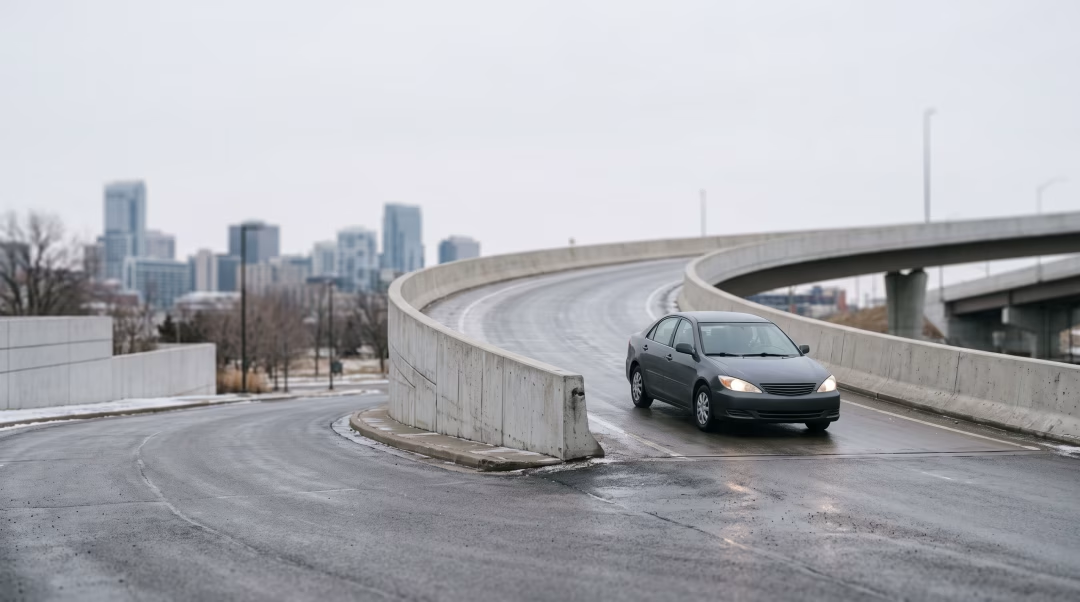
The science behind why bridges and overpasses freeze first is straightforward. A regular road surface has the ground beneath it, which retains heat and acts as insulation. An overpass, however, is exposed to the cold air on all sides—top, bottom, and sides. This means it loses heat rapidly, and its surface temperature can drop to the freezing point while the roads connected to it are still just wet. Drivers can be lulled into a false sense of security, driving at normal speeds on a wet road only to hit a patch of slick ice without warning as they ascend an overpass. This sudden transition is what makes these structures the frequent site of multi-car pileups during a DFW ice storm. Recognizing that every overpass could be icy, even when other roads seem fine, is the first and most crucial step to staying safe.
Preparing Your Vehicle for a Texas Freeze
Before the temperature drops, a thorough vehicle check is in order. You cannot control the weather, but you can control the condition of your car. A well-maintained vehicle is more predictable and responsive in an emergency. If you are unsure about your current vehicle's readiness, you can browse our used inventory for models equipped with modern safety features.
- Check Your Tires: Your tires are the only part of your car that touches the road. Ensure they have adequate tread depth and are inflated to the correct pressure. Cold air causes tire pressure to drop, so check it before heading out. Worn tires have significantly less grip on icy surfaces.
- Test Your Brakes: Having functional anti-lock brakes (ABS) is a major advantage on ice. If you are considering a different vehicle, learning what to check on a used car test drive, including the brakes, is vital.
- Inspect Your Battery: A car battery's power is reduced in cold weather. If your battery is more than a few years old, have it tested to make sure it has enough cranking amps to start on a frigid morning.
- Top Off Fluids: Make sure your windshield washer fluid is rated for freezing temperatures and your reservoir is full. Also, check that your engine coolant (antifreeze) is at the proper level and concentration to prevent freezing.
- Assemble an Emergency Kit: Being prepared is key. Having a kit can turn a scary situation into a manageable inconvenience. For ideas on what to include, learn about what to keep in your car emergency kit in Texas.
Defensive Driving Techniques for Icy Conditions
When you must drive in icy conditions, adjusting your mindset and your actions is critical. Your goal is to be smooth, slow, and deliberate.
Slow Down Before the Overpass: The most common mistake is waiting until you are on the bridge to slow down. Reduce your speed significantly while you are still on the pavement leading up to the overpass. This way, you are already at a safe speed when you hit the potential ice.
Increase Following Distance: On a dry road, a 3-4 second following distance is recommended. On ice, you should increase that to 8-10 seconds. This gives you much more time and space to react to the car in front of you without having to slam on your brakes, which can easily induce a skid.
Make No Sudden Moves: Every input you give the car—steering, braking, and accelerating—should be gentle and gradual. Jerking the steering wheel or stomping on the pedals will break your tires' limited traction. Imagine there is a cup of hot coffee on your dashboard and you do not want to spill it.
Avoid Cruise Control: Never use cruise control on wet or icy roads. You need to be in complete control of your speed and able to reduce it instantly if you feel the car begin to slip. Cruise control can cause the wheels to spin at a constant rate, which can lead to a loss of control on a slick surface.
How to Correct a Skid on an Icy Bridge
Even with careful driving, a skid can happen. Panicking is the worst response. Staying calm and knowing how to react can help you regain control.
- Take Your Foot Off the Pedals: Your first instinct might be to brake hard, but this will likely make the skid worse. Take your foot off both the accelerator and the brake. This allows the wheels to start rotating again, which is necessary to regain traction.
- Steer into the Skid: This is the most crucial part. Look where you want the car to go and gently steer in that direction. If the rear of your car is sliding to the right, gently turn your steering wheel to the right. As the car begins to straighten out, you will need to counter-steer to prevent it from skidding the other way.
- Look Where You Want to Go: Your hands will naturally follow your eyes. Do not stare at the guardrail or the obstacle you are trying to avoid. Focus your vision far down your intended path of travel.
The type of drivetrain your vehicle has can also affect how it behaves. Understanding the difference between four-wheel drive vs all-wheel drive can help you better anticipate your car's reaction in slick conditions. While AWD and 4WD can help you get moving, they do not help you stop any faster. The same gentle approach to braking and turning applies to all vehicles.
Why do overpasses and bridges freeze before other roads?
Overpasses and bridges freeze faster because they are exposed to cold air from all sides, including underneath. The ground insulates regular roads, keeping them warmer for longer. An elevated structure loses heat much more quickly, allowing ice to form on its surface even when the approaching roads are just wet.
What is black ice and why is it so dangerous?
Black ice is a thin, transparent layer of ice that forms on the road surface. It is called "black" because it is so clear that the dark pavement underneath shows through, making it nearly invisible to drivers. Its danger lies in its surprise factor; drivers often do not see it until they are already on it and have lost traction.
What is the first thing I should do if my car starts to skid on ice?
The first and most important thing to do is remain calm and take your feet off both the accelerator and the brake pedals. This allows the wheels to regain their rolling traction. Avoid slamming on the brakes, as this will lock the wheels and worsen the skid. Then, you can focus on steering gently where you want to go.
Does having an all-wheel drive (AWD) vehicle mean I can drive normally on ice?
No, it does not. While AWD and 4WD systems can help improve traction for accelerating from a stop, they do not provide any advantage for braking or turning on ice. All vehicles have four-wheel brakes. Overconfidence in an AWD vehicle is a common cause of accidents in icy weather. You must still drive slowly, increase your following distance, and brake gently.
What are the most essential items for a car emergency kit in a Dallas ice storm?
For a winter emergency, your kit should include essentials like a phone charger, warm blankets, extra gloves and a hat, non-perishable snacks, and a bottle of water. It is also wise to have an ice scraper, a small shovel, and a bag of sand or cat litter for traction if you get stuck. Read more about what to keep in your car emergency kit in Texas for a comprehensive list.
