

How to Jump-Start a
Car Safely: A Step-by-Step Guide
A dead car battery is one of the most common and frustrating vehicle issues, often happening at the worst possible moment. That telltale clicking sound, or complete silence, when you turn the key can derail your entire day. The good news is that learning how to jump-start a car safely is a valuable skill that can get you back on the road quickly. While it may seem intimidating, the process is straightforward when you follow the correct procedures and prioritize safety. Understanding these steps can save you time and the cost of a tow truck. Of course, frequent battery problems can be a sign that it is time for a more reliable vehicle. If you find yourself in this situation often, exploring our quality used inventory might be your next best step toward dependable transportation and peace of mind on your daily drives.
Successfully jump-starting your car is a great first step, but it is important to address the underlying issue. A battery may lose its charge for many reasons, from leaving your lights on to age and wear. After a jump-start, you should drive your vehicle for at least 20 to 30 minutes to allow the alternator to recharge the battery. If the problem happens again, it is a strong signal that your battery or charging system needs professional attention. It might also be the perfect time to value my trade and see how a dependable, newer vehicle can fit into your budget.
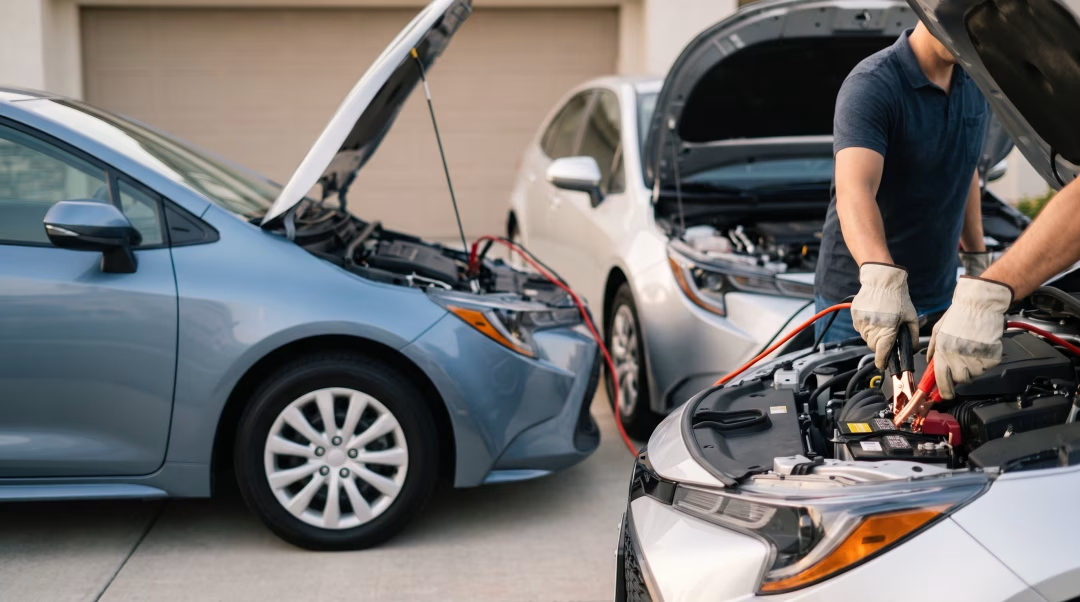
A Comprehensive Guide to Safely Jump-Starting Your Vehicle
Facing a dead battery can be stressful, but with a set of jumper cables and a little knowledge, you can often solve the problem yourself. This detailed guide will walk you through every step of the process, from preparation to the final disconnection, with a heavy emphasis on safety. Following these instructions carefully will help you avoid personal injury and prevent damage to either vehicle's electrical system.
Gathering Your Supplies
Before you begin, make sure you have the right equipment on hand. Attempting to improvise can be dangerous and ineffective. Here is what you will need:
- A set of quality jumper cables. Look for cables that are thick (a lower gauge number, like 4 or 6, is better) and at least 10 to 12 feet long to provide enough reach between vehicles.
- A second vehicle with a healthy, working battery. This is often called the "donor" vehicle.
- Safety glasses and gloves to protect you from potential sparks or battery acid.
- A wire brush for cleaning battery terminals if they are corroded.
Critical Safety Precautions Before You Begin
Safety is the most important part of jump-starting a car. Car batteries contain sulfuric acid and can produce flammable hydrogen gas. A single spark near the battery can cause an explosion. Always follow these safety rules:
First, position the two vehicles so they are close enough for the cables to reach but are not touching each other. Park on a flat, level surface away from traffic. Turn off the ignition for both cars and remove the keys. Engage the parking brake on both vehicles to prevent any accidental movement. For automatic transmissions, put the car in Park; for manual transmissions, put it in Neutral.
Next, open the hoods of both cars and locate the batteries. You may need to consult your owner's manual if the battery location is not obvious. Inspect the dead battery for any signs of damage, like cracks or leaks. If you see damage or smell rotten eggs (a sign of leaking sulfuric acid), do not attempt to jump-start the car. In that case, professional help is needed. If your battery is failing, especially in hot weather, it is a sign that it may be time for a replacement. You can learn more about the signs your car battery is failing in hot weather on our blog.
The Correct Cable Connection Sequence: A Step-by-Step Guide
The order in which you connect the jumper cables is essential for safety. Connecting them incorrectly can cause sparks and damage the electronics in one or both cars. A simple rhyme to remember is "Red to Dead, Red to Good, Black to Good, Black to Metal."
- Step 1: Identify the positive (+) and negative (-) terminals on both batteries. The positive terminal is usually marked with a "+" sign and may have a red plastic cover. The negative terminal is marked with a "-" sign. If the terminals are dirty or corroded, use a wire brush to clean them for a better connection.
- Step 2 (Red to Dead): Take one of the red (positive) clamps and attach it securely to the positive (+) terminal of the dead battery.
- Step 3 (Red to Good): Attach the other red (positive) clamp to the positive (+) terminal of the donor vehicle's battery.
- Step 4 (Black to Good): Attach one of the black (negative) clamps to the negative (-) terminal of the donor vehicle's battery.
- Step 5 (Black to Metal): This is the most critical step for safety. Attach the final black (negative) clamp to an unpainted metal surface on the car with the dead battery. Good grounding points include a bolt on the engine block or a metal strut holding the hood open. Do NOT connect it to the negative terminal of the dead battery. This final connection may create a small spark, and keeping it away from the battery prevents any hydrogen gas from igniting.
Starting the Engines and Disconnecting
With the cables correctly connected, start the engine of the donor vehicle. Let it run for a few minutes. This allows the working alternator to send some charge to the dead battery. After about five minutes, try to start the car with the dead battery. If it starts, you have been successful. If it just clicks or turns over slowly, let the donor car run for another five minutes before trying again.
Once the dead car is running, you need to disconnect the jumper cables. This must be done in the exact reverse order of how you connected them to prevent sparks.
1. Remove the black clamp from the unpainted metal surface on the formerly dead car.
2. Remove the black clamp from the negative terminal of the donor car.
3. Remove the red clamp from the positive terminal of the donor car.
4. Remove the red clamp from the positive terminal of the formerly dead car.
Be careful not to let the metal clamps touch each other or any metal part of the cars while you are disconnecting them.
What to Do After a Successful Jump-Start
Do not turn the recently started car off immediately. You need to drive it around for at least 20-30 minutes, preferably on a highway, to give the alternator enough time to build up a significant charge in the battery. If you turn it off too soon, you will likely need another jump-start. A jump-start is a temporary fix. You should have your battery and charging system tested by a professional as soon as possible to determine why it died. It may need to be replaced, or there could be an issue with your alternator. If you have any questions, please do not hesitate to contact us for guidance.
Troubleshooting: What If It Still Does Not Work?
If your car does not start after a couple of attempts, there might be a more significant problem. Double-check your cable connections to make sure they are secure and on the correct terminals. If the connections are good, the issue could be a completely dead battery that cannot hold a charge, a faulty alternator, a bad starter, or a blown fuse. In these situations, it is best to stop trying to jump-start the car and seek professional mechanical help. Knowing what to do if your car breaks down on highway can also be helpful in these scenarios.
Can you jump-start a car in the rain?
Yes, you can jump-start a car in the rain, but you must take extra precautions. Water conducts electricity, so ensure the jumper cable clamps and the top of the batteries are as dry as possible. Wear rubber gloves and safety glasses. Avoid standing in deep puddles and make sure no water can create a direct connection between the clamps or terminals.
How do I know which battery terminal is positive and which is negative?
Battery terminals are clearly marked. The positive terminal will have a plus sign (+) and often a red plastic cover or red-colored components nearby. The negative terminal will have a minus sign (-) and is typically connected to a black cable. If the markings are unclear due to dirt, clean them off before proceeding.
Can jump-starting damage my car's electronics?
If done correctly, the risk of damaging your car's sensitive electronics is very low. However, connecting the cables incorrectly, such as reversing the polarity (positive to negative), can cause a power surge that may damage the electronic control unit (ECU) and other components in both vehicles. Always double-check your connections before starting the donor car.
How long should the working car run before I try to start the dead one?
It is generally a good idea to let the donor vehicle run for at least five minutes after connecting the cables. This allows the working alternator to transfer some initial charge to the dead battery, increasing the chances of a successful start. If the first attempt fails, letting it run for another five minutes can sometimes help.
What is the difference between jumper cables and a portable jump starter?
Jumper cables require a second vehicle to provide the necessary power. A portable jump starter, or jump box, is a self-contained battery pack with built-in cables. It allows you to jump-start your car without needing another vehicle, making it a more convenient option if you are stranded in a remote location or a crowded parking lot.
