

How to Prepare Your Car
for a Rare Texas Ice Storm
When the forecast calls for a rare Texas ice storm, it is crucial to take proactive steps to prepare your vehicle. Unlike northern states where winter driving is a regular occurrence, freezing rain and icy roads can catch Dallas-Fort Worth drivers off guard. Proper preparation is not just about convenience; it is a critical safety measure for you, your passengers, and others on the road. Taking an hour to check essential components like your tires, battery, fluids, and wipers can make a significant difference in how your vehicle performs in slick, hazardous conditions. Building a simple emergency kit and understanding how to adjust your driving habits are equally important. This guide will walk you through the essential preparations to help you navigate a winter weather event safely and with greater confidence, so you can protect your investment and, more importantly, yourself.
The best defense against unpredictable weather is a reliable and well-maintained vehicle. These preparations can help you identify potential issues before they become serious problems on a frozen roadway. If checking these systems makes you question your current vehicle's dependability, it might be time to explore other options. We invite you to browse our extensive used inventory of cars, trucks, and SUVs that have been thoroughly inspected. A dependable vehicle provides peace of mind, no matter what the Texas weather brings.
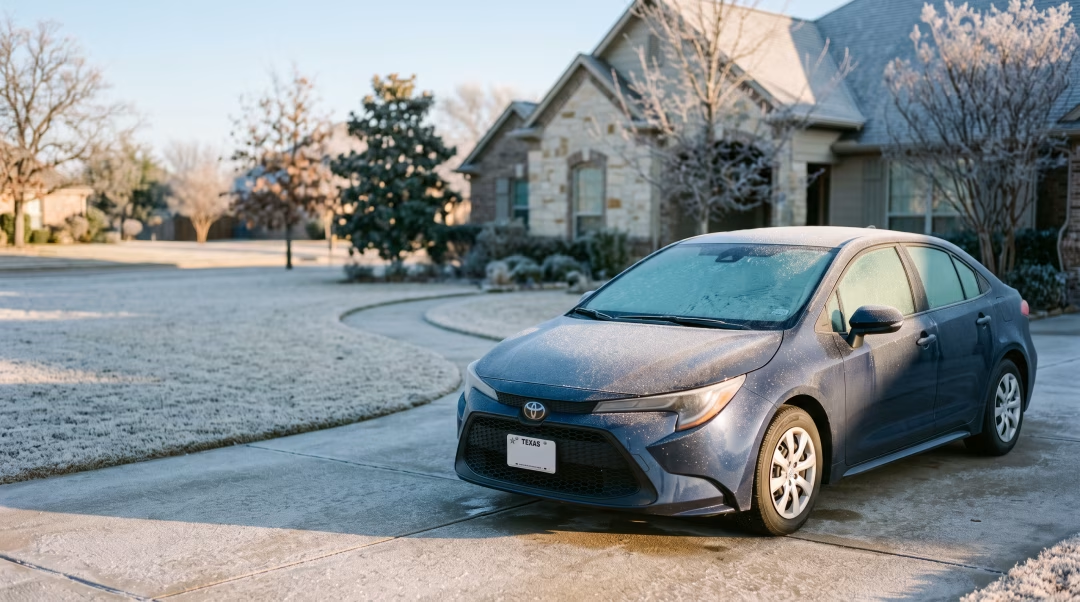
A Comprehensive Guide to Winter Vehicle Readiness in North Texas
In North Texas, we are more accustomed to preparing our cars for blistering summer heat than for ice. This lack of familiarity is precisely why a sudden freeze can be so disruptive and dangerous. Most vehicles on our roads are equipped with all-season tires, not snow tires, and our local infrastructure is not designed for sustained freezing temperatures. When an ice storm is imminent, a little preparation goes a long way. Before the temperature drops, performing a thorough inspection of your vehicle's core systems is the first and most important step.
Essential Mechanical Checks Before the Freeze
Cold weather is notoriously hard on vehicles, exposing weak points in key systems. Addressing these areas before the storm hits can prevent you from being stranded.
- Tires: Your Connection to the Road
Proper tire maintenance is critical for traction on icy surfaces. First, check your tire pressure. For every 10-degree drop in temperature, tire pressure can decrease by about one PSI. Underinflated tires make poor contact with the road, reducing grip. Inflate them to the manufacturer's recommended level, found on the sticker inside your driver's side door jamb. Next, inspect your tread depth. Use the penny test: insert a penny into the tread with Lincoln's head upside down. If you can see the top of his head, your tread is too worn, and it is time to consider new tires. While most Texas drivers use all-season tires, understanding the difference between them and other types, like those on an all-wheel-drive vehicle, can inform your driving decisions. - Battery: The Heart of Your Vehicle
A car battery loses a significant amount of its starting power in freezing temperatures. If your battery is more than three years old or has been showing signs of weakness, such as slow engine cranking, get it tested. Many auto parts stores offer this service for free. Check the battery terminals for corrosion, which looks like white or greenish buildup, and clean it off with a wire brush. A weak battery that works fine on a 50-degree morning might leave you stranded when it is 20 degrees. This is similar to how extreme temperatures impact batteries in the summer, which you can read more about by learning the signs your car battery is failing. - Fluids: The Lifeblood of Your Engine
Ensure all your vehicle's fluids are topped off and appropriate for cold weather. Most importantly, fill your windshield washer reservoir with a freeze-resistant fluid. Standard fluid can freeze in the lines or on your windshield, completely obstructing your view. Also, check your antifreeze (coolant) level to make sure your engine is protected from freezing. Finally, while modern engine oils are effective in a wide range of temperatures, making sure you are current on your oil changes helps your engine run efficiently in the cold. - Visibility: See and Be Seen
Your ability to see is dramatically reduced in winter weather. Replace worn or streaking windshield wiper blades. Clean the inside and outside of all windows and mirrors to prevent fogging and improve clarity. Test your front and rear defrosters to make sure they are working effectively. Lastly, walk around your vehicle and check that all exterior lights, including headlights, taillights, and turn signals, are functioning properly.
Building Your Texas Winter Car Emergency Kit
If you do get stuck or stranded, having the right supplies can make a dangerous situation manageable. Your emergency kit should be tailored to the specific challenges of a Texas ice storm. For more ideas, you can review our complete guide on what to keep in your car emergency kit in Texas.
- An ice scraper and a snow brush.
- A portable phone charger or power bank.
- Warm blankets, gloves, socks, and a hat.
- Non-perishable snacks and bottled water.
- A flashlight with fresh batteries.
- A basic first-aid kit.
- Jumper cables.
- A bag of sand or non-clumping kitty litter for traction if you get stuck.
Safe Driving Techniques for Icy Conditions
The most important rule of driving in an ice storm is to avoid it if possible. If you must be on the road, adjusting your driving style is non-negotiable. Everything takes longer on ice: accelerating, turning, and especially braking. Reduce your speed dramatically. Double or even triple your normal following distance to at least 8-10 seconds. Make every input to the steering, brakes, and accelerator smooth and gentle to avoid breaking traction. If your car begins to skid, take your foot off the pedals and steer calmly in the direction you want the front of the car to go. Be particularly cautious on bridges, overpasses, and shaded areas, as these freeze first and stay frozen longer. Learning how to drive safely on icy Dallas overpasses is a skill every local driver should have. If you find your current car is not giving you the confidence you need, it might be time to value your trade and see what a more suitable vehicle might cost.
If You Become Stranded
Even with careful preparation, getting stranded is a possibility. Do not leave your vehicle; it is your best source of shelter. Turn on your hazard lights and tie a brightly colored cloth to your antenna or window to increase visibility. To conserve fuel, run the engine and heater for only about 10 minutes each hour. Before you do, make sure your exhaust pipe is clear of any snow or ice to prevent deadly carbon monoxide from entering the cabin. Use the blankets and warm clothing from your emergency kit to stay warm. Call for help, inform them of your location, and wait for assistance to arrive. If you need to reach out to us for any reason, you can find our information on the contact us page.
Do I really need special tires for a rare Texas ice storm?
For the vast majority of Texas drivers, all-season tires that are in good condition with plenty of tread depth are sufficient. The key is to drive extremely carefully and slowly. Winter tires are designed for sustained snow and ice conditions not typically seen here. The more important factor is checking that your existing tires are properly inflated and not worn out.
What is the most important thing to keep in my car for freezing weather?
While every item in an emergency kit is useful, a warm blanket and a fully charged phone power bank are arguably the most critical. Staying warm is your first priority if you are stranded, and having a charged phone allows you to call for help and stay informed. An ice scraper is another essential item for maintaining visibility.
How can I tell if a bridge is icy before I drive on it?
Assume all bridges and overpasses are icy when temperatures are near or below freezing. Because cold air circulates above and below the elevated surface, they freeze much faster than regular roads. Look for a glossy, wet appearance, which could be black ice. Reduce your speed significantly before you get on the bridge and avoid braking or turning while on it.
Is all-wheel drive or four-wheel drive enough to keep me safe on ice?
AWD and 4WD systems can help you accelerate from a stop on slippery surfaces, but they do not help you stop or turn on ice. They can provide a false sense of security, leading drivers to go faster than conditions allow. All vehicles, regardless of their drive system, are vulnerable to sliding on ice. Safe, slow driving is far more important than your vehicle's drivetrain.
Why does my tire pressure light come on when it gets cold?
The air inside your tires contracts when it gets cold, causing the pressure to drop. A significant temperature drop overnight is often enough to lower the pressure below the threshold that triggers your vehicle's Tire Pressure Monitoring System (TPMS). This is a normal and important warning. You should check your tire pressure with a gauge and add air to bring it back to the recommended level.
