

How to Tell if a
Used Car Has Been Repainted
A vehicle's paint is more than just its color; it is the first line of defense against the elements and a key indicator of its history. A glossy, fresh finish can make any used car look appealing, but it can also hide secrets from a past life, such as damage from an accident or developing rust. Learning how to tell if a used car has been repainted is a critical skill for any savvy car buyer. It empowers you to ask the right questions and understand the vehicle's true condition. Identifying previous paintwork allows you to differentiate between minor cosmetic touch-ups and extensive repairs that might conceal more significant issues. This knowledge gives you the confidence to assess a car's quality and value accurately, ensuring you make a well-informed decision. We believe in complete transparency, which is why we want you to have the expertise to inspect any vehicle like a seasoned professional.
While trying to spot a repaint might seem like a job for a professional, it often comes down to paying close attention to the small details that others overlook. By carefully using your senses of sight and touch, you can uncover the real story behind a car's shiny exterior. A high-quality repair to fix a simple scratch is very different from a rushed paint job designed to hide major bodywork. Knowing how to spot the difference is crucial for making a smart investment. Every vehicle in our used inventory undergoes a detailed inspection, but we encourage every customer to use these tips.
Why Would a Used Car Be Repainted?
Finding evidence of a repaint is not automatically a reason to walk away from a potential purchase. There are many legitimate reasons a car might have new paint. The key is to investigate the reason for the work and assess its quality. Minor accidents, like a parking lot fender bender, often require a panel to be repainted. Sometimes, deep scratches or vandalism are repaired to restore the car's appearance. In other cases, environmental factors like severe sun exposure can cause the clear coat to fail, necessitating a repaint to protect the underlying metal. The goal of your inspection is to determine if the paintwork was done to a high standard to fix a minor issue or if it was a cheap, quick fix intended to mask a more serious problem, such as structural damage from a major collision.
Your Visual Inspection Guide: What to Look For
The most effective tool you have is a sharp pair of eyes. Conduct your inspection in bright, natural daylight, as artificial lighting or shade can easily hide imperfections. Walk around the entire vehicle, looking at it from different angles to see how the light reflects off the surfaces.
- Inconsistent Color and Finish: Factory paint jobs are remarkably consistent. Compare adjacent body panels, such as the door and the front fender, or the bumper and the quarter panel. Does one panel seem slightly lighter, darker, or have a different metallic flake? A mismatched color is a tell-tale sign of a partial repaint.
- Signs of Overspray: Overspray is a fine, sandy-feeling mist of paint that settles on areas that were not properly masked off. Carefully check the black plastic trim, rubber window seals, wheel well liners, and even the exhaust pipe. Run your fingers over these surfaces; they should be smooth. If you feel a rough texture, it is likely overspray.
- Uneven Paint Texture: Look closely at the reflection in the paint. A factory finish is typically very smooth. A repainted surface may have a bumpy texture, often called "orange peel," that resembles the skin of an orange. While some factory paints have a slight orange peel, it should be consistent across the entire vehicle. Inconsistent texturing is a major red flag.
- Hidden Paint Edges: Open the doors, hood, and trunk. Look in the jambs and under the weather stripping. Body shops often do not paint these areas as meticulously as the factory. You might find a hard "tape line" where the new paint ends and the original paint begins.
- Debris in the Paint: Look for tiny specks of dust, dirt nibs, or even small insect wings trapped in the clear coat. Professional factory paint booths are sterile environments. A local body shop, no matter how clean, can rarely replicate this, and small airborne particles can settle on the wet paint.
Using Touch and Tools to Uncover the Truth
Sometimes, what you can feel is just as important as what you can see. Your sense of touch can reveal imperfections that are too subtle for the eye to catch.
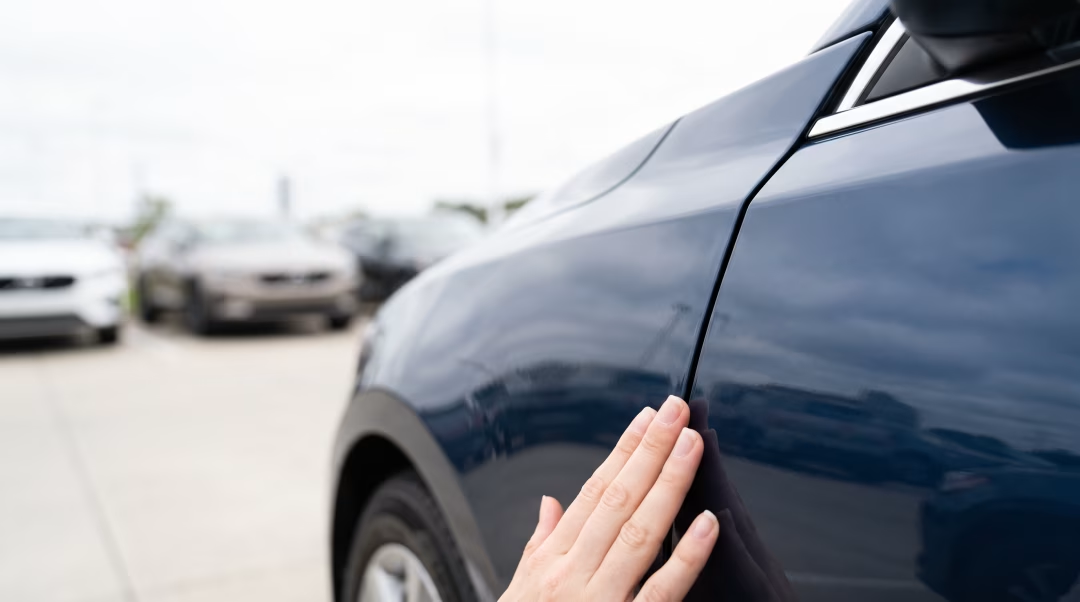
Gently run your hand along the edges of the body panels. Do you feel a distinct edge or ridge? This could be a sign of a poorly blended paint job. The surface of the paint should feel uniformly smooth. Any rough patches could indicate overspray or imperfections under the surface.
For a more advanced check, you can use a simple magnet. Body filler, often referred to by the brand name Bondo, is a polyester resin used to fill dents. It is not magnetic. Take a weak refrigerator magnet and test it on various parts of the car's steel body panels (this will not work on aluminum or plastic panels). It should stick with consistent force everywhere. If you find a spot where the magnet does not stick or feels very weak, it is highly likely that a thick layer of body filler is present, indicating a significant past repair.
The ultimate tool for this job is a paint thickness gauge, which measures the combined thickness of the primer, base coat, and clear coat in microns. While most buyers do not own one, understanding what it does is valuable. Factory paint is applied by robots and is extremely consistent, usually falling within a specific thickness range. A reading that is significantly higher than the surrounding areas confirms that a panel has been repainted. If you are serious about a vehicle, you may want to consider a pre-purchase inspection and ask the mechanic to use a gauge.
Putting It All Together with a Vehicle History Report
Your physical inspection provides clues, but a vehicle history report (VHR) can provide the backstory. A VHR from a service like CARFAX or AutoCheck will not explicitly state "this car was repainted." However, it will report documented events like accidents, hail damage, or a salvage title. If the report shows a moderate or severe accident on record, you can be almost certain that paint and body work were performed. This information gives you context for the signs you discovered during your own inspection. A clean VHR combined with signs of a poor-quality repaint suggests that an unreported repair was made, which warrants further questions.
Ultimately, identifying a repaint is about gathering information to make a confident purchase. A high-quality repaint to fix a minor issue may not be a concern, but a poor job hiding major damage could lead to rust, peeling, and a lower value when it is time to value your trade. If you have any questions about a vehicle's history, feel free to contact us. Our team is here to provide the answers you need.
Is a repainted used car always a bad thing to buy?
Not at all. Many repaints are done to fix minor cosmetic issues like scratches or fading clear coats. The key is to assess the quality of the repair. A professional, high-quality repaint can be just as durable as a factory finish. The concern arises when a poor-quality job is used to hide significant underlying damage.
Can a car be repainted without ever being in an accident?
Yes, absolutely. A car might be repainted to repair damage from vandalism (keying), severe hail, or simply to restore a finish that has been damaged by sun exposure and environmental factors over many years. Some owners also choose to repaint a car a custom color for purely aesthetic reasons.
What is "orange peel" in car paint?
"Orange peel" refers to a paint texture that is not perfectly smooth and flat. Instead, it has a dimpled or bumpy appearance that resembles the skin of an orange. This is caused by paint droplets not flowing and leveling out correctly before drying. While a small, consistent amount can be present from the factory, an inconsistent or heavy orange peel is a sign of an aftermarket repaint.
Will a CARFAX or AutoCheck report always show if a car was repainted?
No, a vehicle history report will not state that a car was repainted. However, it will show reported incidents like accidents or hail damage claims, which almost always involve paint and body work. If a repair was paid for out-of-pocket and never reported to insurance or the police, it will not appear on the report.
Besides overspray, what are other signs of a lazy masking job?
Look for paint on the edges of headlights, taillights, or exterior emblems. A meticulous body shop will remove these items before painting, while a rushed job will simply tape around them. You may also see different sheens or colors on bolts under the hood or in door jambs, indicating they were painted over instead of removed.
