

How to Tell When Your
Car Needs New Shocks or Struts
Your vehicle's suspension system, particularly the shocks and struts, plays a crucial role in both your comfort and your safety on the road. These components are designed to absorb impacts from bumps and potholes, keeping your tires firmly planted on the pavement for optimal control. Over time, however, they wear out, leading to a decline in ride quality and handling performance. Ignoring the warning signs of failing shocks or struts can not only make for an unpleasant journey but can also compromise your ability to brake and steer effectively, especially in emergency situations. Recognizing the early symptoms is key to maintaining your vehicle’s stability and preventing more costly repairs down the road. This guide will walk you through the common indicators that your car’s suspension may need attention, helping you become a more informed and proactive vehicle owner. It is important to know what to look for.
Understanding the health of a vehicle’s suspension is a critical part of the car ownership experience. The signs of wear we will explore are not just about comfort; they are direct indicators of your vehicle's ability to perform safely. Whether you are maintaining your current car or evaluating a potential purchase from our used inventory, this knowledge is invaluable. A car with a well-cared-for suspension is often a sign of a well-cared-for vehicle overall, giving you confidence in its reliability and performance from the moment you drive it home.
A Deep Dive into Your Car’s Suspension Health
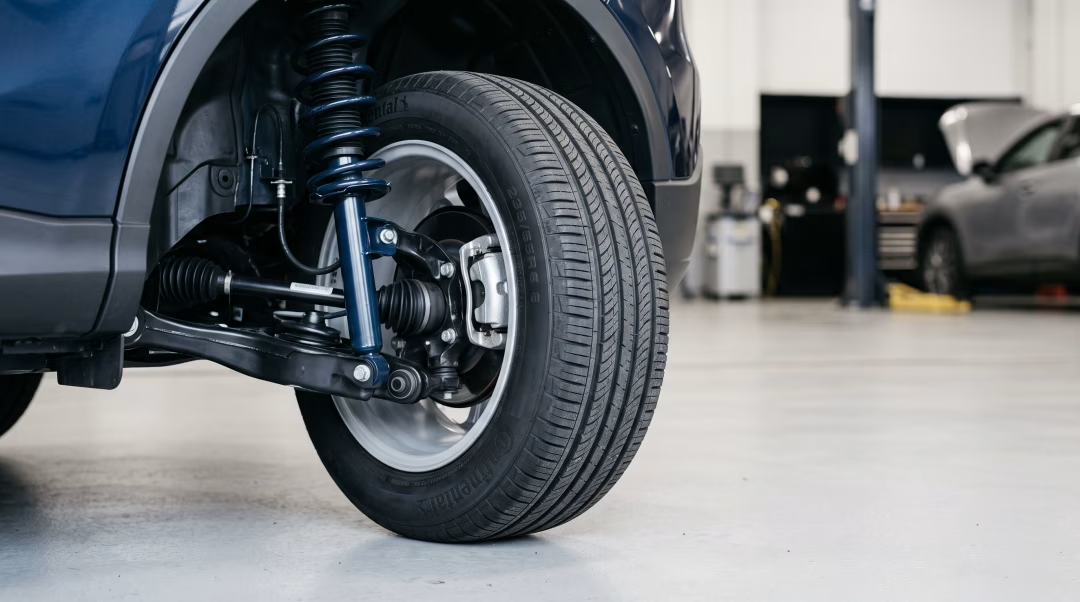
Your car’s shocks and struts are fundamental to its handling and safety systems. While often mentioned together, they serve distinct functions. Shock absorbers are standalone components that dampen suspension movement, converting kinetic energy into heat. Struts are a more structural part of the suspension, integrating a coil spring and providing support for the vehicle's chassis while also dampening movement. Most modern vehicles use a combination, typically with struts on the front axle and shocks on the rear. Regardless of the setup, their job is the same: to manage the vertical movement of your wheels and keep your tires in consistent contact with the road. When they begin to fail, this control is lost, leading to a cascade of noticeable and potentially dangerous symptoms.
Key Warning Signs Your Shocks or Struts Are Failing
Identifying a worn-out suspension does not always require a trip to the mechanic. By paying attention to how your car feels, looks, and sounds, you can often spot the early warning signs yourself. Being aware of these changes is the first step toward addressing the issue before it becomes a major safety concern. Here are the most common symptoms to watch out for:
- Excessive Bouncing and Instability: This is the classic symptom. If your car continues to bounce up and down long after you have driven over a bump or a dip in the road, your shocks or struts are likely worn. They are no longer effectively dampening the spring's movement. This can also manifest as a general feeling of instability or "floating" at highway speeds.
- Nose-Diving When Braking: When you apply the brakes firmly, does the front end of your car dip or lurch forward excessively? This "nose-dive" indicates that the front struts or shocks are too weak to properly manage the vehicle's weight transfer during deceleration. This can significantly increase your stopping distance.
- Rear-End Squatting During Acceleration: The opposite of nose-diving, this occurs when the rear of the vehicle dips down as you accelerate. The rear shocks or struts are failing to handle the shift in weight, which can reduce front-wheel traction and affect steering control.
- Swaying or Leaning in Turns: If you feel your car body rolling or swaying excessively when you take a corner or even during a lane change, the suspension is not keeping the vehicle stable. This lack of control can be particularly dangerous during sharp turns or evasive maneuvers.
- Uneven or Cupped Tire Wear: Worn shocks and struts allow the tires to bounce erratically against the pavement. This can lead to a distinctive wear pattern called "cupping" or "scalloping," where patches are scooped out of the tread. If you notice this pattern, it is a strong sign that your suspension needs immediate attention, as it is also ruining your tires. You can learn more by reading about how to check tire condition on a used car.
- Visible Fluid Leaks: Shocks and struts are hydraulic components filled with fluid. If you see oily fluid leaking from the body of the shock or strut, it means the seals have failed. A leaking component cannot function properly and must be replaced.
- Knocking or Clunking Noises: When suspension components become worn or loose, they can make clunking or rattling sounds, especially when driving over bumps. This could be due to worn-out mounting hardware or internal failure of the shock or strut itself.
Simple Diagnostic Checks You Can Do
Beyond observing how your car drives, there are a couple of hands-on checks you can perform. The most well-known is the "bounce test." When the car is parked, push down firmly on one corner of the vehicle several times and then let go. If the car bounces more than one or two times before settling, the shock or strut on that corner is likely worn. Repeat this for all four corners.
You can also perform a visual inspection. With the car parked on a level surface, look at the shock and strut assemblies in each wheel well. Look for any signs of leaking fluid, which will appear as an oily, dirty film on the component's body. Also, check for physical damage like dents in the shock body or broken mounts, which can impair their function. Learning how to check a used car's suspension is a valuable skill for any car owner.
Why Ignoring Suspension Problems is a Bad Idea
Putting off the replacement of worn shocks and struts is not just a matter of comfort. It is a critical safety issue. A compromised suspension can increase your braking distance by up to 20 percent, which can be the difference between a close call and a serious accident. It also reduces the effectiveness of safety systems like your Anti-lock Braking System (ABS) and electronic stability control, as these systems rely on consistent tire contact with the road to function correctly.
Financially, procrastination can lead to higher costs. As mentioned, bad shocks will destroy your tires prematurely. They also accelerate wear on other suspension components like ball joints, control arms, and tie rods. Turning a single repair into a full suspension overhaul is an expensive consequence of neglect. Understanding how to create a plan for unexpected car repair costs is an important part of responsible vehicle ownership.
Your Trusted Partner in Reliable Transportation
At our dealership, we understand that a reliable vehicle starts with a solid foundation. That is why every car in our inventory undergoes a thorough inspection process. We pay close attention to critical safety and performance systems, including the suspension. We believe that an informed customer is a confident customer. If you have questions about a vehicle's suspension or any other aspect of its condition, our team is here to provide clear, honest answers. You can even schedule a test drive to feel the ride for yourself and see the difference a well-maintained suspension makes. For more information, you can always contact us to speak with a knowledgeable professional.
What's the main difference between shocks and struts?
The main difference is that a strut is a structural part of the vehicle's suspension system, while a shock is not. A strut assembly combines a shock absorber with a coil spring and provides structural support for the suspension. A shock absorber's only job is to dampen spring oscillations. If your car has struts, you cannot drive without them. If it has shocks, they primarily affect ride control, not structural integrity.
How often do shocks and struts need to be replaced?
There is no universal replacement interval, as it depends heavily on the vehicle, the quality of the parts, and your driving conditions. A common recommendation is to have them inspected around 50,000 miles and consider replacement between 50,000 and 100,000 miles. However, you should always replace them as soon as you notice any of the key warning signs, regardless of mileage.
Can I just replace one bad shock or do they need to be replaced in pairs?
It is always recommended to replace shocks and struts in pairs (both front or both rear). Replacing only one can create an imbalance in damping performance from side to side, which can negatively affect handling and stability. A new component on one side and a worn one on the other can make the vehicle unpredictable, especially in turns or during sudden braking.
Will bad shocks or struts cause my car to fail a safety inspection?
Yes, they can. In Texas, a vehicle can fail its safety inspection if there are obviously broken or missing suspension components, or if a shock absorber is disconnected or has severe leakage. While a "bouncy" ride might not be a specific failure point, an inspector who sees evidence of a serious leak or broken mount will fail the vehicle, as it directly impacts safe operation.
Besides a rough ride, what are the biggest safety risks of worn shocks?
The biggest safety risks are increased stopping distance and loss of vehicle control. Worn shocks allow the tires to lose contact with the road surface over bumps, which means you temporarily lose braking and steering ability. They also contribute to excessive body roll in corners and hydroplaning on wet roads, making it harder to control the vehicle during emergency maneuvers.
