

How to Check
a Used Car's Suspension
A car's suspension system is one of its most critical and often overlooked components. It is responsible for providing a smooth, comfortable ride and, more importantly, keeping your tires firmly planted on the road for safe handling and braking. When you are looking at a used inventory, the condition of the shocks, struts, springs, and other connections can tell you a lot about how the vehicle was maintained and what future expenses you might face. A worn-out suspension not only makes for an unpleasant driving experience but can also lead to premature tire wear and compromise your control over the vehicle, especially in emergency situations. Learning a few simple checks can empower you to spot potential red flags before you make a purchase, saving you from costly repairs down the road and giving you valuable peace of mind. Knowing what to look, listen, and feel for is a key step in choosing a reliable pre-owned car.
Inspecting these components might sound technical, but many of the initial checks are straightforward and do not require any special tools. By combining a simple visual inspection with an attentive test drive, you can gather significant clues about the suspension’s health. This guide will walk you through the essential steps, from a basic "bounce test" in the parking lot to identifying specific noises and handling issues on the road. Arming yourself with this knowledge will help you make a more informed decision and select a vehicle that is both safe and sound.
A Detailed Guide to Inspecting a Used Car's Suspension
The suspension is a complex network of parts designed to absorb impacts from road imperfections and maintain vehicle stability. It is the bridge between the car's body and its wheels. When it is working correctly, you barely notice it. When it is failing, the signs can range from subtle annoyances to serious safety concerns. For any car shopper, a thorough suspension check is a non-negotiable part of the evaluation process. A well-maintained suspension indicates a well-cared-for vehicle, while a neglected one can signal a history of hard driving or deferred maintenance. Before you even schedule a test drive, there are several things you can assess while the car is stationary.
The Static Inspection: What to Check Before You Drive
Your inspection begins the moment you approach the vehicle. Take a moment to observe its stance and look for anything out of the ordinary before you get up close.
- Observe the Ride Height: Stand back from the car on a level surface and look at it from the front, back, and sides. Does the car sit level? If one corner appears lower than the others, it could indicate a failing spring or a collapsed strut. A sagging appearance, especially in the rear, can be a sign of worn-out components that can no longer support the vehicle's weight properly.
- Perform the Bounce Test: This is a classic and simple test. Go to each corner of the car and push down firmly on the fender or bumper. Release it quickly. A car with a healthy suspension should rebound once and then settle. If it continues to bounce up and down two, three, or more times, it is a strong indication that the shock absorbers or struts are worn out and can no longer dampen the spring's movement.
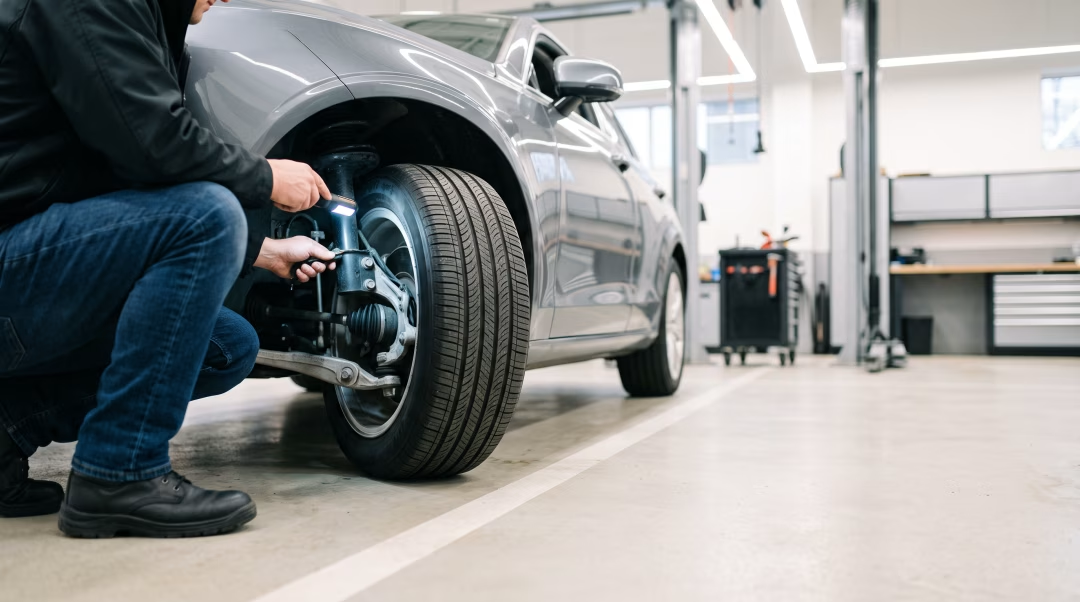
- Visual Inspection of Components: Safely look underneath the car at each corner. You may need a flashlight. Look at the shock absorbers or struts (the large, piston-like components). Do they look oily or wet? Shocks are filled with hydraulic fluid, and a greasy, fluid-covered housing is a clear sign of a leak, meaning the part has failed and needs replacement. Also, inspect any visible rubber bushings for cracks, perishing, or signs of excessive wear.
- Analyze the Tire Condition: The tires can tell you a story about the suspension and alignment. As you learn how to check tire condition on a used car, look for unusual wear patterns. A specific pattern called "cupping" or "scalloping," which appears as high and low spots across the tread, is a classic symptom of failing shocks or struts. This happens because the tire is literally bouncing off the pavement as it rotates.
The Dynamic Inspection: What to Look For on a Test Drive
A thorough test drive is where suspension problems truly reveal themselves. Your goal is to pay close attention to the vehicle's sounds and handling characteristics under various conditions. For a comprehensive overview of this process, review our guide on what to check on a used car test drive.
First, find a safe area with some bumps, dips, and corners, like an empty parking lot or a quiet side road. Turn off the radio and listen carefully as you drive. Do you hear any clunking, knocking, or rattling noises when you go over bumps? These sounds often point to worn-out sway bar links, ball joints, or control arm bushings. A squeaking or creaking noise, especially when turning or going over speed bumps, can also indicate worn bushings or ball joints that have lost their lubrication.
Next, focus on how the car feels. Does it feel floaty or bouncy, continuing to oscillate after hitting a dip in the road? This confirms the findings of the bounce test—the shocks are likely worn. When you go around a corner, does the car feel like it is leaning or swaying excessively? This "body roll" suggests issues with the struts or sway bar components. Pay attention during braking as well. If the front end of the car dips downward significantly (a phenomenon known as "nose-diving"), it is another sign that the front shocks or struts are weak. A healthy suspension will keep the car relatively stable and flat during turns and braking maneuvers. Finally, note any vibrations in the steering wheel, as this can also be linked to worn suspension parts or wheel balance issues.
When in Doubt, Seek a Professional Opinion
While these checks can help you spot many common suspension problems, some issues can be difficult to diagnose without a lift and professional expertise. If you perform these checks and still have concerns, or if you simply want a definitive assessment, it is always a good idea to get a pre-purchase inspection. An experienced mechanic can put the car on a lift to get a clear view of all the components, checking for play in ball joints, wear in tie rod ends, and other hidden problems you cannot see from the ground. Considering the cost of major suspension repairs, the small investment in an inspection can provide invaluable confidence in your purchase. You can learn more about this step in our article discussing if you should get a pre-purchase inspection on a used car.
Identifying suspension issues before you buy is crucial for both your safety and your wallet. A vehicle with a failing suspension is less predictable and harder to control. Understanding how to check for these problems puts you in a stronger position, allowing you to choose a reliable car or budget for necessary repairs. If you have questions about a vehicle's condition or our reconditioning process, please contact us for more information.
What is the easiest way to check for a bad suspension?
The simplest initial check is the "bounce test." Press down firmly on each corner of the vehicle and observe its reaction. If it bounces more than once after you release it, the shocks or struts at that corner are likely worn out. This is a quick, tool-free way to get a basic idea of the suspension's health.
Can I drive a car with a bad suspension?
While you can technically drive a car with a worn suspension, it is not recommended for safety reasons. A failing suspension can negatively affect your ability to control the car, increase braking distances, and lead to unpredictable handling, especially in an emergency. It also causes accelerated wear on other components, like your tires.
How much does it typically cost to fix a used car's suspension?
Suspension repair costs vary widely depending on the vehicle's make and model and the specific parts that need replacement. Replacing a pair of shocks might cost a few hundred dollars, while a more extensive job involving struts, control arms, and ball joints could cost well over a thousand dollars. This is why checking it beforehand is so important for your budget.
What is the difference between shocks and struts?
Both shocks (shock absorbers) and struts are damping devices, but they have different roles. A shock is a standalone component that only dampens spring movement. A strut is a structural part of the suspension and steering system that incorporates the damping function, a spring coil, and a mounting point for the wheel assembly. Most modern cars use struts on the front and either shocks or struts on the rear.
Does a bouncy ride always mean the suspension is bad?
While a bouncy ride is a primary symptom of worn shocks or struts, it can sometimes be related to other issues, such as incorrect tire pressure or severely unbalanced tires. However, if the bounciness is accompanied by other signs like nose-diving during braking, excessive body roll in turns, and a failed bounce test, the suspension is the most likely culprit.
