

Is It Better to Trade In
or Sell Your Car Privately in Dallas?
Deciding what to do with your current vehicle is one of the biggest questions Dallas drivers face when buying their next car. The choice between trading it in at a dealership or selling it privately comes down to a simple trade-off: convenience versus cash. Selling your car on your own can often result in a higher selling price, but it demands significant time, effort, and risk. You will be responsible for advertising, meeting with strangers, handling all the paperwork, and navigating potential scams. On the other hand, trading in your vehicle at a dealership is a fast, secure, and straightforward process. It simplifies the entire transaction by rolling everything into one event at one location. Plus, in Texas, trading in your car offers a substantial sales tax advantage that you do not get with a private sale, which can significantly close the price gap between the two options.
Ultimately, the right choice depends on your priorities. If your goal is to maximize your return and you have the time and patience to manage the selling process yourself, a private sale might be for you. However, if you value a seamless, secure, and quick transaction that saves you a significant amount on sales tax, trading in your car is the superior option. We invite you to find out what your car is worth with our easy online tool. It is a great first step to making an informed decision.
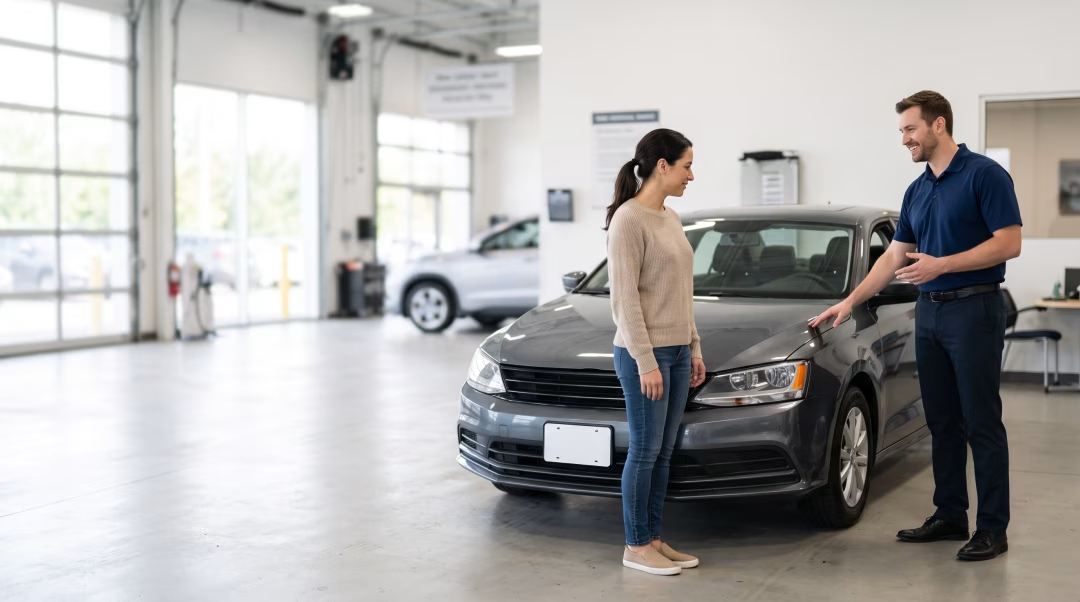
Comparing Your Options: A Deep Dive into Trading In vs. Selling Privately in Dallas
When you are ready for a new set of wheels, your current car becomes a key asset in the transaction. The path you choose to convert that asset into cash or credit will have a major impact on your overall car-buying experience. For drivers in the Dallas-Fort Worth area, the decision to trade in at a dealership or sell to a private party involves weighing factors like time, money, safety, and paperwork. Let's break down the pros and cons of each method to help you determine the best route for your situation.
The Benefits of Trading In Your Car at a Dealership
Choosing to trade in your vehicle is the most popular option for a reason. It prioritizes efficiency and security, streamlining the process of buying another car. While the offer might be less than the top retail value, the numerous advantages often outweigh the difference.
- Unmatched Convenience: This is the number one reason people trade in their cars. You can drive your old vehicle to the dealership and leave in your next one on the same day. There is no need to juggle selling your car and buying a new one separately, which could leave you without transportation. The entire process, from appraisal to applying the value toward your new purchase, is handled under one roof.
- Significant Sales Tax Savings: In Texas, this is a game-changing benefit. You only pay sales tax on the difference between the price of the vehicle you are buying and the value of your trade-in. For example, if you buy a $20,000 car and your trade-in is valued at $8,000, you only pay sales tax on $12,000. At the Texas rate of 6.25%, this saves you $500 instantly. This tax credit effectively increases your trade-in's value. You can learn more about how Texas calculates sales tax on used cars on our blog.
- No Hassle or Risk: Selling a car privately means dealing with the public. This involves writing ads, taking photos, answering countless inquiries, weeding out scammers, and meeting strangers for test drives. Trading in eliminates all these headaches and potential safety risks. You are dealing with a licensed, professional business in a secure environment.
- Simplified Financing: When you trade in your car, its value is easily applied as a down payment toward your next vehicle. This simplifies the financing process, as everything is handled in one transaction. If you still owe money on your current car, the dealership manages the loan payoff and paperwork, even if you have negative equity. This is a complex process to handle on your own in a private sale. Explore our financing area to see how a trade-in can fit into your purchase.
The Reality of Selling Your Car Privately
The primary motivation for selling a car privately is the potential to get more money for it. By selling directly to the next owner, you are cutting out the middleman. However, earning that extra cash requires you to take on all the responsibilities—and risks—of being a car seller.
- Demands Significant Time and Effort: The process is far from simple. You must research your car's market value, give it a thorough cleaning and detailing, take dozens of high-quality photos, and write a compelling description. Then, you need to post your ad on multiple online marketplaces and manage the incoming messages and phone calls.
- Dealing with Buyers: You will spend a lot of time communicating with potential buyers. Many will ask questions already answered in your ad, make lowball offers, or schedule a time to see the car and never show up. You will have to accompany strangers on test drives, which carries inherent safety risks.
- Handling Paperwork and Payment: As the seller, you are responsible for ensuring the payment is secure. Cash is ideal, but for large amounts, you may need to meet at the buyer's bank to verify a cashier's check. Personal checks can bounce, and payment apps have limits and risks. You must also correctly handle all the necessary Texas title transfer paperwork, including the title signing and submitting the Vehicle Transfer Notification to the state. Mistakes can lead to legal and financial liability down the road.
- No Tax Advantage: Remember that any extra money you make from a private sale needs to be weighed against the sales tax you will lose. The $500 you saved in our earlier example would have to be covered by the higher private sale price just to break even.
Making the Smartest Choice for You
For most people in Dallas, the combination of speed, safety, and the powerful sales tax advantage makes trading in their vehicle the clear winner. The process is transparent and lets you focus on the exciting part: choosing your next quality used car from our used inventory.
A great way to start is by getting a baseline value for your current vehicle. You can use our free and easy Value My Trade tool to get an estimate in minutes. This no-obligation appraisal gives you a solid number to work with. Once you have that figure, you can more accurately weigh it against the potential—and hassles—of a private sale. You might find that the dealership's offer, combined with the tax savings and peace of mind, is more attractive than you thought.
Helpful Links
Does trading in my car really lower my sales tax in Texas?
Yes, absolutely. This is a major financial benefit of trading in your vehicle at a licensed Texas dealership. The state calculates sales tax based on the final purchase price minus the value of your trade-in. This tax credit does not apply to private sales, where the buyer of your next car will pay tax on the full purchase price.
Can I trade in a car that I still owe money on?
Yes, you can. This is a very common scenario, and dealerships are equipped to handle it smoothly. We will contact your lender to get the exact payoff amount. That amount is then subtracted from your trade-in value. If there is positive equity, the remaining amount is applied as a down payment. If there is negative equity (you owe more than the car is worth), that amount can often be rolled into the financing for your next vehicle.
Should I fix dents or mechanical issues before trading in my car?
Generally, it is not cost-effective to perform major repairs before trading in your vehicle. Dealerships have access to wholesale parts and efficient service centers, allowing them to fix issues for much less than you would pay a retail repair shop. For minor things like a deep cleaning or touch-up paint, it might help with appearance, but you are unlikely to recoup the cost of significant repairs in a higher trade-in offer.
How long does a trade-in appraisal take?
A thorough trade-in appraisal is a quick process, typically taking around 15 to 30 minutes. Our appraisers will perform a physical inspection of your vehicle's interior and exterior, check the mileage, take it for a short test drive, and review its vehicle history report. We then use current market data to provide you with a fair and competitive offer based on these factors.
Do I have to buy a car from you to sell my car to you?
While most people trade in their vehicle as part of a purchase, many dealerships, including ours, will often buy your car outright even if you do not buy one from us. This provides another convenient way to sell your car without the hassles of a private sale. Simply get your offer, and if you accept, you can walk away with a check. Contact us to learn more about this option.
- All Inventory
- Cars
- Trucks
- Vans
- Crossovers
- SUVs
- Inventory
- Contact Us
- Sitemap
- Bios
- Sold Inventory
- Value My Trade
- Refer Friend
- Research Page Template
- Pre-Qualification
- Full Application
- Financing Area
- What Is BHPH?
- Financing FAQs
- Get Pre-Qualified
- Refer a Friend
- Sell Your Auto
- Book Test-Drive
- Testimonials
- Write a Review
- Privacy Policy
- Terms of Use
- Blog
