

How Is Trade-In Value Calculated
at a Used Car Dealer?
Understanding how your trade-in value is calculated can feel like trying to solve a complex puzzle. At our dealership, we believe in transparency, and we want to demystify the process for you. Your vehicle’s trade-in offer is not just an arbitrary number; it is a carefully determined figure based on a combination of factors, including its current market value, overall condition, and local demand. The process begins with established industry guides but goes much deeper. An experienced appraiser conducts a thorough physical inspection, from the tread on your tires to the smoothness of the engine's idle. They assess the vehicle's history and calculate the potential costs needed to prepare it for its next owner. This comprehensive evaluation allows us to provide a fair and competitive offer that reflects your car’s true current worth, helping you transition smoothly into your next vehicle from our used inventory.
The final trade-in value combines the vehicle's wholesale market price with a detailed assessment of its unique characteristics. Every scratch, service record, and feature contributes to the final calculation. We consider what it will cost to recondition the car to meet our quality standards for resale. This includes everything from a deep interior and exterior detailing to addressing any necessary mechanical repairs. Our goal is to present you with a clear, understandable offer that you can confidently apply toward your next purchase.
A Deep Dive into the Trade-In Appraisal Process
When you decide to trade in your vehicle, the number you are offered is the result of a multi-step evaluation process designed to determine its current wholesale market value. This is different from the retail price you see on cars for sale on a lot. The wholesale value is what a dealer might pay for a car at auction before accounting for reconditioning, marketing, and other costs. Let us break down exactly what goes into calculating that number.
Step 1: The Starting Point - Market Data and Vehicle Guides
The appraisal process almost always begins with data. Appraisers use several industry-standard resources to establish a baseline value for your car. These include:
Third-Party Pricing Guides: You are likely familiar with names like Kelley Blue Book (KBB), NADAguides, and Edmunds. These companies collect vast amounts of sales data to estimate a vehicle's value based on its year, make, model, trim, mileage, and general condition. Our appraisers use the professional versions of these tools, which provide more detailed wholesale and auction-level data.
Auction History Reports: Dealerships live and die by the auction market. We have access to real-time data showing what vehicles identical to yours have recently sold for at wholesale dealer auctions across the region and country. This is one of the most accurate indicators of a car's current wholesale value.
Vehicle History Reports: Before we even see your car, we will likely run a Vehicle History Report from a service like CarFax or AutoCheck using your VIN. This report tells us about the number of previous owners, reported accidents, title issues (like a salvage title), and service history. A clean, one-owner history generally adds value, while a history of accidents or a branded title will reduce it.
This initial data gives us a ballpark figure, but it is only the beginning. The real valuation happens during the physical inspection.
Step 2: The Hands-On Inspection and Test Drive
No amount of data can replace a thorough physical inspection. An experienced appraiser will walk around and drive your vehicle to assess its true condition. This is where the baseline value is adjusted up or down significantly. Here is what they are looking for:
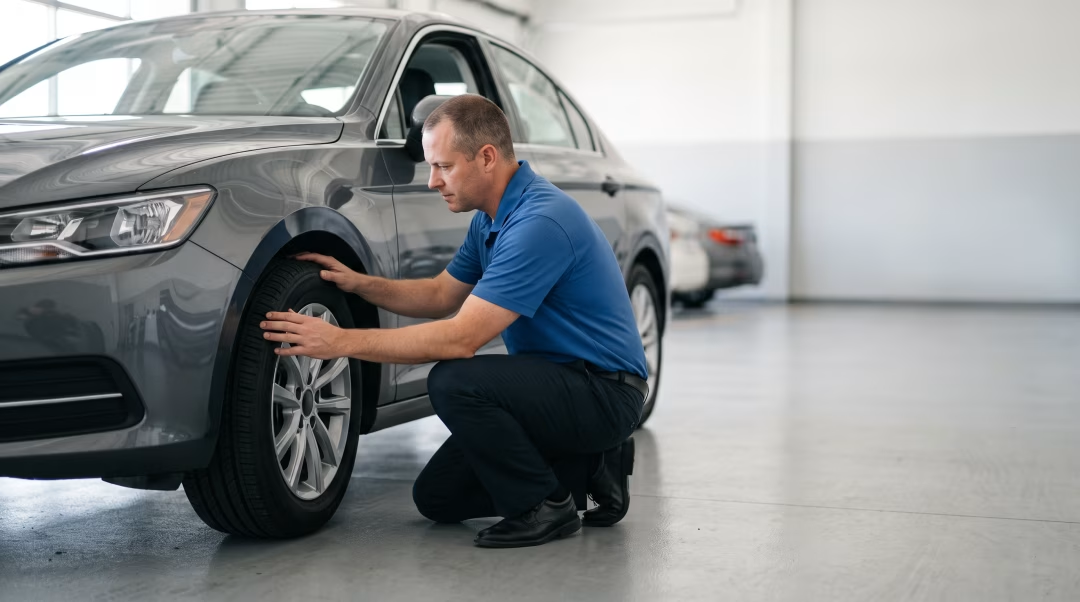
Exterior Condition: The appraiser will examine every body panel for dents, dings, deep scratches, and rust. They will check the quality of the paint and look for signs of previous bodywork or repainting, which could indicate a past accident. The condition of the glass, lights, and trim is also noted. Finally, they will inspect the tires. Mismatched brands, excessive wear, or dry rot mean the vehicle will need a new set of tires, which is a direct cost that reduces the offer.
Interior Condition: The inside of the car is just as important. Appraisers look for rips, stains, or burns in the upholstery and carpeting. They check for strong odors like smoke or pets, which can be very difficult and costly to remove. They will test all the electronic components, including the radio, climate control (A/C and heat), power windows, seats, and sunroof. A worn-out interior or malfunctioning features will lower the value.
Mechanical Condition and Test Drive: This is arguably the most critical part of the inspection. The appraiser will start the engine and listen for any unusual noises, like knocking or ticking. They will check for any visible fluid leaks under the hood. The test drive is essential to evaluate the engine's performance, the transmission's shifting, the brakes' effectiveness, and the suspension's feel. Any warning lights on the dashboard, such as the check engine light, are immediate red flags that signal a need for potentially expensive diagnostics and repairs. Learn more about what a check engine light usually means to understand the potential issues.
Step 3: Factoring in Local Market Conditions
A car's value is not universal; it is heavily influenced by the local market. A convertible might be worth more in a sunny climate, while a four-wheel-drive truck is in high demand in areas with rough weather or a strong construction industry. Our dealership understands the Dallas-Fort Worth market intimately. We consider:
Local Demand: Are trucks, SUVs, or fuel-efficient sedans more popular right now? The demand for your specific vehicle type in our area plays a huge role. For example, a reliable vehicle is crucial for people with long drives, like commuting on I-635.
Our Current Inventory: If we already have five sedans just like yours on our lot, we may offer less for another one. Conversely, if we just sold our last mid-size SUV and customers are asking for them, we might be more aggressive with our offer on yours.
Seasonality: Demand for certain vehicles fluctuates with the seasons. We account for these trends when making an offer.
Step 4: Calculating Reconditioning Costs
After the appraiser has a complete picture of your car's condition and market position, the final step is to calculate the cost of getting it "front-line ready." Every car we take in on trade requires some level of investment before it can be sold. This is known as reconditioning. The estimated cost of this work is deducted from the car's wholesale value to arrive at your trade-in offer. Common reconditioning costs include:
Full interior and exterior detailing.
Replacing worn tires and brakes.
Fixing mechanical issues found during the test drive.
Repairing cosmetic damage like dents or scratches.
State safety and emissions inspections.
The final offer is the result of this equation: Market Value - Reconditioning Costs = Your Trade-In Offer. By understanding these steps, you can see that your offer is a direct reflection of your vehicle's condition and the current market realities. If you are ready to see what your vehicle is worth, you can start the process online with our Value My Trade tool, and then visit us for a professional appraisal.
Can I trade in a car that I still owe money on?
Yes, you absolutely can. This is a very common situation. We will contact your lender to get the exact payoff amount. That amount is then factored into your new vehicle purchase. If your trade-in is worth more than the payoff, the difference, known as positive equity, can be used as a down payment. If you owe more than the car is worth, this is called negative equity, and the difference can often be rolled into your new auto loan. You can learn more at our financing area page.
Does having a clean car get me a better trade-in offer?
While a car wash will not add hundreds of dollars to the value, a clean and well-maintained vehicle makes a very strong first impression. It suggests to the appraiser that the car has been cared for, both cosmetically and mechanically. It saves the dealership time and money on detailing, and it helps them see the true condition of the paint and interior without dirt and clutter in the way. A clean car can definitely help you get the best possible offer for its condition.
Should I fix minor issues before trading my car in?
This depends on the issue. For major mechanical problems, it is usually not cost-effective for you to make the repair. A dealership can typically perform repairs for less than a consumer can. However, for very minor things like replacing a burnt-out bulb or touching up a tiny paint chip, it might be worth the small investment. We have a helpful guide that explores if you should fix your car before trading it in.
How is my trade-in offer different from the car's retail price?
The trade-in offer is based on the vehicle's wholesale value, which is what a dealer would pay to acquire it at auction. The retail price is the price the dealer will ask for the car after it has been fully reconditioned, inspected, and prepared for sale. The difference between these two prices covers the reconditioning costs, any warranty or service contracts, marketing expenses, sales staff commissions, and the dealership's profit margin.
What documents do I need to trade in my car?
To ensure a smooth trade-in process, you should bring your vehicle's title. If you have a loan, bring your account information so we can get the payoff amount. You will also need your valid driver's license, proof of current auto insurance, and the vehicle's current registration. If you have them, bringing along any service records and all sets of keys can also be beneficial.
