

Should You Fix Your Car Before
Trading It In? A Complete Guide
Deciding whether to invest in repairs before trading in your car is a common dilemma for vehicle owners. You want to get the highest possible value for your trade-in, but you also don't want to spend money on fixes that won't provide a return on your investment. The truth is, the answer isn't always simple. Minor cosmetic improvements might boost curb appeal and perceived value, while major mechanical repairs can cost far more than they add to the appraisal amount. Understanding the difference is key to making a smart financial decision. It's a careful balance between the cost of the repair, the time and effort involved, and the actual impact it will have on the final offer from a dealership. This guide will help you navigate that decision, so you can approach your trade-in with confidence and clarity about the best path forward for your specific situation.
Ultimately, the goal is a smooth and beneficial transition into your next vehicle. Our appraisal process is designed to be transparent and straightforward, taking the guesswork out of the equation for you. Our experienced team evaluates your vehicle based on its current condition, market demand, and our ability to recondition it efficiently. This often means we can handle necessary repairs more cost-effectively than you could on your own. Let us assess your vehicle as-is and provide a competitive offer that you can apply directly toward a quality vehicle from our used inventory.
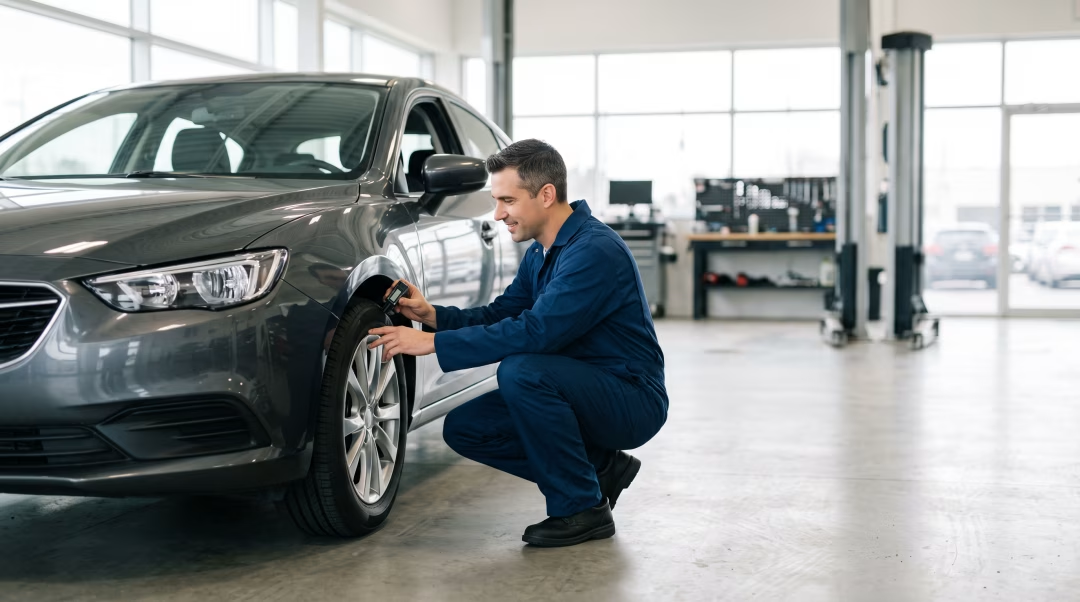
Analyzing the Return on Investment for Pre-Trade-In Repairs
When you're preparing to trade in your vehicle, every dollar counts. The core question is: will spending money on this repair increase my trade-in value by more than what I spent? For most drivers, the answer is often no, especially when it comes to significant mechanical work. Dealerships have a distinct advantage. We work with wholesale parts suppliers and have in-house technicians, allowing us to recondition vehicles for a fraction of what a retail body shop or mechanic would charge you. Because we can fix things for less, the deduction from your trade-in value for a known issue is typically smaller than your out-of-pocket repair cost would be. Let's break down the different types of repairs to see where it might, and might not, make sense to invest.
Low-Cost, High-Impact Fixes (Often Worth Considering)
These are the small things that create a powerful first impression. A car that looks clean and well-cared-for suggests to an appraiser that it has likely been well-maintained mechanically, too. These fixes are inexpensive and can often be done yourself.
- Thorough Cleaning: A deep clean inside and out is the single most effective thing you can do. Vacuum the carpets, wipe down all surfaces, and wash and wax the exterior. It costs very little but dramatically improves curb appeal.
- Replace Burnt-Out Bulbs: Check all your headlights, taillights, and interior lights. A non-working bulb is a quick and cheap fix that prevents an appraiser from noting it as a required repair.
- Top Off Fluids: Ensure your oil, windshield washer fluid, and coolant are at the proper levels. It's another small sign of a maintained vehicle.
- Gather Your Paperwork: Having service records, the owner's manual, and both sets of keys organized shows responsibility and can add a small amount of value.
Moderate Repairs (The Gray Area)
This is where the math gets tricky. These are noticeable issues that will almost certainly be factored into your appraisal. However, the cost for you to fix them at a retail shop may still be higher than the increase you'd see in your trade-in value. Before proceeding with any of these, it is a great idea to see what your vehicle might be worth as-is. You can get a preliminary estimate with our online value my trade tool.
- Replacing Worn Tires: A set of new tires can cost $600-$1,000 or more. While bald tires will lower your trade-in value, you are unlikely to recoup the full cost of the new set. A dealership might only increase the offer by $300-$500, as they can source and mount tires at a much lower cost.
- Fixing a Cracked Windshield: A significant crack is a safety issue that must be fixed. Your insurance may cover this, but if you have to pay out of pocket, a replacement can be hundreds of dollars. The dealership will deduct for this, but likely less than your full replacement cost.
- Minor Dent and Scratch Repair: For small dings and scratches, a paintless dent repair service or a touch-up pen might be a worthwhile investment. For larger bodywork, the cost will almost certainly exceed the value it adds.
Major Mechanical Repairs (Almost Never Worth It)
If your car has a serious mechanical problem, like a check engine light indicating a transmission issue or a knocking engine, fixing it before you trade is rarely a good financial move. These repairs can cost thousands of dollars. Spending $3,000 to fix a transmission might only increase the trade-in offer by $1,500. You are far better off disclosing the issue to the appraiser and putting that $3,000 toward the down payment on your next vehicle. We have the expertise to either repair these issues efficiently or find other outlets for vehicles with significant problems. Your best strategy is to be transparent about the issue and focus on finding your next reliable car from our used inventory.
How We Determine Your Trade-In Value
Understanding our appraisal process can help you see why trading in "as-is" is often the most sensible option. It is not just about subtracting repair costs; it is a holistic evaluation of your vehicle's overall worth in the current market.
- Physical Inspection: Our appraiser will walk around the vehicle, examining the body for damage, checking tire tread depth, and looking for signs of previous repairs. They will then inspect the interior for wear and tear, check electronic features, and look under the hood.
- Test Drive: A short test drive helps assess the engine's performance, transmission shifting, brake function, and steering alignment.
- Vehicle History Report: We review reports from services like CarFax or AutoCheck to see the accident history, title status, and service records.
- Market Data: We consult multiple sources that show what similar vehicles in similar condition are selling for at auctions and on other dealership lots in our area. This ensures our offer is aligned with current market conditions.
By combining these factors, we arrive at a fair offer that reflects the vehicle's true market value and the cost required for us to recondition it for sale. This process is designed to be efficient for you and allows for a seamless transition into a newer vehicle, often with the help of our dedicated financing department.
Should I fix the check engine light before trading in my car?
Generally, no. The cost to diagnose and repair the issue behind a check engine light can range from minor to extremely expensive. It is better to be upfront about the light with the appraiser. They will factor in a potential repair cost, but it will likely be less than what you would pay a retail mechanic, saving you from a potentially costly and non-recoverable expense.
Is it worth detailing my car before a trade-in appraisal?
Yes, this is one of the most cost-effective preparations you can make. A thoroughly cleaned car gives the impression that it has been well-maintained overall. While it may not add thousands to the offer, it can certainly contribute to a higher appraisal value by improving the initial impression and showing the vehicle in its best possible light.
Will new tires increase my trade-in value?
New tires will increase the value, but typically not by the full amount you paid for them. For example, spending $800 on new tires might only increase the trade-in offer by $400 or $500. If your tires are dangerously worn, it might be necessary, but if they just have some life left, it's usually better to let the dealer replace them at their wholesale cost.
Can I trade in a car that has been in an accident?
Absolutely. It is important to be transparent about any accident history, as it will appear on the vehicle history report. The value will be adjusted based on the severity of the damage and the quality of the repairs. Trading in a car with a history of damage is very common and is a much simpler process than trying to sell it privately.
How much does a dealership deduct for common repairs?
The deduction amount is based on the dealership's wholesale cost to fix the issue, not the retail price you would pay. This is a key advantage of trading in as-is. For a repair that might cost you $1,000, a dealer might only deduct $500-$600 from the trade-in offer because their internal costs for parts and labor are significantly lower.
