

What Does a Powertrain Warranty
Cover on a Used Car?
Understanding Your Powertrain Warranty Coverage
When you are considering the purchase of a pre-owned vehicle, understanding the included warranty is a crucial step in making a confident decision. A powertrain warranty is one of the most valuable forms of coverage you can have, as it specifically protects the most essential and expensive components of your car. Think of it as a safety net for the parts that make your vehicle move: the engine, transmission, and drivetrain. These are the core systems responsible for generating power and delivering it to the wheels. A failure in any of these areas can lead to significant and often unexpected repair bills. Having a clear understanding of what this warranty covers provides peace of mind, knowing that you are protected against some of the costliest potential mechanical issues. It is a fundamental aspect of a smart vehicle purchase, ensuring your investment is safeguarded from the moment you drive off the lot.
Peace of Mind for the Road Ahead
A powertrain warranty is designed to give you confidence in your used car purchase by covering the intricate and vital systems that propel your vehicle. While it doesn't cover everything, it focuses on the components that are the most complex and costly to repair or replace. This targeted protection is a key benefit when browsing our used inventory, allowing you to focus on finding the right car, truck, or SUV for your needs, knowing that its core mechanical systems are covered. It is a testament to the quality of our vehicles.
A Deep Dive into Powertrain Warranty Protection
Navigating the world of automotive warranties can sometimes feel complex, but breaking it down makes it much more approachable. The term "powertrain" refers to the group of components in your vehicle that work together to create power and transfer it to the road, making the wheels turn. It is the heart, muscle, and skeleton of your car's ability to move. A powertrain warranty, therefore, is a specific type of coverage that focuses exclusively on these critical, high-cost parts. Unlike a more comprehensive "bumper-to-bumper" warranty that covers a wider array of vehicle parts, a powertrain warranty hones in on the mechanical systems that are most integral to the car's operation and typically the most expensive to fix if something goes wrong.
Let's explore the three main areas typically included in powertrain coverage:
1. The Engine
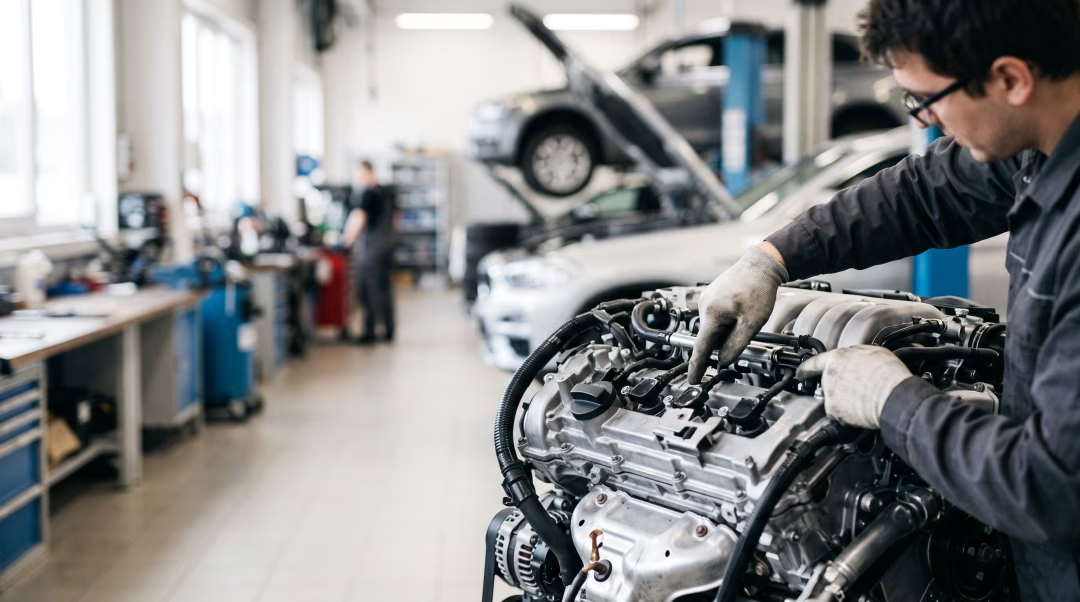
The engine is the primary power source for your vehicle. A powertrain warranty generally covers the engine block and cylinder heads, along with all of the internally lubricated parts they contain. These are the moving pieces inside the engine that work under immense pressure and heat. Problems with these parts are often complex and require specialized labor to address.
- Pistons and piston rings
- Crankshaft and main bearings
- Camshaft and lifters
- Timing chains or belts and gears
- Oil pump
- Intake and exhaust valves
It is important to note that parts considered external to the engine block, such as belts, hoses, spark plugs, the radiator, and sensors, are usually not covered under a standard powertrain warranty.
2. The Transmission and Transaxle
The transmission is the gearbox that takes the power generated by the engine and adjusts it to send the appropriate amount of force to the wheels for your driving speed. Forgetting to check this component is a common mistake people make during a used car test drive. Powertrain warranties cover both automatic and manual transmissions. This includes the transmission case itself and all its internally lubricated parts.
- Torque converter (in automatic transmissions)
- Gears and gear sets
- Internal seals and gaskets
- Transmission control module
In front-wheel-drive vehicles, the transmission and axle assembly are combined into a single unit called a transaxle, which is also covered.
3. The Drivetrain (Drive Axle Assembly)
The drivetrain includes all the components that come after the transmission and are responsible for delivering the final rotational force to the wheels. The specific parts covered will depend on whether your vehicle is front-wheel drive (FWD), rear-wheel drive (RWD), all-wheel drive (AWD), or four-wheel drive (4WD).
- Driveshaft(s)
- Axle shafts
- Constant velocity (CV) joints
- Differential housing and internal gears
- Universal joints (U-joints)
- Transfer case (on AWD and 4WD vehicles)
What Is Typically Excluded from a Powertrain Warranty?
Just as important as knowing what is covered is understanding what is not. A powertrain warranty is not an all-encompassing protection plan. Generally, items that are expected to wear out over time through normal use are excluded. This distinction is important because while a warranty covers defects in materials or workmanship, a used car service contract might be available to cover some of these other items. Typical exclusions include:
- Wear-and-Tear Items: Brake pads and rotors, tires, clutch linings, windshield wipers, and shock absorbers.
- Routine Maintenance: Oil changes, filter replacements, fluid top-offs, and tire rotations.
- Electrical Systems: The battery, starter, alternator, wiring, stereo system, navigation, and power windows.
- Suspension and Steering: Ball joints, tie rods, and the power steering pump are usually not included.
- Cosmetic Issues: Paint, trim, and interior upholstery.
Furthermore, any damage resulting from an accident, misuse, environmental factors, or failure to perform required maintenance is not covered. It is your responsibility to maintain the vehicle according to the manufacturer's recommendations to keep the warranty in effect.
Why This Matters for Your Used Car Purchase
For anyone financing a used car, especially through an in-house financing program like ours, a powertrain warranty is incredibly valuable. Our goal at our financing area is to set you up for success. A major, unexpected repair can strain any budget and make it difficult to keep up with payments. A powertrain warranty directly addresses this concern by mitigating the risk of a catastrophic mechanical failure. It demonstrates our commitment to providing reliable vehicles that you can depend on for your daily commute and family needs. Always be sure to review your retail installment contract on a used car to fully understand all the terms of your purchase and warranty coverage. Learning how to plan for unexpected car repair costs is easier when the biggest potential expenses are already covered.
Does a powertrain warranty cover the radiator?
Typically, a powertrain warranty does not cover the radiator. The radiator is considered part of the vehicle's cooling system, which is separate from the engine's internal mechanical components. While essential for engine operation, it is not an internally lubricated part of the engine block itself.
Is the catalytic converter part of the powertrain warranty?
No, the catalytic converter is not covered by a powertrain warranty. It is a component of the vehicle's exhaust and emissions control system. While it is connected to the engine, it is not part of the core powertrain that creates and delivers power to the wheels.
How long does a powertrain warranty usually last on a used car?
The duration of a powertrain warranty on a used car can vary significantly. It is often defined by a period of time or a number of miles, whichever comes first (for example, 3 months or 3,000 miles). The specific terms will be clearly stated in the warranty documentation provided at the time of purchase.
Do I have to get my car serviced at the dealership to keep the warranty?
This depends on the specific terms outlined in your warranty agreement. While you are generally not required to have routine maintenance performed at the selling dealership, you will need to prove that the required services were completed on schedule by a qualified facility. Keeping detailed service records is essential for any warranty claim.
Does a powertrain warranty cover labor costs for repairs?
Yes, for a covered repair, a powertrain warranty typically includes the cost of labor to fix or replace the failed component. However, you should always review the warranty contract for specifics, as some may have a deductible or other limitations. If you have any questions, please contact us for clarification.
