

7 Telltale Signs Your
Car Needs a Wheel Alignment
Have you ever felt like you are fighting with your steering wheel just to drive in a straight line? That constant tug to the left or right is more than just an annoyance—it is a classic sign that your car needs a wheel alignment. Proper alignment is crucial for your vehicle's safety, handling, and the lifespan of your tires. It ensures all four wheels are pointing in the exact same direction, perfectly parallel to each other and perpendicular to the ground, as intended by the manufacturer. Over time, hitting potholes, bumping into curbs, or even just the general wear and tear from driving on Dallas roads can knock your wheels out of sync. Ignoring these symptoms can lead to more expensive problems down the road, including premature tire replacement and stress on your suspension components. Recognizing the early warning signs is key to keeping your vehicle safe and running efficiently.
Paying attention to how your vehicle drives is one of the most important aspects of car ownership. The subtle changes in steering and handling are your car's way of communicating a problem. Addressing alignment issues promptly not only restores a smooth, safe ride but also protects your investment. A vehicle with a well-documented maintenance history, including regular alignments, often has a higher value. If you are considering upgrading, see what your current car is worth by visiting our value my trade page.
A Deeper Dive into Vehicle Alignment Issues
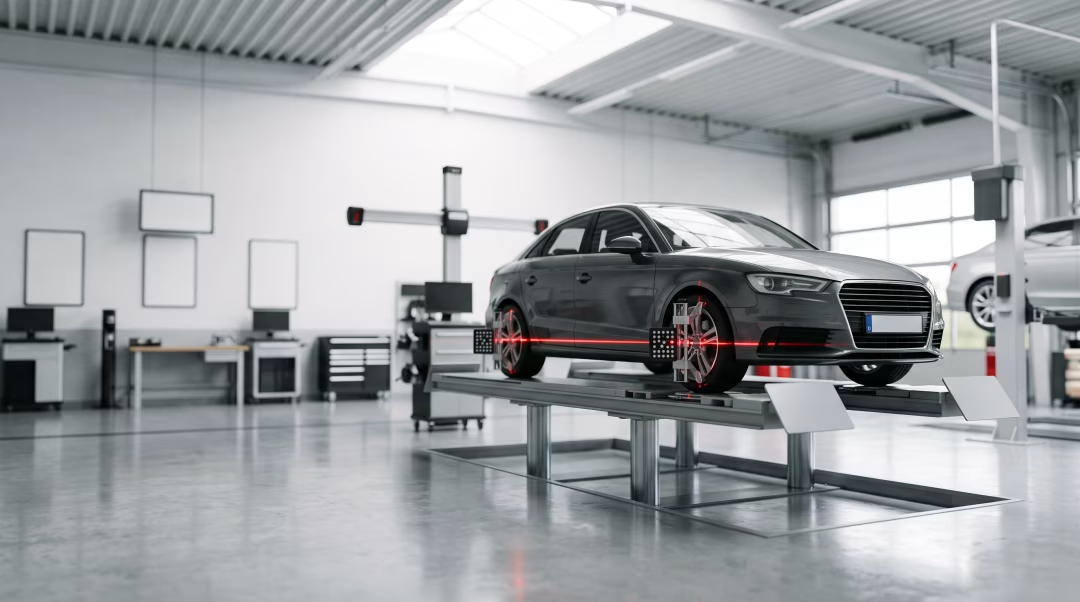
A wheel alignment is a fundamental part of vehicle maintenance, yet it is often misunderstood or overlooked until a major problem appears. It involves adjusting the angles of the wheels to meet the car manufacturer's specifications. The purpose of these adjustments is to reduce tire wear, and to ensure that vehicle travel is straight and true without "pulling" to one side. When your car's alignment is off, it can affect multiple systems, compromising your control and safety. Below, we explore the most common signs in detail, helping you diagnose a potential issue before it escalates.
1. Your Vehicle Pulls to the Left or Right
This is perhaps the most obvious symptom of poor alignment. While driving on a straight, flat road, you may notice you have to apply constant pressure to the steering wheel to keep the car from drifting into another lane. To test this safely, find an empty parking lot or a straight, level road with no traffic. Briefly loosen your grip on the steering wheel and observe if the car maintains a straight path or starts to veer. While some slight drifting can be caused by the crown of the road, a persistent and noticeable pull is a clear indicator that your alignment needs to be checked.
2. The Steering Wheel is Off-Center
When you are driving straight, your steering wheel should be centered and level. If you notice that your vehicle's emblem in the center of the steering wheel is tilted to one side while you are traveling in a straight line, your alignment is off. This issue, known as an off-center steering wheel, is a direct result of the wheel angles being out of specification. It is a simple visual cue that something is amiss with the geometry of your suspension and steering systems.
3. Uneven or Rapid Tire Wear
Your tires can tell you a lot about the health of your vehicle's alignment. Inspect all four tires carefully. Do you see more wear on the inside or outside edges of the tread? This is called "camber wear." Are the edges of the tread blocks worn into a sawtooth or feathered pattern when you run your hand over them? This is a sign of "toe wear." When wheels are not aligned properly, they do not roll straight ahead. Instead, they are dragged slightly sideways, scrubbing rubber off the tread and causing it to wear down unevenly and much faster than normal. If you are replacing tires far more often than you should be, poor alignment is a likely culprit.
4. Squealing Tires During Turns
While tires might squeal if you take a corner too fast, hearing this sound during routine, low-speed turns is a red flag. When your alignment is incorrect, the tires may not be tracking properly through the arc of a turn. This forces them to scrub and skip across the pavement, creating a distinct squealing or screeching noise. This is a sign of excessive friction and indicates that your tires are under significant stress, which accelerates wear and can impact handling.
5. Vibration in the Steering Wheel
A vibrating steering wheel can be caused by several issues, including unbalanced tires, but it can also be a symptom of misalignment. If the wheels are fighting each other due to improper angles, it can create oscillations that travel up the steering column to your hands. This vibration may be more noticeable at certain speeds. While it is important to rule out tire balancing, if the vibration persists or is accompanied by other signs like pulling, an alignment check is in order. It is also wise to understand the other parts of your suspension, which you can learn about on our page about how to tell when your car needs new shocks or struts.
6. Loose or Unstable Steering
Does your steering feel less responsive than it used to? If there seems to be a lot of "play" in the steering wheel or the car feels wandering and requires constant small corrections, your alignment could be to blame. Worn suspension components can also contribute to this feeling, and these parts are often inspected during a comprehensive alignment service. A properly aligned car should feel tight, responsive, and stable, giving you confidence behind the wheel.
7. Your Steering Wheel Doesn't Return to Center
After completing a turn, the steering wheel should naturally start to return to its centered position on its own. This is part of the vehicle's design, influenced by the alignment angles. If you find that your steering wheel remains in a turned position or is very slow to return to center, it often points to an alignment problem, specifically with the caster angle. This can make driving feel unnatural and requires more effort from the driver.
What Causes Misalignment?
Understanding what can throw your alignment off can help you be more aware of potential issues. While gradual wear is normal, several common events can cause sudden and significant problems:
- Potholes and Poor Road Conditions: A jarring impact from hitting a pothole is one of the most frequent causes of misalignment. The constant road construction around Dallas can also contribute, as you can learn more about on our page discussing how road construction can affect your tires.
- Hitting a Curb: Whether parking or sliding on a slick surface, bumping into a curb can easily knock your suspension out of alignment.
- Minor Accidents: Even a small fender bender can have enough force to bend suspension components and disrupt your vehicle's alignment.
- Wear and Tear: Over time, suspension parts like ball joints, tie rod ends, and bushings wear out. As they develop looseness, they can no longer hold the alignment settings correctly.
When you are considering a pre-owned vehicle, it is essential to check for these signs during your evaluation. Performing a thorough test drive is critical, and our guide on what to check on a used car test drive can help you spot potential alignment issues before you make a purchase from our used inventory.
How often should I get a wheel alignment?
As a general rule, it is a good idea to have your alignment checked about once a year or every 12,000 miles. You should also have it checked anytime you install new tires, have suspension parts replaced, or after a significant impact with a curb or pothole.
Can hitting a pothole really cause alignment issues?
Absolutely. The sudden, harsh impact of hitting a pothole can be enough to bend a steering or suspension component, which will immediately alter your vehicle's alignment angles. The severity of the misalignment often depends on the speed of the impact and the size of the pothole.
Is a wheel alignment the same as wheel balancing?
No, they are two different services. A wheel alignment adjusts the angles of the wheels so they are perpendicular to the ground and parallel to each other. Wheel balancing involves adding small weights to the wheel to ensure the weight is distributed evenly, which prevents vibrations at higher speeds.
How long does a wheel alignment service usually take?
A typical four-wheel alignment for a standard passenger vehicle usually takes about one hour to complete. However, if any suspension components are seized or broken and require replacement, the process can take longer.
Will a wheel alignment fix a vibration I feel while driving?
It might, but it is not guaranteed. Vibrations are most commonly caused by unbalanced tires. However, severe alignment issues can also create vibrations. A technician can diagnose the root cause, which could be balancing, alignment, worn parts, or a tire issue.
