

What Does MPG Mean
for Real Dallas Driving Conditions?
When you are looking at used cars, one of the most prominent numbers you will see is the MPG rating, which stands for Miles Per Gallon. This figure, provided by the EPA, gives you a standardized estimate of a vehicle's fuel efficiency. However, Dallas drivers know that the number on the sticker does not always match the reality at the pump. The daily grind of North Texas traffic, from the stop-and-go crawl on I-635 to cruising on the Dallas North Tollway, creates unique challenges for fuel economy. The intense summer heat also plays a significant role, demanding more from your car's air conditioning system and engine. Understanding what MPG truly means for your actual commute in the DFW Metroplex is key to choosing a vehicle that fits your lifestyle and, more importantly, your budget. It is about translating a lab-tested number into real-world savings.
Choosing a car based on its real-world performance in Dallas can make a significant difference in your monthly transportation costs. A fuel-efficient vehicle means fewer trips to the gas station and more money in your pocket for other priorities. Whether you need a sedan for commuting from Plano, an SUV for family trips in Richardson, or a reliable truck for work in Mesquite, we have a wide selection of quality vehicles. Explore our used inventory to find a car that matches both your driving needs and your financial goals.
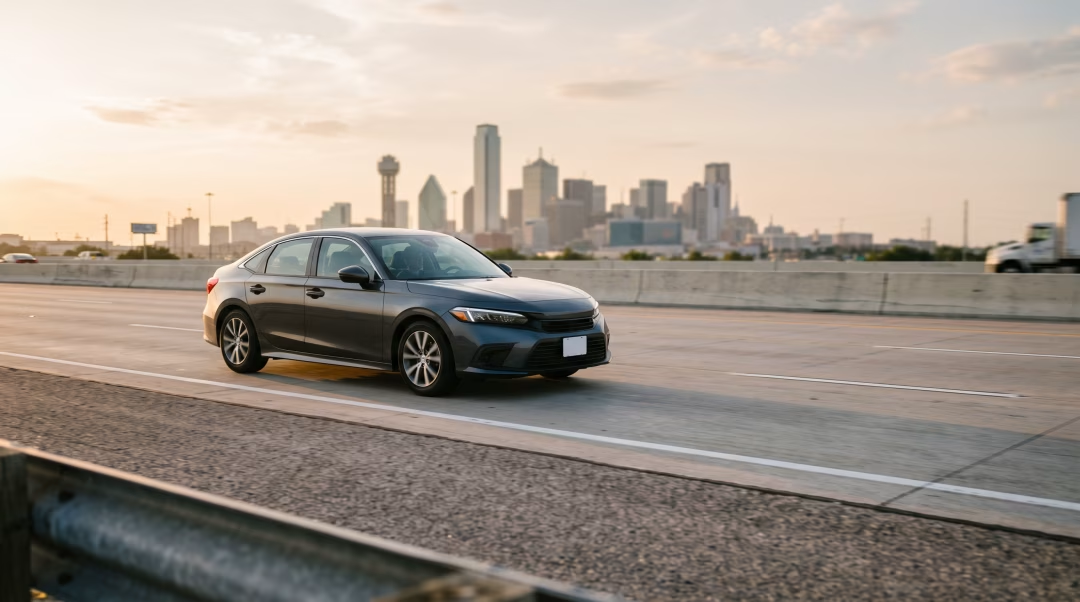
Decoding MPG: From the Label to the Dallas Pavement
The concept of Miles Per Gallon seems straightforward, but the official ratings you see on a car's window sticker are the result of highly controlled laboratory tests. The Environmental Protection Agency (EPA) determines these figures to provide a consistent benchmark for comparing different vehicles. They generate separate ratings for "city" and "highway" driving, as well as a "combined" number that weighs both. While these numbers are excellent for comparison shopping, they cannot replicate the specific conditions of every driver's daily life, especially not in a sprawling and dynamic area like Dallas-Fort Worth.
The "city" MPG rating simulates a low-speed, stop-and-go environment with frequent idling, which is common in downtown areas. The "highway" rating reflects driving at higher, more sustained speeds without stops. Your personal MPG will almost always be a blend of these two, but Dallas throws in some unique variables that the EPA's tests do not account for.
The Dallas Driving Factors That Impact Your True MPG
Why does a car that is rated for 30 MPG combined sometimes only get 25 MPG on a commute from Garland to Irving? Several local factors are at play, each chipping away at your vehicle's maximum efficiency.
- Heavy Traffic Congestion: North Texas is famous for its traffic. Commuting on major arteries like US-75, I-30, or the LBJ Freeway often involves long periods of idling or moving at a crawl. Every time you accelerate from a stop, your engine uses a significant burst of fuel. This constant cycle of braking and accelerating is one of the biggest drains on your gas tank, pulling your real-world MPG much closer to the lower "city" rating, even on a highway.
- Extreme Summer Heat: From June through September, Dallas temperatures can be relentless. Running your air conditioner on full blast is not a luxury; it is a necessity. The A/C compressor puts a direct load on the engine, forcing it to work harder and burn more fuel. Studies have shown that using the A/C in hot conditions can reduce a conventional vehicle's fuel economy by more than 25%. You can learn more about how the heat affects your vehicle on our blog.
- High Highway Speeds: While highways are generally more efficient than city streets, fuel economy tends to decrease rapidly at speeds above 50-60 mph. With many Texas highways posting speed limits of 70 or 75 mph, you are often driving faster than the optimal speed for fuel efficiency, which is what the EPA highway tests are based on.
- Toll Roads and Topography: While the DFW area is mostly flat, the frequent on-ramps, off-ramps, and overpasses of our extensive highway and tollway system require constant adjustments in speed. Budgeting for travel is important, which is why we have resources on how tolls add to your commute budget.
How to Maximize Your Fuel Economy in Dallas
While you cannot control the traffic or the weather, you can adopt driving habits and maintenance routines that will help you get the most out of every gallon of gas. Making small adjustments can lead to noticeable savings over time. Before you even start shopping, it is a great idea to build a car budget that includes realistic fuel costs.
First, adjust your driving style. Aggressive driving, with its rapid acceleration and hard braking, is a major fuel-waster. Instead, accelerate smoothly and try to anticipate stops, coasting to red lights or slowing traffic when possible. On the highway, using cruise control can help maintain a steady speed and improve your MPG. Second, keep up with routine maintenance. Simple things like using the recommended grade of motor oil, keeping your tires properly inflated, and replacing clogged air filters can improve your gas mileage by several percentage points. A well-maintained car is an efficient car. Finally, plan your trips. Combining errands into one outing and trying to avoid rush hour when possible can reduce the time you spend idling in traffic.
Choosing the Right Used Vehicle for Your DFW Commute
Understanding real-world MPG in Dallas helps you make a smarter choice when browsing our used inventory. Think about your primary driving routine. If you spend most of your time in stop-and-go traffic, a hybrid vehicle or a smaller sedan with a high city MPG rating might be an excellent choice. If your commute involves long stretches of open highway, like driving in from Waxahachie or Forney, a vehicle with a superior highway MPG rating will serve you better. We offer a wide variety of used cars known for good gas mileage that are perfect for Texas drivers.
Do not just look at the combined MPG number. Consider the city and highway ratings separately and weigh them against the type of driving you do most often. Our team can help you compare models and understand how their features might benefit your specific situation. When you find a vehicle you are interested in, you can schedule a test drive to see how it feels on the road. And if you are ready to take the next step, our in-house financing team is here to help you get pre-qualified for a loan that works with your budget.
Why is my car's actual MPG so much lower than the window sticker rating in Dallas?
The EPA's MPG ratings are achieved in a controlled lab setting that does not account for real-world factors. In Dallas, heavy stop-and-go traffic, extreme summer heat requiring constant A/C use, and highway speeds often above 60 mph all combine to reduce your actual fuel economy compared to the idealized sticker rating.
Does running my air conditioner all summer really impact my gas mileage that much?
Yes, it makes a significant difference. The A/C compressor is powered by the engine, and running it, especially on high, can reduce a vehicle's fuel efficiency by up to 25%. During a hot Dallas summer, this is one of the single biggest contributors to lower-than-expected MPG.
What type of used car is best for Dallas's heavy traffic?
For frequent stop-and-go driving, a used hybrid is often an excellent choice because its electric motor assists during low-speed travel and acceleration, saving fuel. Smaller sedans and crossovers with high "city" MPG ratings are also great options, as they are designed to be more efficient in these conditions. Check our inventory for some of the best used hybrids for commuters.
How much money can I really save by changing my driving habits?
The savings can be substantial. By avoiding aggressive driving behaviors like speeding and rapid acceleration, you can improve your gas mileage by 15% to 30% at highway speeds and 10% to 40% in city traffic. Over a year, that could add up to hundreds of dollars back in your pocket.
Is a vehicle with a high highway MPG a good choice if I mostly drive on city streets?
Not necessarily. A car optimized for highway driving may not be as efficient in city conditions. If your daily routine involves more surface streets and traffic lights than open highway, you should prioritize a vehicle with a strong "city" MPG rating. It is important to match the car's strengths to your typical driving environment to maximize fuel savings.
