

What Is a Body-on-Frame SUV
and Is It Right for You?
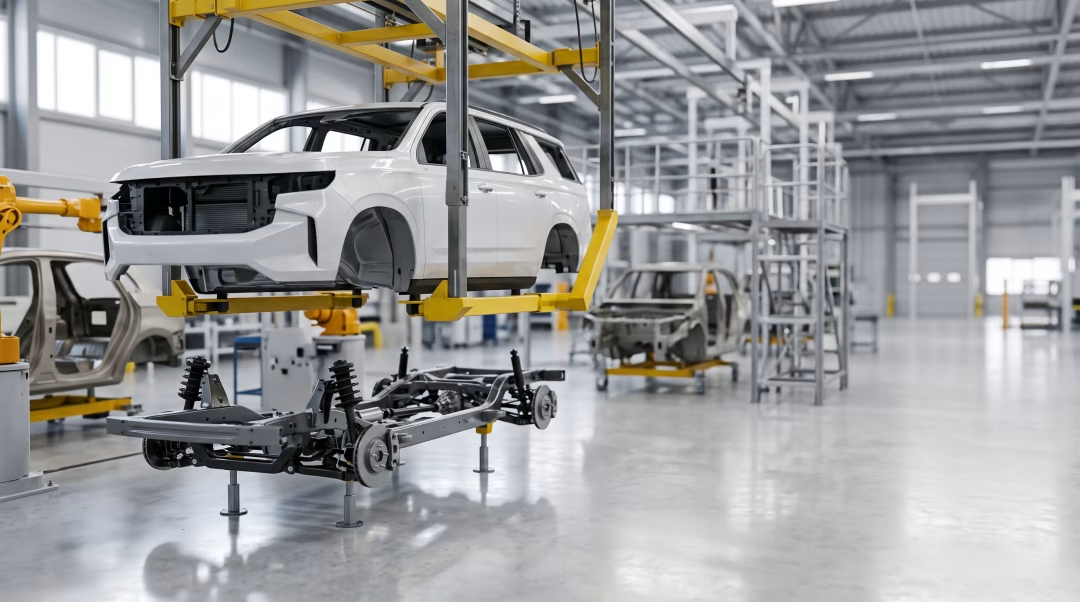
When you are exploring the world of used SUVs, you will often encounter the term "body-on-frame." But what does it mean? In simple terms, this is a traditional method of vehicle construction where the body of the SUV and its frame are built as two separate pieces and then joined together. Think of it like a house built on a strong, separate foundation. The frame, typically a rigid steel ladder-like structure, provides the vehicle's core strength and supports the engine, transmission, and suspension. The body is then bolted on top of this robust chassis. This design is renowned for its toughness, durability, and ability to handle heavy loads and challenging terrain. It is the same construction method used for most pickup trucks, which is why body-on-frame SUVs are often praised for their exceptional towing capabilities and off-road prowess, making them a popular choice for adventurers and families with heavy hauling needs.
Understanding the difference between body-on-frame and its more common unibody alternative is crucial for choosing the right used vehicle. While unibody crossovers offer a car-like ride and better fuel economy, a body-on-frame SUV delivers unmatched ruggedness. If your lifestyle includes towing a boat, navigating rough backroads, or simply wanting the peace of mind that comes with a heavy-duty build, this type of vehicle might be the perfect fit. Exploring our used inventory can help you see these capable vehicles firsthand and find one that matches your specific requirements.
A Deeper Dive into Body-on-Frame Construction
The concept of body-on-frame construction is one of the oldest in automotive manufacturing, tracing its roots back to the earliest days of horse-drawn carriages. The core principle involves a strong, rectangular steel frame, often called a ladder frame due to its shape, that serves as the vehicle's skeleton. All the crucial mechanical components, including the engine, drivetrain, axles, and suspension system, are mounted directly onto this frame. The vehicle's body, which forms the passenger and cargo compartment, is a completely separate unit that is attached to the frame with a series of bolts and rubber bushings. These bushings play a vital role in isolating the cabin from road noise and vibrations, although the overall ride can still feel less refined than in other designs.
This separation of body and frame is the defining characteristic and the source of both the design's greatest strengths and its notable weaknesses. The sheer strength of the underlying frame makes these vehicles incredibly resilient and capable of withstanding the immense twisting forces encountered during serious off-roading or when towing heavy trailers. To learn more about how to choose the right truck for your needs, you can explore our guide on half-ton vs three-quarter-ton trucks, which often share this construction.
The Unibody Alternative: A Tale of Two Designs
To fully appreciate the body-on-frame design, it helps to compare it to its modern counterpart: unibody construction. Most modern cars, crossovers, and even some SUVs use a unibody (or monocoque) design. In this method, the vehicle's frame and body are integrated into a single, cohesive structure. This one-piece shell is engineered to be lightweight yet strong, with crumple zones built in to absorb impact energy during a collision.
The unibody approach generally results in a vehicle that is lighter, more fuel-efficient, and has a lower center of gravity, which contributes to better handling and a smoother, more comfortable ride. However, because the entire structure is interconnected, it is not as adept at handling the torsional stress of heavy towing or extreme off-roading. Repairs after a significant accident can also be more complex and costly, as damage to one part of the structure can affect the integrity of the entire shell. Understanding the distinction between drivetrains is also helpful, as explained in our article on four-wheel drive vs all-wheel drive.
Advantages of a Body-on-Frame SUV
Choosing a body-on-frame SUV comes with a distinct set of benefits that cater to specific needs and lifestyles. If these characteristics align with your priorities, this type of vehicle could be an excellent choice.
- Superior Durability: The heavy-duty steel frame provides a rugged foundation that is highly resistant to twisting and impacts, making it ideal for rough conditions and demanding use.
- Exceptional Towing Capacity: The strong frame bears the brunt of the towing load, allowing these SUVs to pull significantly heavier trailers, boats, and campers compared to unibody vehicles of a similar size.
- Off-Road Capability: The frame's ability to flex independently of the body helps keep all four wheels on the ground over uneven terrain. This design also makes it easier to install suspension lift kits for even greater ground clearance.
- Simplified Repairs: In some types of collisions, damage may be confined to either the body or the frame. This separation can make repairs more straightforward and potentially less expensive than fixing the integrated structure of a unibody vehicle.
- Commanding Road Presence: These vehicles naturally sit higher off the ground, offering a commanding view of the road and a feeling of security that many drivers appreciate. They are often considered some of the best used SUVs for families due to their size and perceived safety.
Potential Drawbacks to Consider
While rugged and capable, the body-on-frame design is not without its compromises. It is important to weigh these potential disadvantages against your daily driving needs before making a decision.
- Reduced Fuel Efficiency: The heavy steel frame adds significant weight to the vehicle, which almost always results in lower miles per gallon compared to lighter unibody crossovers.
- Less Refined Handling: The high center of gravity and truck-like underpinnings can lead to more body roll in corners and a generally less agile feel on paved roads. They often handle more like a truck than a car.
- Bouncier Ride Quality: While the body is isolated from the frame, the stiff suspension required to manage the vehicle's weight can translate into a firmer, sometimes bouncier, ride over bumps and imperfect pavement.
- Inefficient Space Packaging: The frame structure takes up considerable space underneath the vehicle floor. This can result in a higher floor and less interior passenger and cargo room than a unibody vehicle of similar exterior dimensions.
Inspecting a Used Body-on-Frame Vehicle
When you are ready to look at a used body-on-frame SUV, there are a few specific things to check. It is crucial to perform a thorough inspection, especially on vehicles that may have been used for towing or off-roading. Before you visit, you might want to review our tips on what to check on a used car test drive. During your inspection, pay close attention to the frame itself. Look underneath the vehicle with a flashlight for any signs of excessive rust, cracks in the welds, or bends that could indicate past damage. Also, inspect the body mounts, which are the rubber bushings located between the frame and the body, for signs of cracking or deterioration. When you schedule a test drive, listen for any unusual squeaks, clunks, or groans when going over bumps, as this could signal worn-out suspension components or body mount issues. A thorough pre-purchase inspection can offer peace of mind with your decision.
Are all large, three-row SUVs body-on-frame?
Not anymore. While traditionally most large SUVs like the Chevrolet Tahoe or Ford Expedition used body-on-frame construction, many modern three-row family vehicles like the Honda Pilot or Toyota Highlander are built on a unibody platform to prioritize ride comfort and fuel efficiency. It is important to check the specifications of the specific model and year you are considering.
Is a body-on-frame SUV inherently safer than a unibody vehicle?
Not necessarily. While the large size and heavy frame of these SUVs can be advantageous in certain types of collisions, modern unibody vehicles are engineered with advanced crumple zones and safety features that are highly effective at absorbing and redirecting crash energy. Safety often depends more on the specific vehicle's design, safety ratings, and features than on its construction type alone.
Do body-on-frame vehicles cost more to maintain?
Maintenance costs can be comparable to unibody vehicles for routine items like oil changes and brakes. However, due to their heavier weight, they may go through tires and brake components slightly faster. The primary difference in cost often comes down to fuel consumption, which is typically higher in these heavier SUVs. Our team in our financing area can help you budget for the total cost of ownership.
Can a body-on-frame SUV be comfortable for daily driving?
Absolutely. Modern engineering has significantly improved the ride quality of body-on-frame SUVs. While they may not be as smooth as a unibody crossover, many models offer comfortable, quiet cabins with modern amenities, making them perfectly suitable for daily commutes and family road trips, with the added benefit of go-anywhere capability.
How can I easily tell if an SUV is body-on-frame?
One of the quickest ways to tell is to look at its siblings. If an SUV shares its platform with a pickup truck (for example, the Chevrolet Tahoe and Silverado, or the Toyota Sequoia and Tundra), it is almost certainly a body-on-frame vehicle. A quick online search for the specific model and year will also confirm its construction type.
