

What is a Crossover and How
is it Different from an SUV?
Navigating the world of used vehicles can be confusing, especially when two popular categories, crossovers and SUVs, seem so similar. While the terms are often used interchangeably, there is a fundamental difference in their construction that impacts everything from ride quality to capability. A crossover is built on a unibody platform, just like a car, where the body and frame are a single piece. This results in a smoother, more comfortable ride and better fuel efficiency. A traditional SUV, on the other hand, uses a body-on-frame design, similar to a pickup truck. This separate body and frame construction gives it superior strength for heavy towing and rugged off-road performance. Understanding this key distinction is the first step toward choosing the perfect vehicle for your driving needs and lifestyle, ensuring you find a ride that truly fits you. Let us help you explore the specifics so you can shop with confidence.
Ultimately, the choice between a crossover and a traditional SUV comes down to your daily priorities. Do you value fuel economy and car-like handling for commuting around Dallas, or do you need the raw power and go-anywhere capability for weekend adventures? Modern advancements have equipped both vehicle types with impressive safety features and versatile interiors, making either one a fantastic option for families and individuals alike. Dive into our detailed guide below as we break down the performance, space, and capability of each.
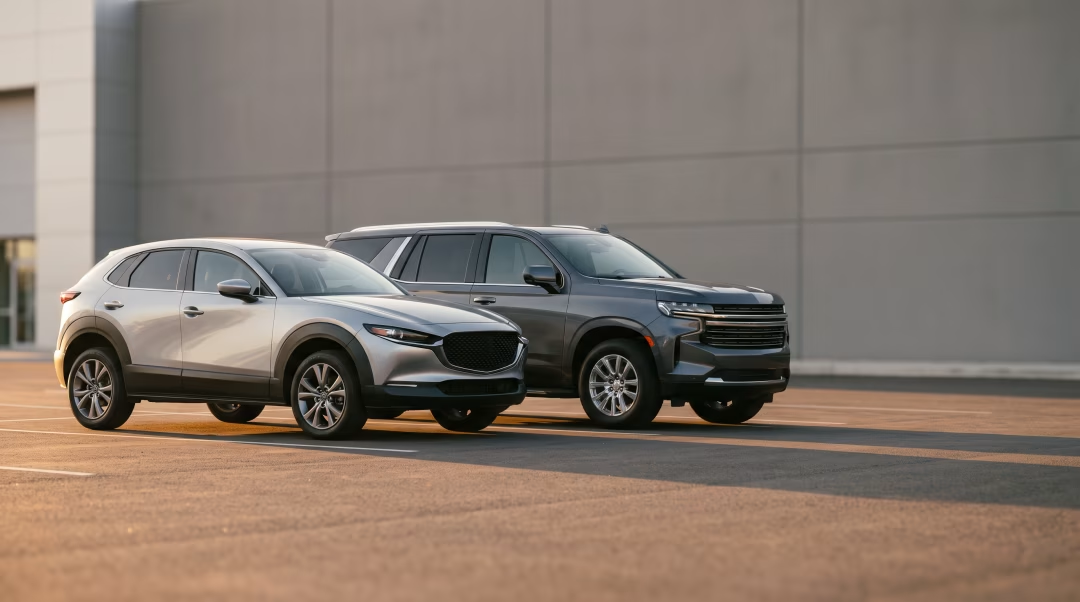
The Core Difference: A Tale of Two Platforms
The single most important factor that separates a crossover from a traditional SUV is its chassis, or the vehicle's underlying framework. This engineering choice influences nearly every aspect of how the vehicle drives, performs, and feels on the road.
Crossovers are built using a "unibody" construction. In this design, the vehicle’s body and the frame are integrated into one single structure. This is the same method used to build virtually all modern sedans and hatchbacks. This unified construction makes the vehicle lighter, which contributes to better fuel efficiency and more nimble, responsive handling. The unibody design is also highly effective at absorbing impact energy in a collision, often leading to excellent safety ratings. If you have ever driven a car, stepping into a crossover will feel immediately familiar and comfortable.
Traditional SUVs, in contrast, are built with a "body-on-frame" design. Just as the name implies, the vehicle's body is manufactured as a separate unit and then bolted onto a strong, rigid steel frame, often called a ladder frame. This is the same robust construction method used for pickup trucks. This separation of body and frame provides incredible strength and durability, making it the ideal platform for tasks that put a lot of stress on the vehicle, such as heavy towing or navigating challenging off-road terrain. You can learn more about how vehicle construction impacts capability by exploring topics like half-ton vs three-quarter-ton trucks.
Comparing the On-Road Experience
How these vehicles are built directly translates to how they feel behind the wheel during your daily drive.
- Crossovers: With their car-based unibody platforms, crossovers offer a driving experience focused on comfort and ease of use. The ride is typically smoother and quieter, absorbing bumps and road imperfections with ease. They are easier to maneuver in traffic and simpler to park in tight city spaces, which is a major advantage for anyone navigating busy Dallas lots. Check out some of our best used cars for easy parking to see what we mean. Their lower center of gravity also means they feel more stable and planted when cornering.
- SUVs: Body-on-frame SUVs provide a more commanding presence on the road. You sit higher up, offering a great view of your surroundings. However, the truck-based suspension can feel stiffer and may not insulate you from bumps as well as a crossover. While modern engineering has greatly improved the ride quality of SUVs, their sheer size and weight can make them feel less agile in city driving conditions.
Capability: Where Your Needs Define the Choice
When it comes to performance and capability, the differences become even clearer. This is where your lifestyle plays the biggest role in your decision.
For fuel economy, crossovers have a distinct advantage. Their lighter weight means the engine does not have to work as hard, resulting in better MPG for both city and highway driving. This makes them an excellent choice for daily commuters looking to save at the pump. Many are available in hybrid variants, making them some of the best used hybrids for Dallas commuters.
When it comes to towing and off-road use, traditional SUVs are the undisputed champions. The robust ladder frame is designed to handle the immense stress of pulling heavy loads, like a large boat for a weekend at the lake or a family camper. If you need serious towing muscle, you will want to look at our best used trucks for towing and body-on-frame SUVs. Furthermore, their rugged construction and available 4-Wheel Drive (4WD) systems with low-range gearing are built for true off-road adventures, from rocky trails to muddy fields. Crossovers, often equipped with All-Wheel Drive (AWD), are perfectly capable in rain or light snow, but their systems are designed for on-road traction, not off-road crawling. It is important to understand the difference between four-wheel drive vs all-wheel drive when making your choice.
Space, Versatility, and Your Family
In today's market, both crossovers and SUVs offer incredible versatility for passengers and cargo. Many models in both categories offer three rows of seating, but how they utilize that space can differ. You can explore the pros and cons of different family haulers in our guide to choosing between a used minivan or three-row SUV.
Crossovers often have a lower cargo floor, which can make loading groceries, strollers, or sports equipment a bit easier. The interior layout is designed for maximum passenger comfort and everyday convenience. SUVs, with their typically boxier shape, can sometimes offer more vertical cargo space, which is ideal for hauling bulky items. Whether you need a compact SUV or a midsize SUV, you will find options in both categories that can meet your family's needs.
Making Your Decision
With a clearer understanding of the differences, you can find the perfect vehicle by browsing our extensive used inventory online. Once you have found a few options, you can schedule a test drive to experience the difference for yourself. Our team is ready to help you explore your financing possibilities and you can even get pre-qualified online. If you have a current vehicle, get a quick and easy estimate of its worth with our Value My Trade tool.
Is a crossover safer than an SUV?
Both vehicle types are designed to be very safe and are equipped with modern safety features. Crossovers, with their unibody construction, are excellent at absorbing and redirecting crash energy. Traditional body-on-frame SUVs have the advantage of mass and a higher ride height. The best way to compare is to check the specific NHTSA and IIHS safety ratings for the models you are considering.
Are all modern SUVs actually crossovers?
The lines have definitely blurred. Many vehicles that are marketed as "SUVs" are technically crossovers built on unibody platforms. Models like the Ford Explorer and Jeep Grand Cherokee, which were once body-on-frame, are now unibody. However, true body-on-frame SUVs like the Chevrolet Tahoe, Ford Expedition, and Toyota 4Runner still exist for those who need maximum capability.
Can a crossover handle any off-roading?
A crossover with All-Wheel Drive (AWD) is perfectly capable of handling gravel roads, dirt paths, and snowy conditions. They provide extra ground clearance and better traction than a sedan. However, they are not designed for serious off-roading that involves rock crawling, deep mud, or steep, uneven terrain. For that, a true body-on-frame SUV with 4WD is necessary.
Which is a better choice for a family?
This completely depends on your family's lifestyle. For most families whose driving is primarily in suburban and city environments, a three-row crossover is an ideal choice, offering comfort, space, and efficiency. If your family enjoys camping, boating, or outdoor adventures that require towing a trailer, the superior capability of a traditional SUV would be a better fit.
Do crossovers have lower maintenance costs than SUVs?
Generally, crossovers may have slightly lower long-term costs. Because they are based on car platforms, their parts (like tires and brakes) can sometimes be less expensive. Their superior fuel economy also contributes to significant savings over the life of the vehicle. However, a well-maintained vehicle of either type can provide years of reliable service.
